In August 2026, researchers at the University of Jyväskylä published eight years of data on children, screens and thinking. The headline finding was not the one anybody was braced for.
The team, led by doctoral researcher Petri Jalanko, followed 124 girls and 136 boys from childhood into adolescence as part of Finland's long-running PANIC study. They tracked screen use and physical activity, and they measured cognitive processing — the speed and accuracy with which a young brain handles information.
Children who had accumulated more screen time showed better cognitive processing as teenagers. The finding was published in Pediatric Exercise Science on 17 August 2026.
Before anyone celebrates
The researchers were careful, and we should be too. Their own words: these are "associations rather than proving that screen time or particular types of physical activity directly cause changes in cognitive performance." They explicitly called for intervention studies to establish whether anything here is causal.
There are ordinary explanations that have nothing to do with screens being good for brains. Children who read faster may enjoy screen-based activities more. Households with more devices differ from households with fewer in a dozen other ways. Eight years is long enough to see a pattern and still not know which end of it came first.
So this is not a green light. What it is, is a crack in a story that had become too simple.
The distinction that actually survives the evidence
Across a genuinely mixed research picture, one line keeps holding up, and the Finnish team drew it themselves. They argued for screen use that emphasises active thinking, problem-solving, creativity and learning — as opposed to passive consumption.
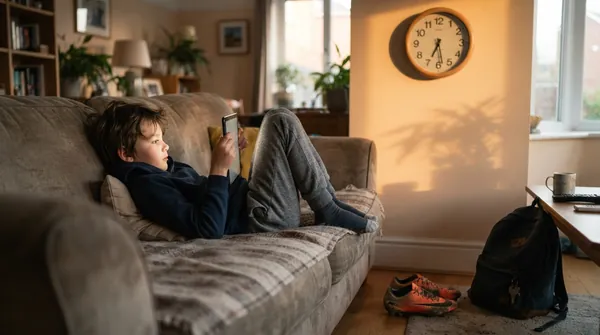
This is the distinction most kitchen-table arguments miss. "Two hours of screen time" describes a duration, not an activity. In those two hours a child might:
- build something in a game that requires planning three steps ahead
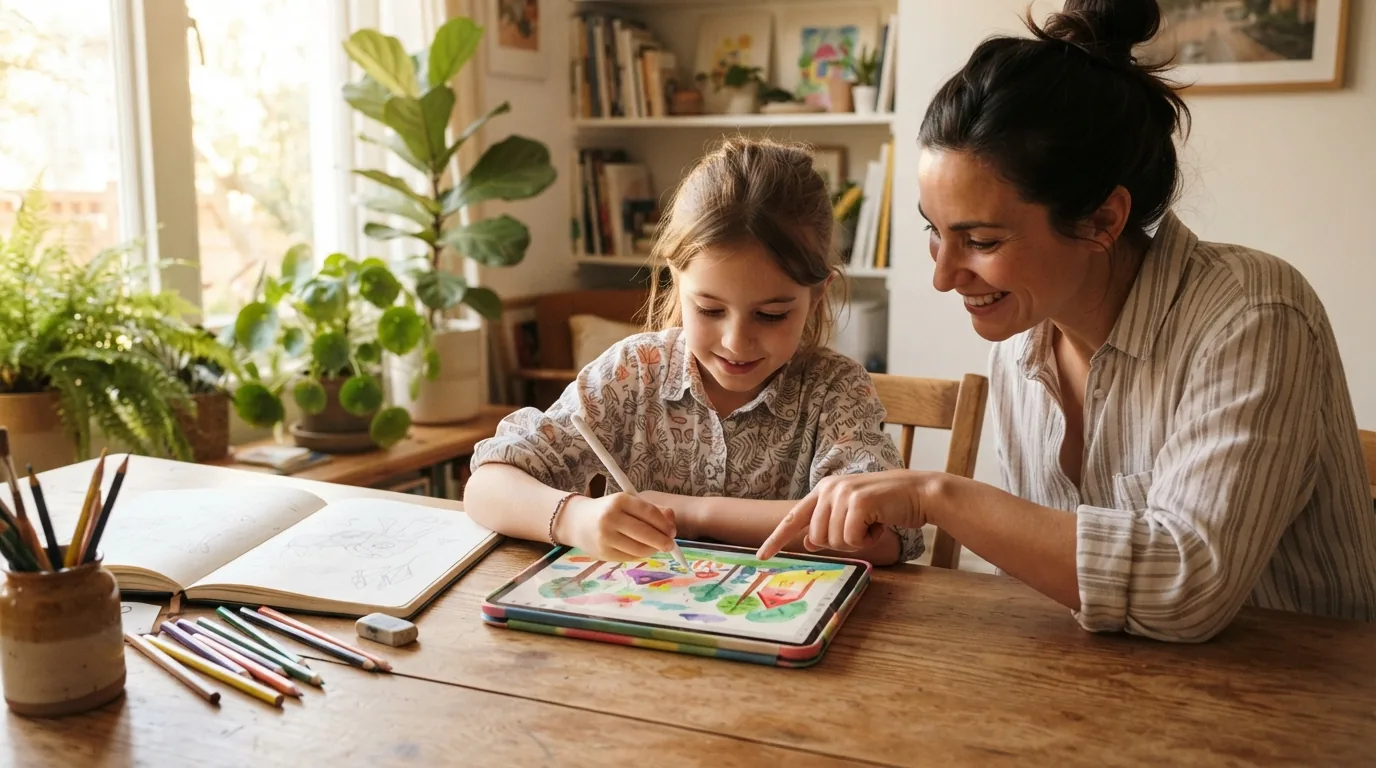
- draw on a tablet and be asked what the picture is about
- watch a documentary and then argue with you about it
- or scroll a feed engineered so that no single item is ever worth remembering
Those are four different experiences wearing the same number. A limit that treats them identically is measuring the wrong thing.
What this changes at home
Not much, if you are already asking what rather than only how long. Quite a lot, if the timer has become the entire policy.
Three questions that separate the four activities above better than any clock:
- Is my child making something, or being served something? Making leaves a trace — a drawing, a level, a story. Being served leaves nothing.
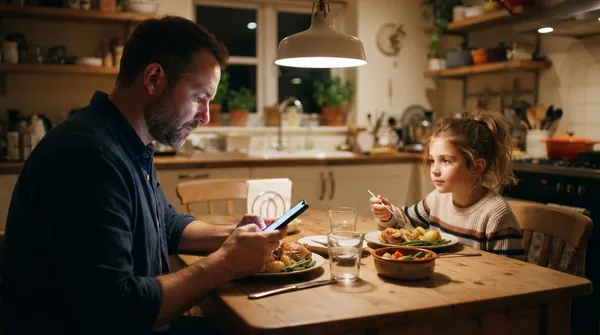
- Can they tell me about it afterwards? Content that survives the walk to the dinner table was doing something. Content that evaporates was not.
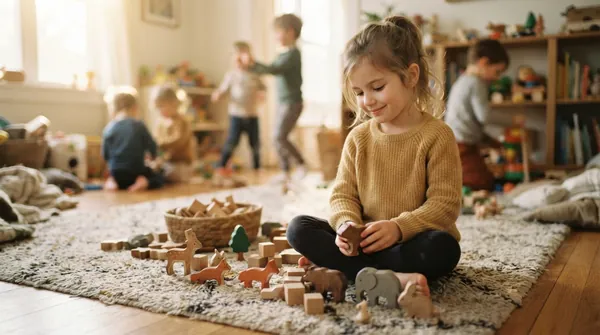
- What is it displacing? Twenty minutes instead of a nap is not the same trade as twenty minutes instead of staring at a wall being bored — and boredom, inconveniently, is where a lot of good ideas start.
A note on the other half of the study
The same research found that the relationship between exercise and thinking was complex and differed by sex: girls appeared to benefit from light-intensity activity, boys from guided exercise. It is a useful reminder that "children" is not one organism, and that advice which works beautifully for one child in a family can miss the next one entirely.
Which is, in the end, the honest conclusion from eight years of Finnish data: watch the child in front of you more closely than the number on the screen.