Pre-K Math Worksheets
Counting to 10, dice dots, number writing, shapes, tall and short, and patterns. · Head Start Early Learning Outcomes
All 30 worksheets
Tap a sheet to open it full size
Save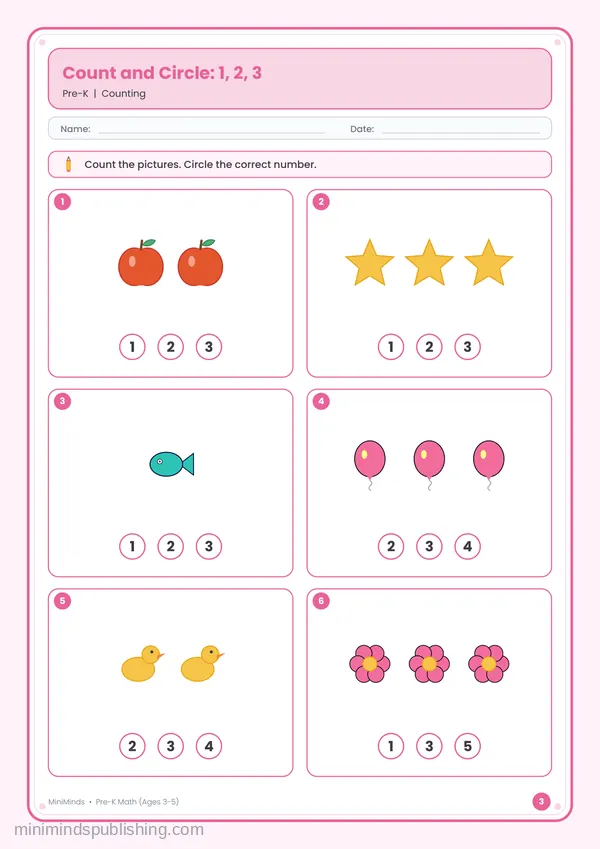
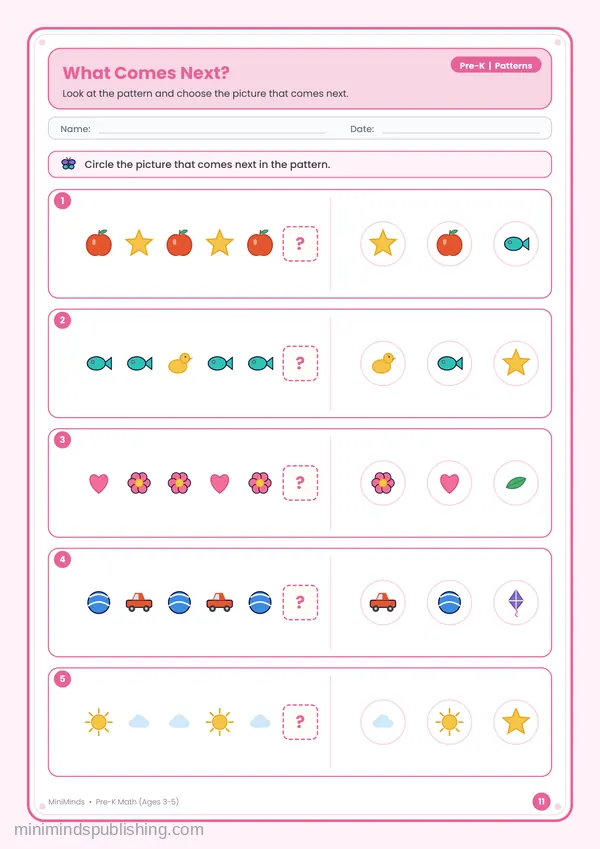
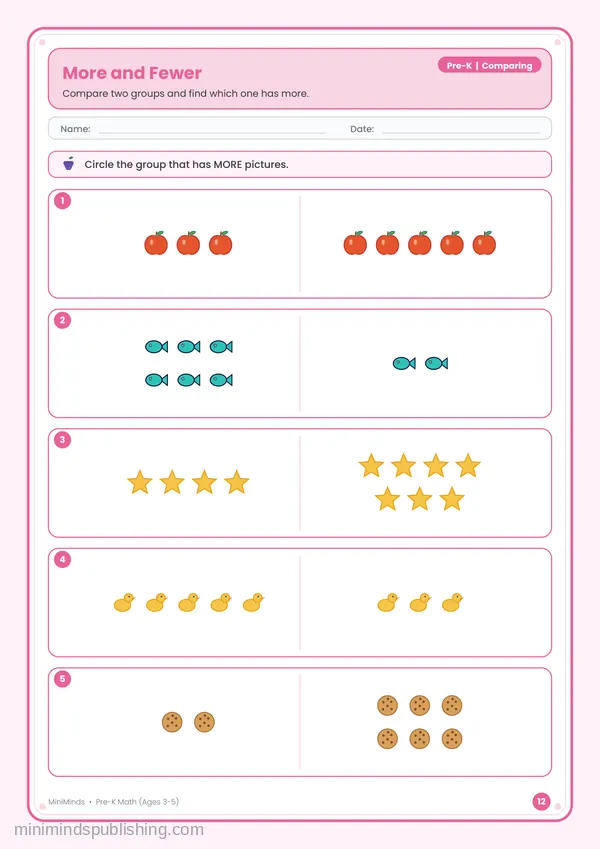
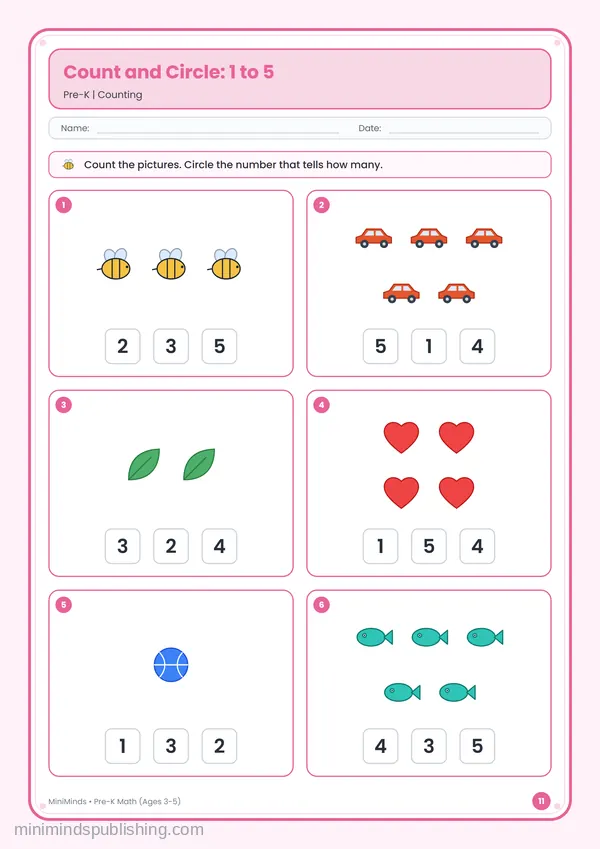
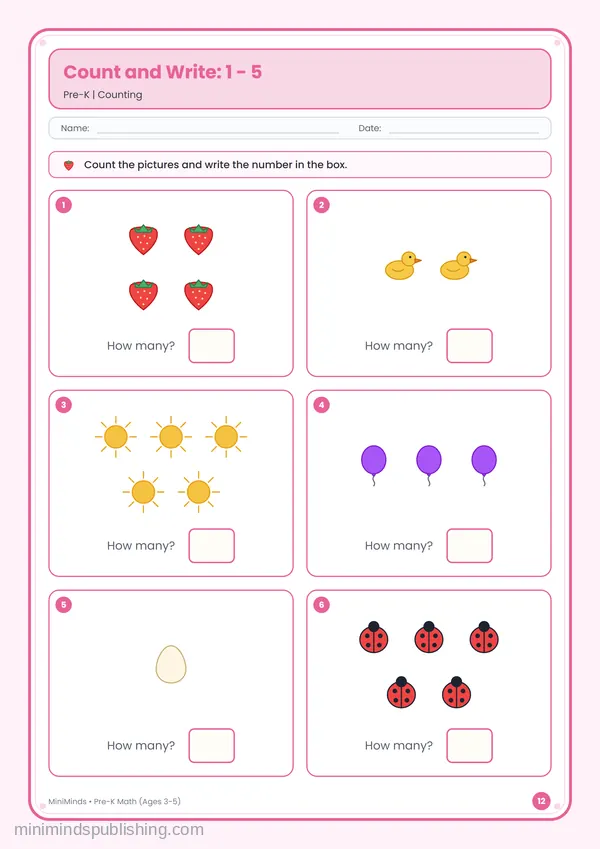
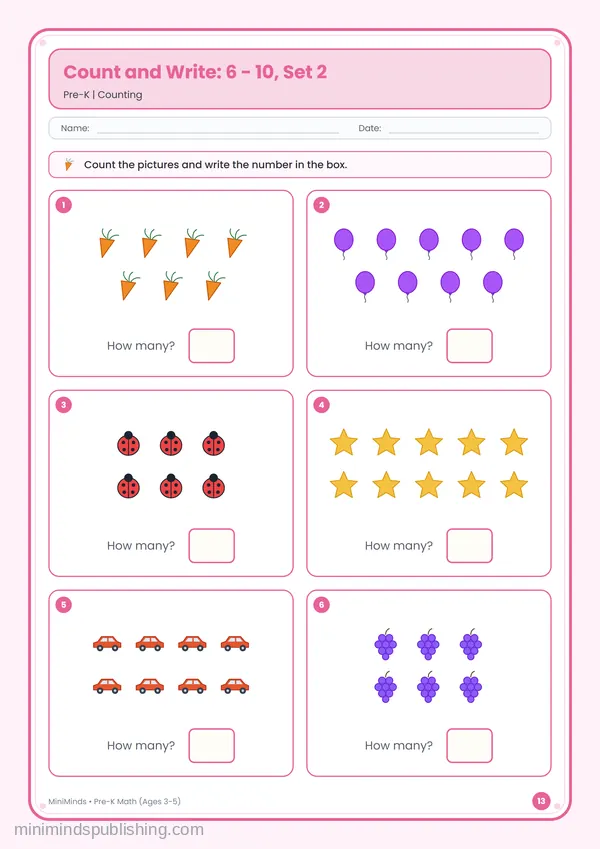
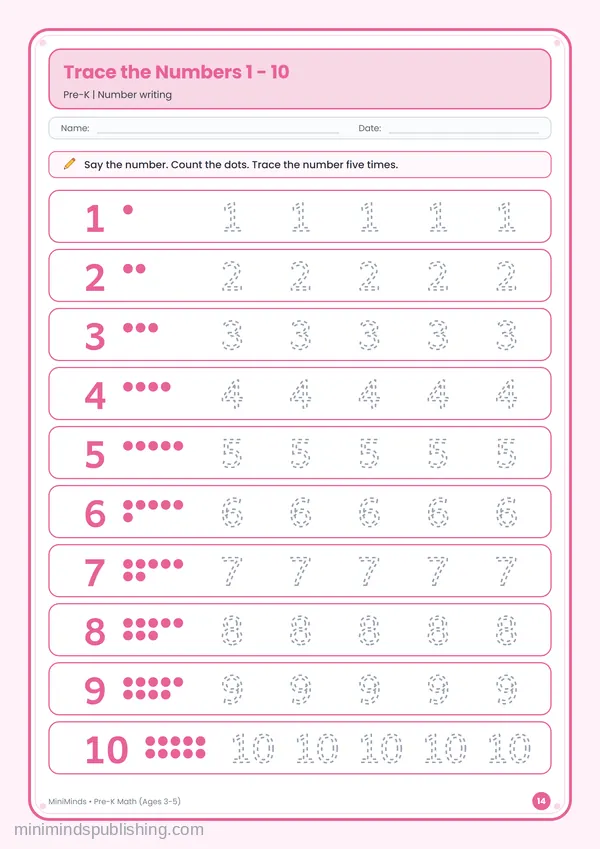
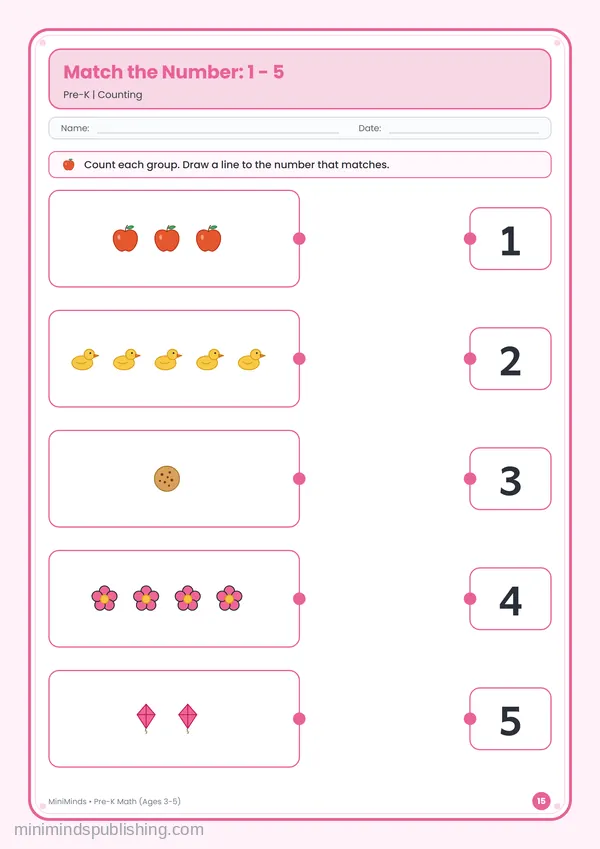
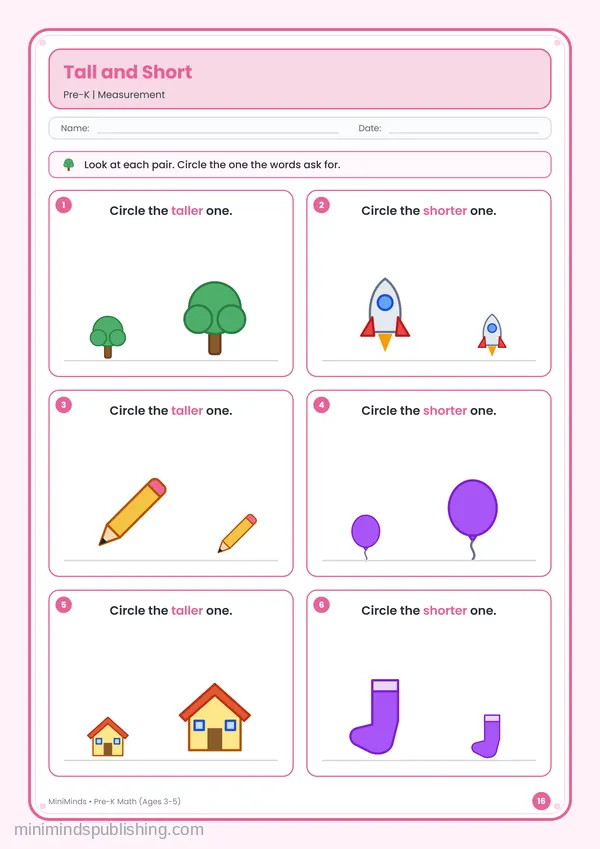
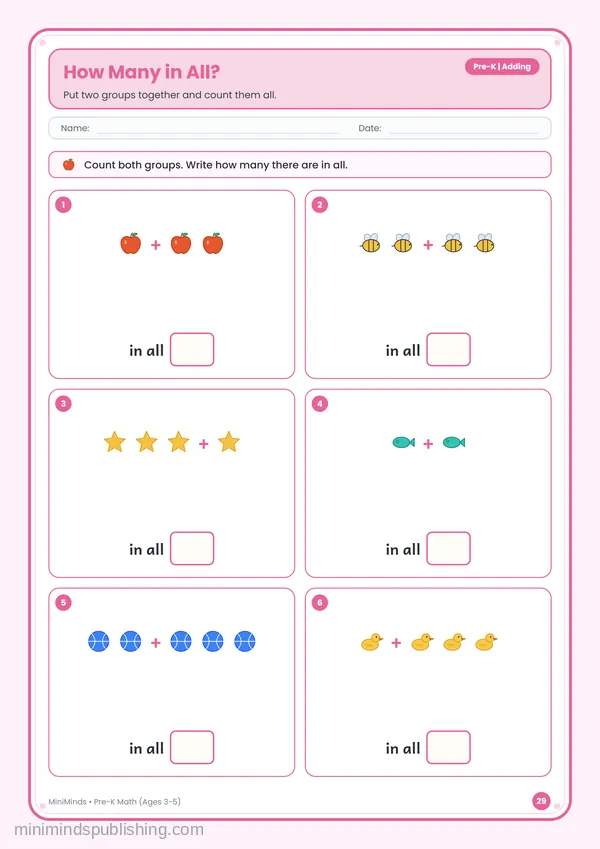
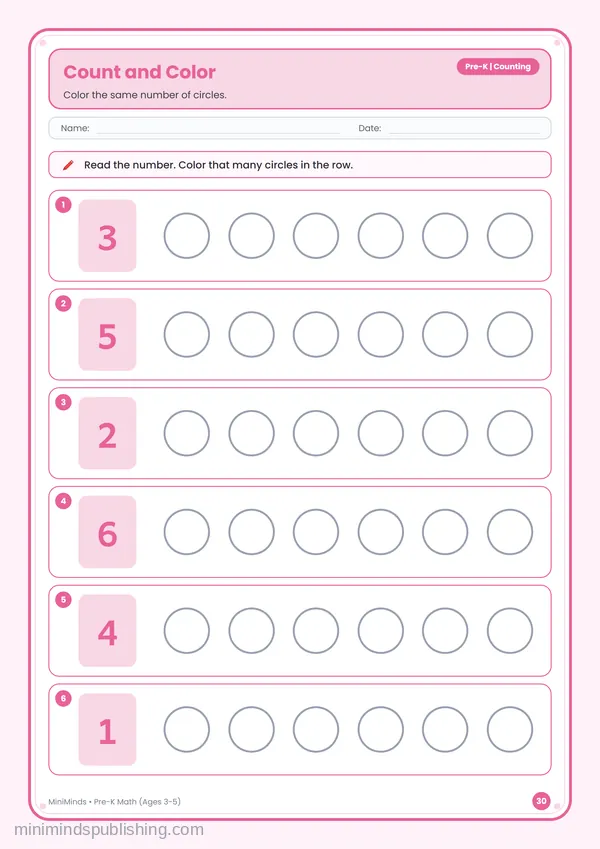
About these pre-k math worksheets
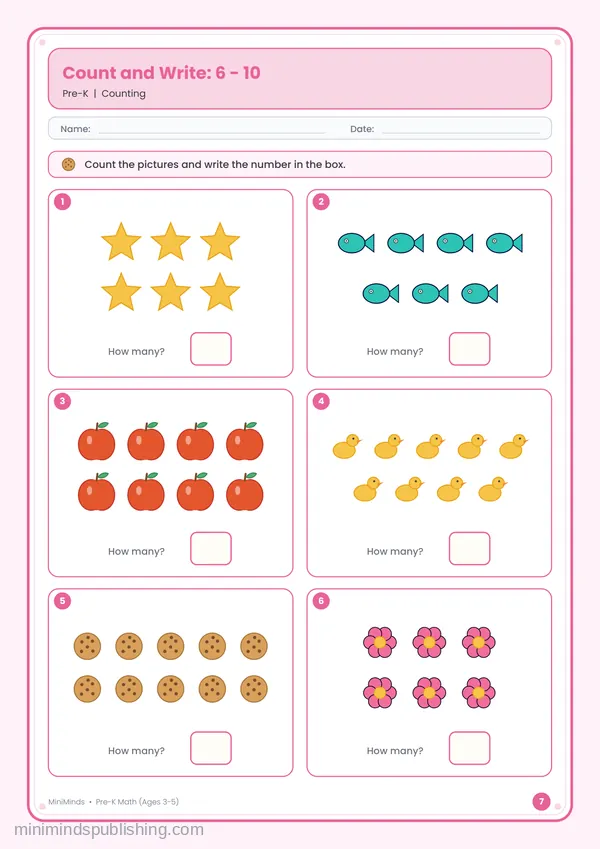
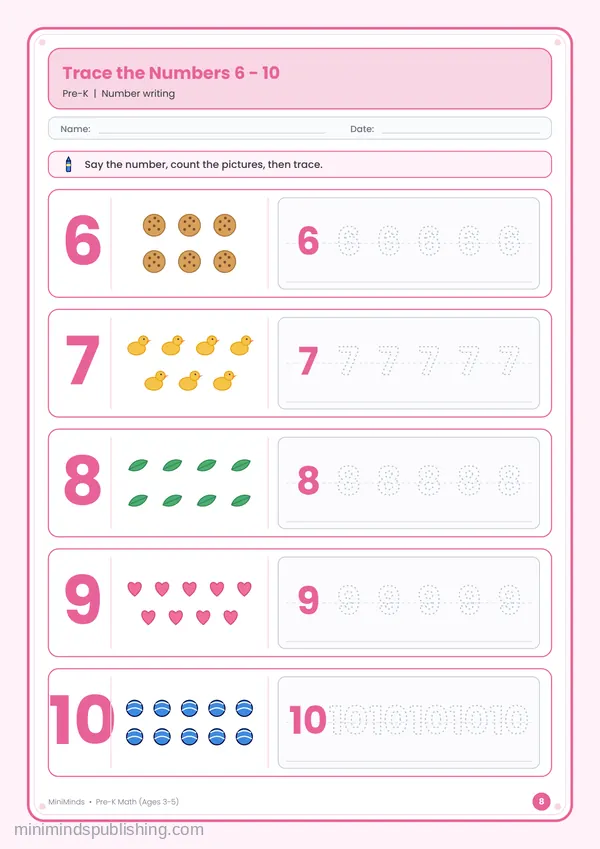
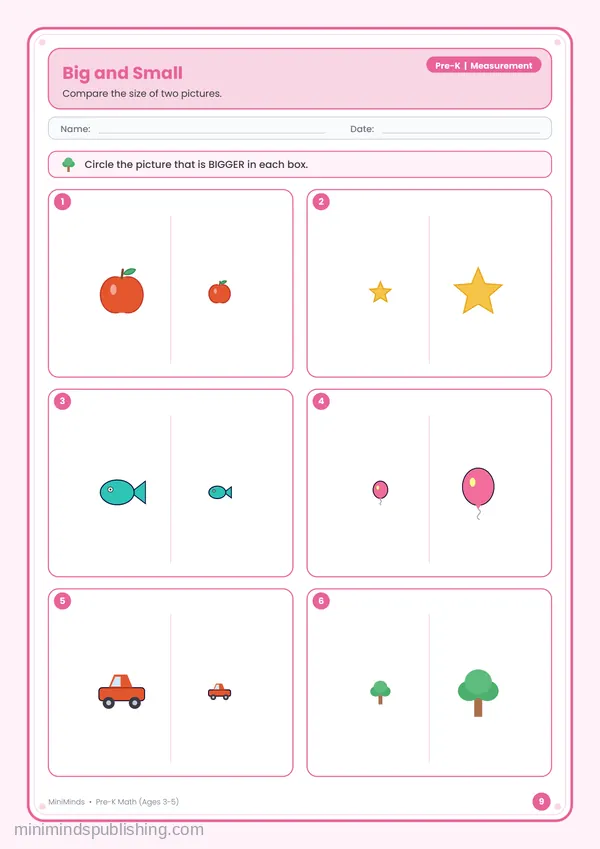
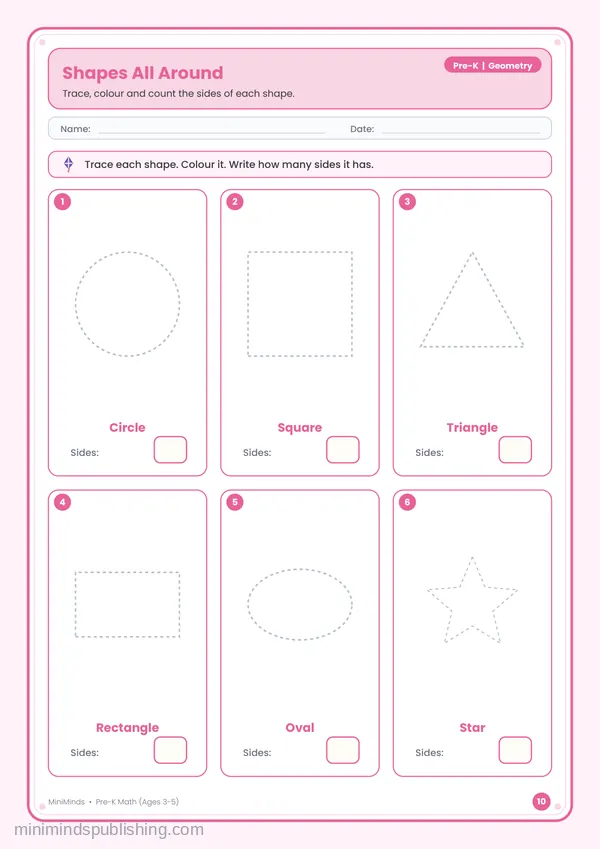
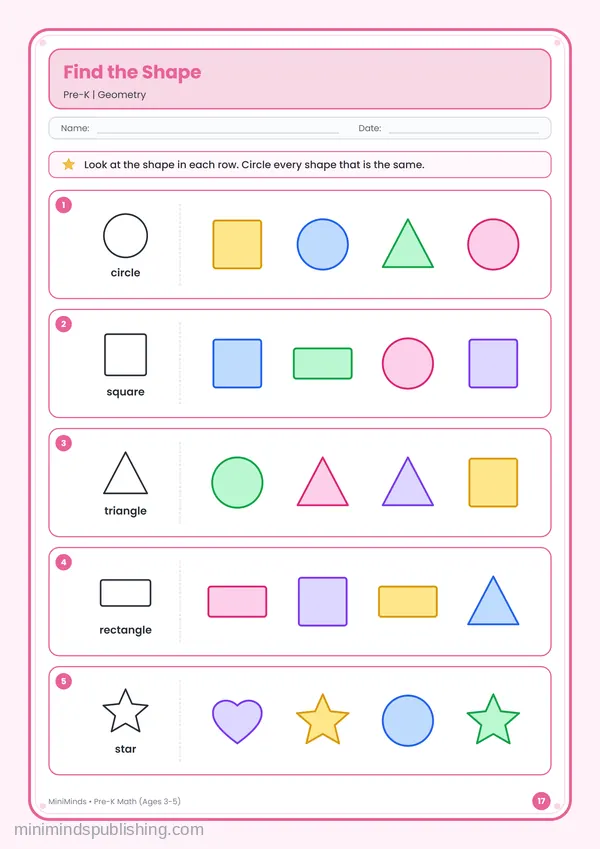
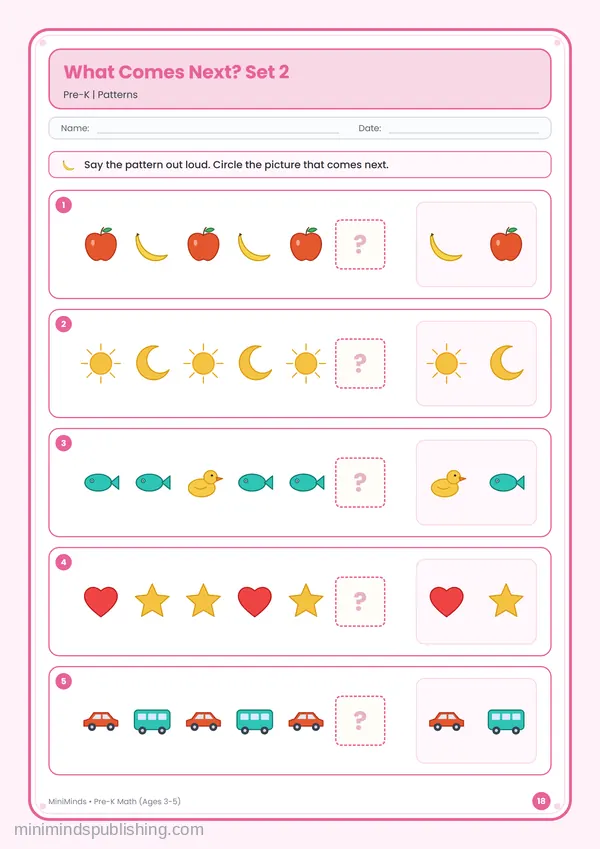
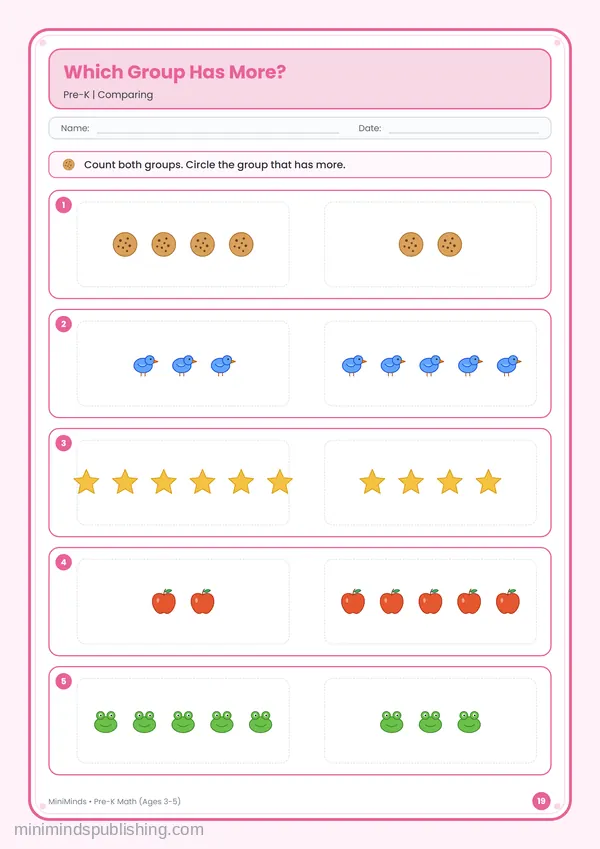
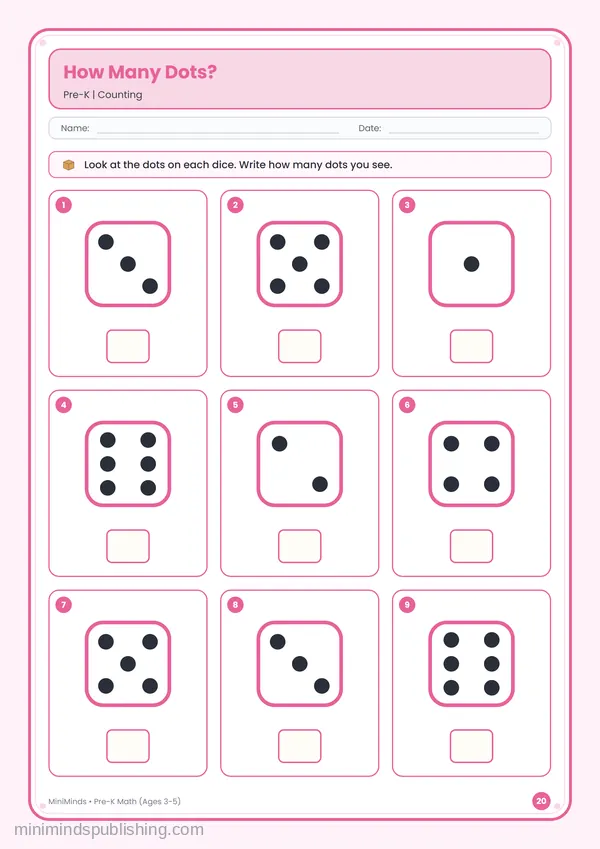
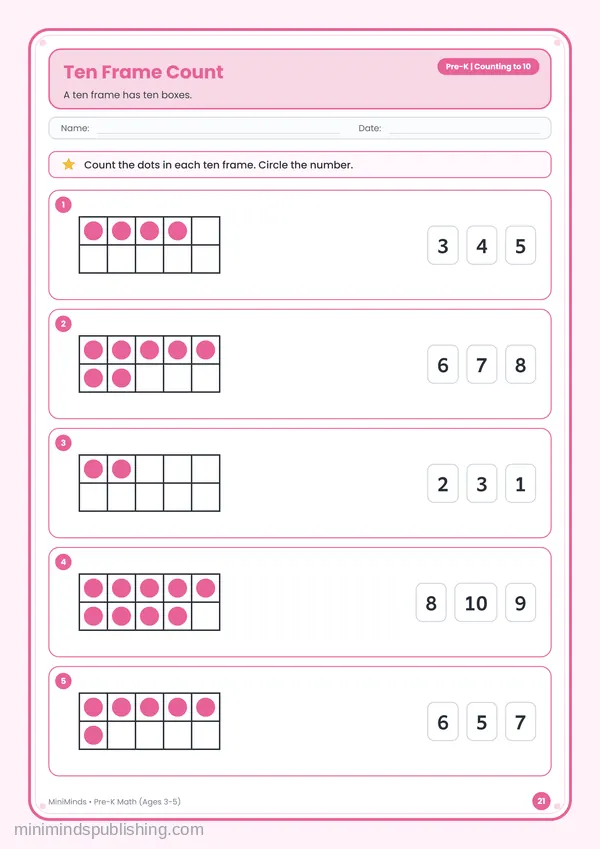
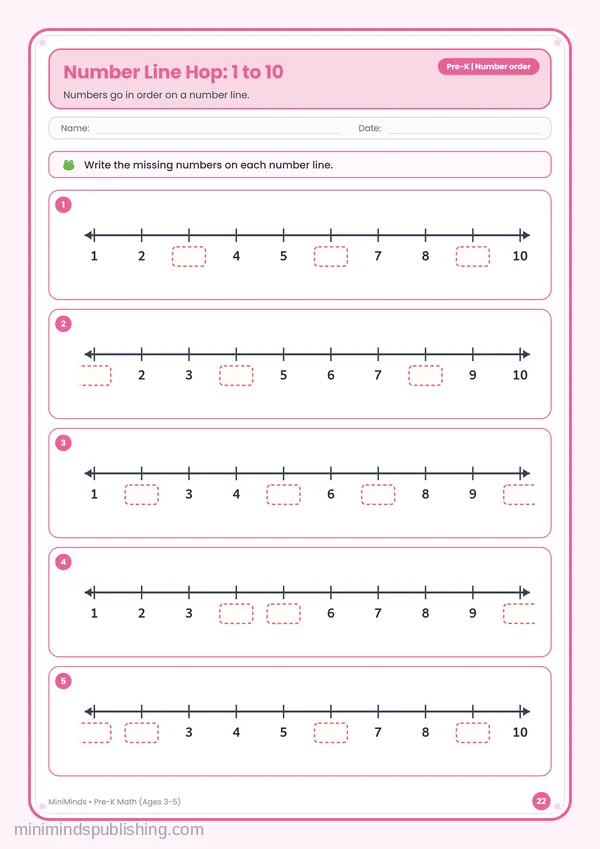
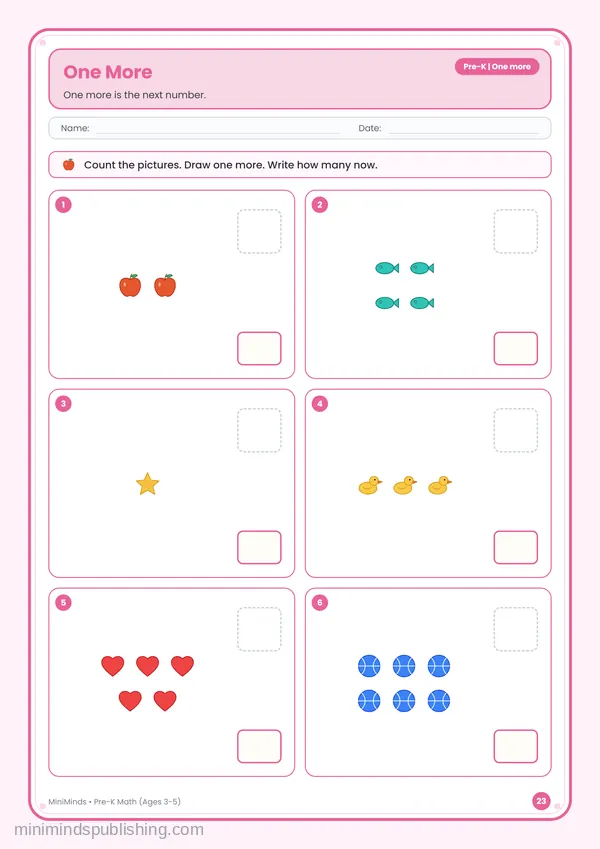
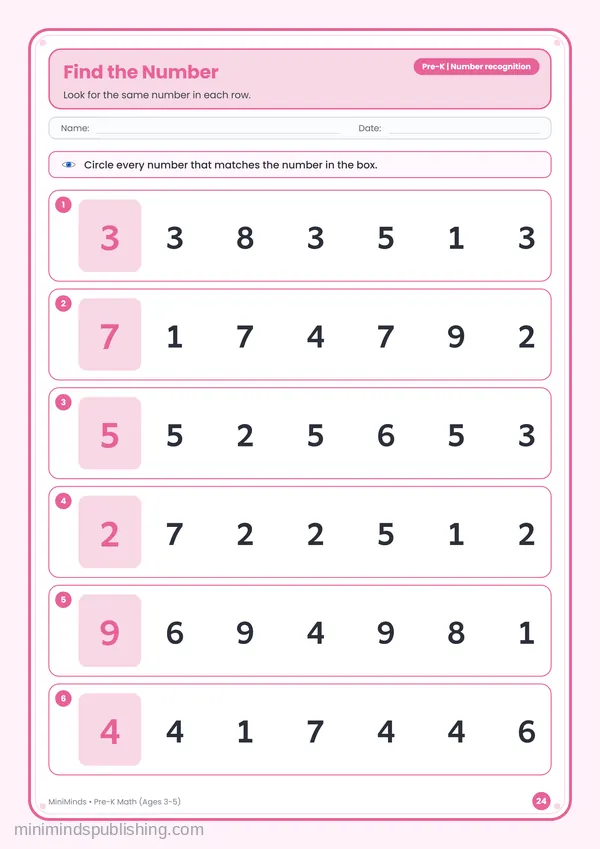
These Pre-K math worksheets cover the first things a three-to-five-year-old needs before formal maths starts: counting small groups accurately, reading dots on a dice, writing the numerals 1 to 10, telling big from small and tall from short, finding and naming basic shapes, and spotting a simple repeating pattern. There is no addition here and there is deliberately no timing — at this age the goal is that a child counts each object once and does not skip.
Pre-K sits below the Common Core, so these sheets carry no standard code. They follow the Head Start Early Learning Outcomes Framework instead, which describes what most children can do by the end of the pre-kindergarten year rather than prescribing a grade-level target.
What these 30 worksheets cover
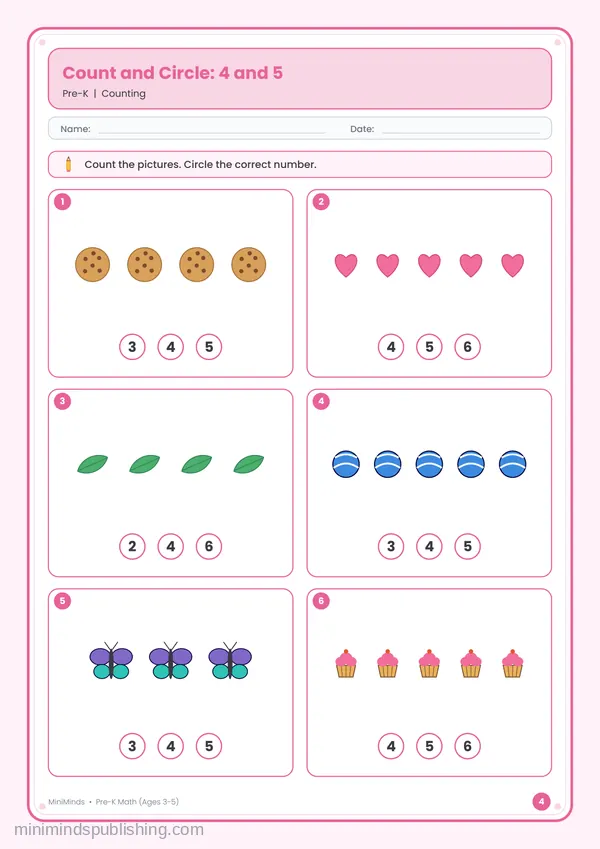
- Counting and circling groups of 1 to 5, then 6 to 10
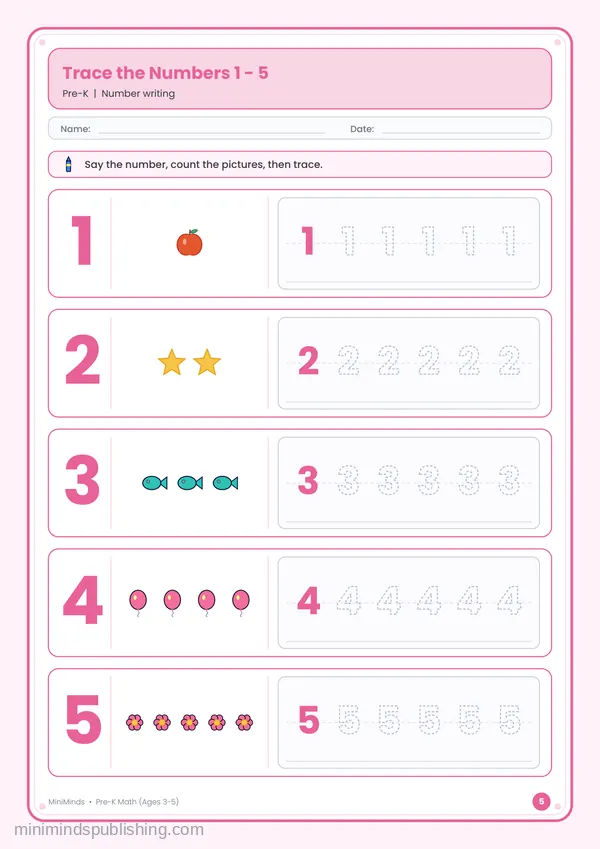
- Tracing the numerals 1 to 10 with correct stroke order
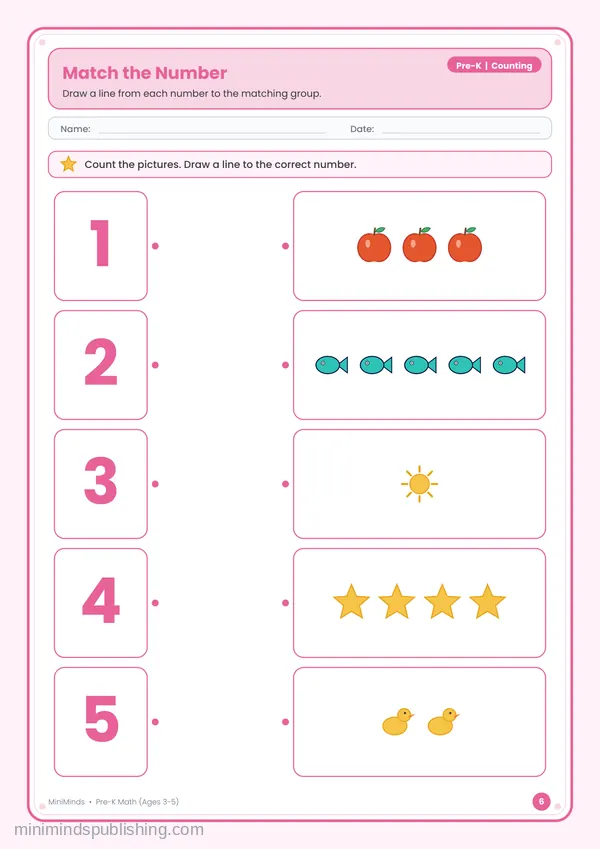
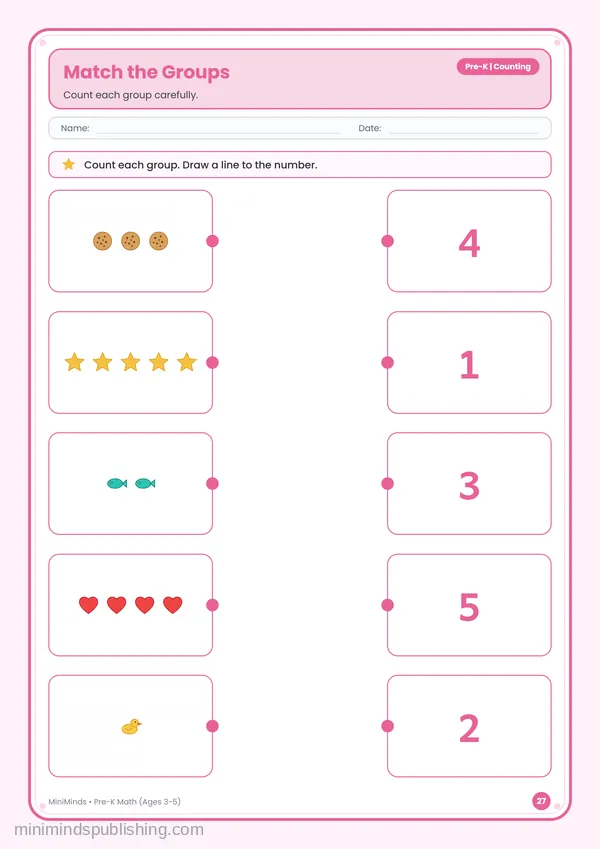
- Matching a written number to the right quantity
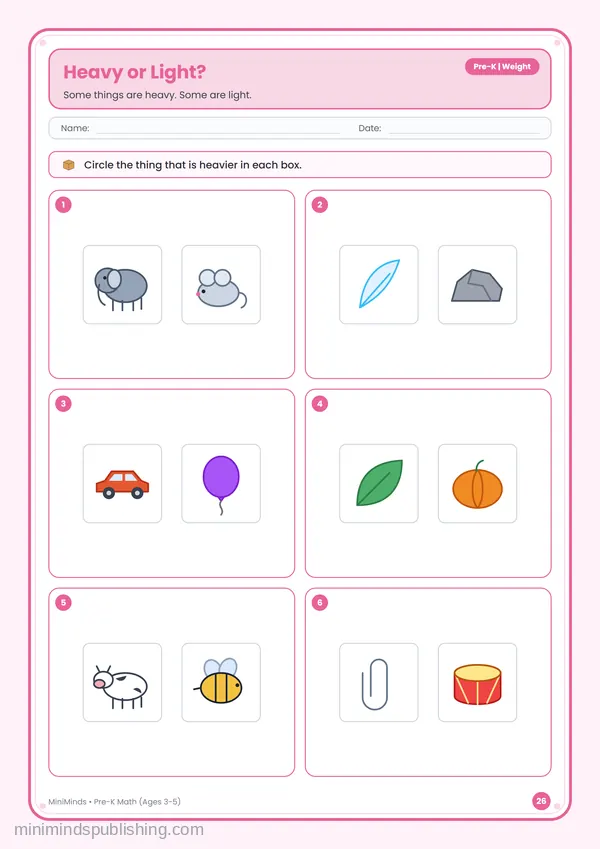
- Comparing size: big and small, more and fewer
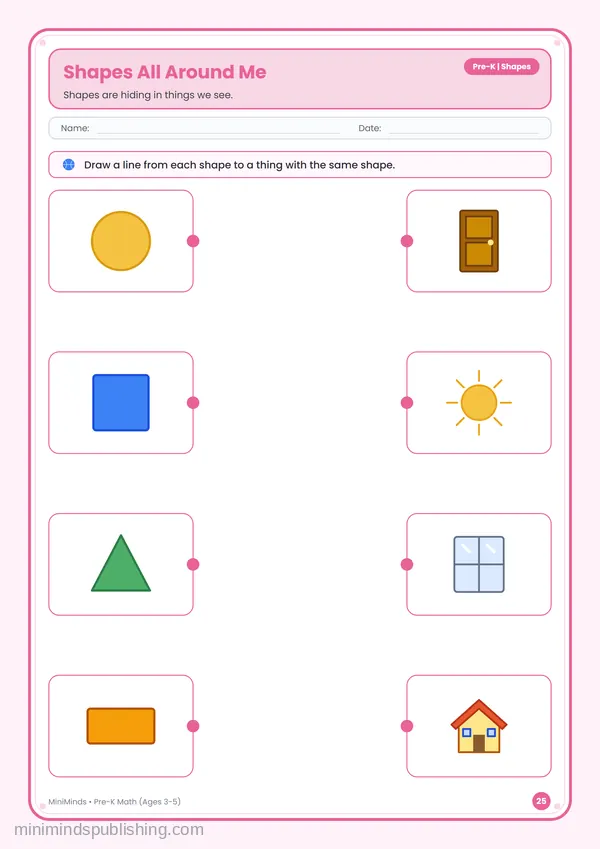
- Recognising circles, squares, triangles and rectangles in everyday objects
- Continuing a simple AB repeating pattern
- Recognising dice dot patterns without counting one by one (subitising)
- Measuring by eye: taller and shorter
- Tracing every numeral 1 to 10 on one page, five times each
All worksheet sets
How to get the most out of them
- 1
Let your child point at and touch each object as they count it out loud. One-to-one correspondence — one word per object — is the skill being built, and pointing is what makes it visible to you.
- 2
Do one sheet at a time. A Pre-K attention span is roughly five to ten minutes, and stopping while it is still going well is what makes them willing to come back.
- 3
Do not correct a reversed numeral yet. Reversed 3s and 5s are normal until about age seven and disappear on their own with practice.
- 4
If tracing is frustrating, open the same sheet in the online studio instead. A finger on a tablet needs far less fine motor control than a pencil, and the counting practice still happens.
Pre-K Math Worksheets — questions parents ask
- What age are Pre-K math worksheets for?
- Ages three to five — the year or two before kindergarten. If your child can already count to twenty and add small numbers, skip ahead to the kindergarten math worksheets instead.
- Why do these sheets have no Common Core code?
- The Common Core starts at kindergarten. Pre-K is covered by the Head Start Early Learning Outcomes Framework, which has no per-sheet code, so there is nothing to print in the corner. Every kindergarten and above sheet on MiniMinds does carry its code.
- My child counts to twenty but miscounts five objects. Is that normal?
- Yes, and it is the single most common Pre-K maths gap. Reciting number words and counting objects are different skills. These sheets target the second one, which is why every counting page asks the child to circle or write a total rather than just say a number.
- Can the worksheets and coloring pages be done online, without printing?
- Yes. Every sheet can also be completed online: open it in the free MiniMinds studio and fill it in, write, draw or color on a tablet (iPad, Android, Chromebook), phone, laptop or desktop computer — with a finger, stylus or mouse, no app or account needed. Finished pages can be printed or saved as an image.
Next steps after Pre-K Math Worksheets
Keep practising in Fun & Learn
- Number IdentificationAges 3–6
- Measuring ThingsAges 4–7
- Shape ActivitiesAges 4–7
- SizesAges 3–6
- SudokuAges 3–6
Take a coloring break
📚 Want the printed book? From the MiniMinds bookshelf
Paperbacks on Amazon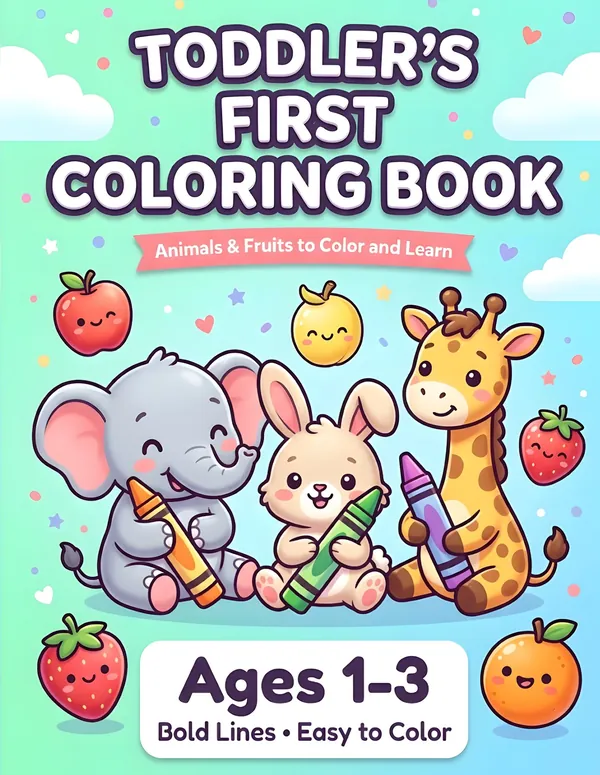 The Artist Todlers First Coloring Ages 1+: Animals and Fruits to Color and Learn Bold Lines That Help Toddler’s Stay Within the Lines for Toddler's Ages 1-3 PaperbackView on Amazon →
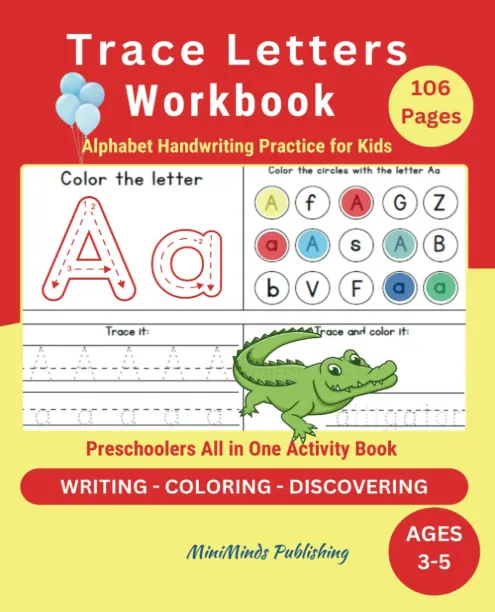 Trace Letters Alphabet Handwriting Practice for Kids Ages 3-5 Workbook: Preschoolers All in One Activity Book Writing Coloring DiscoveringView on Amazon →
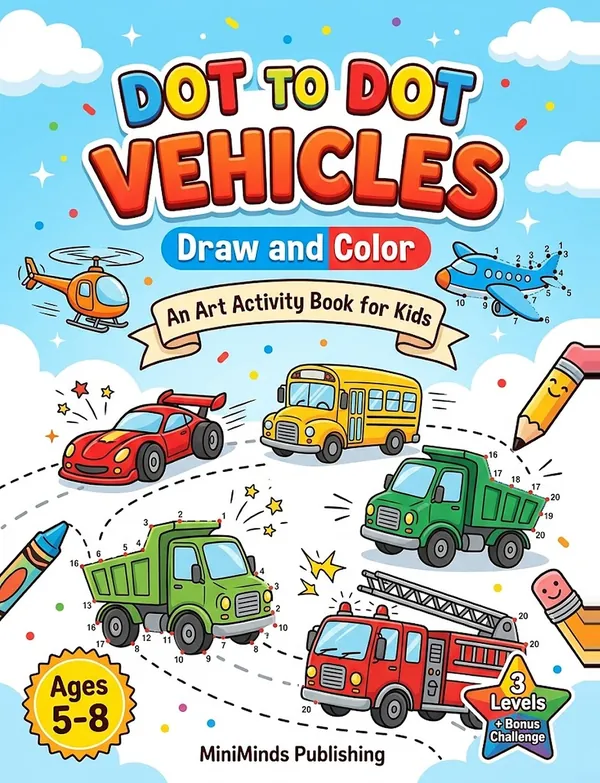 Dot to Dot: Draw and Color: An Art Activity Book for Kids PaperbackView on Amazon →