1st Grade Reading & Writing Worksheets
Word families, blends, digraphs, silent e, grammar and reading passages. · RF.1 / L.1 / RL.1 / W.1
All 30 worksheets
Tap a sheet to open it full size
Save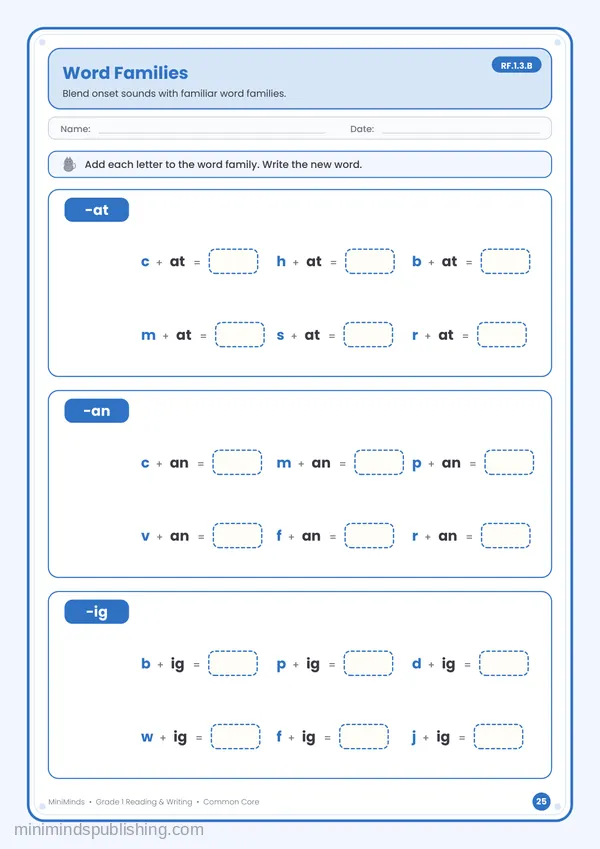
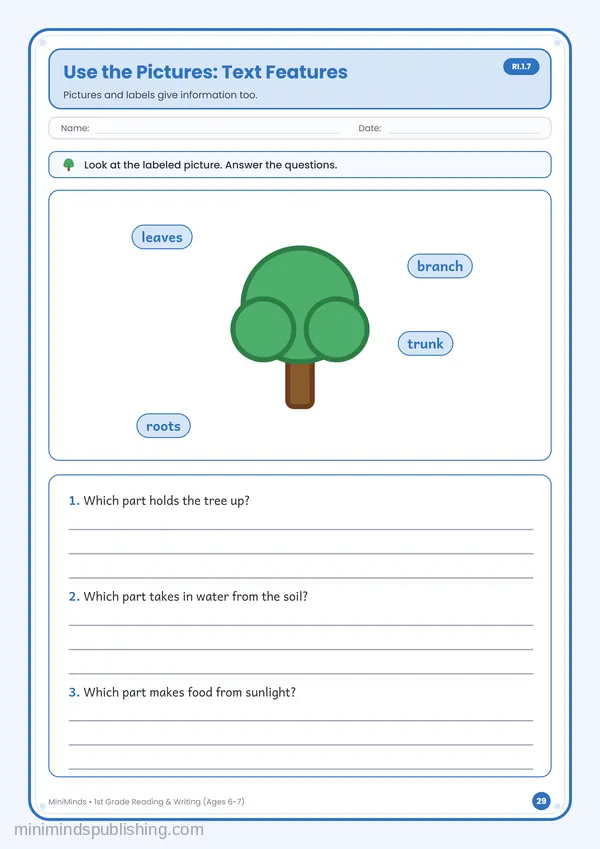
About these 1st grade reading & writing worksheets
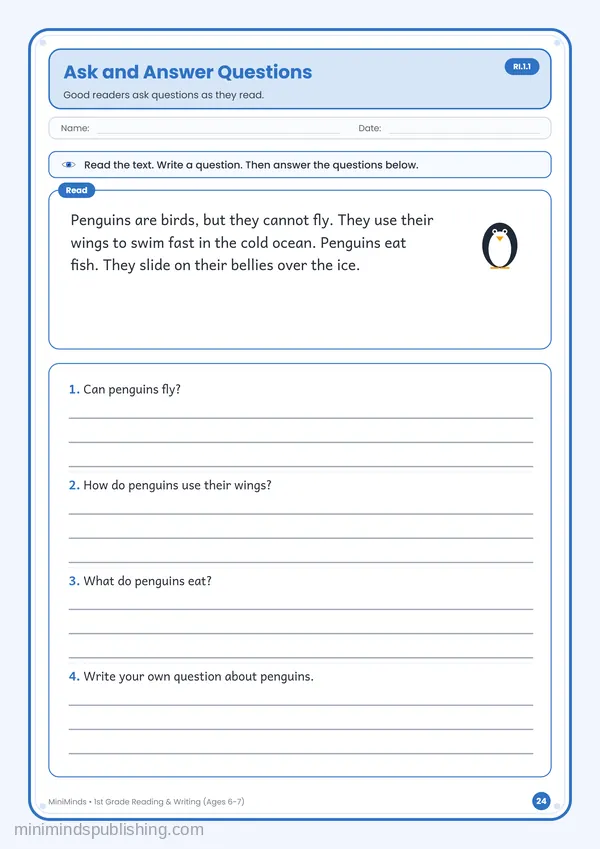
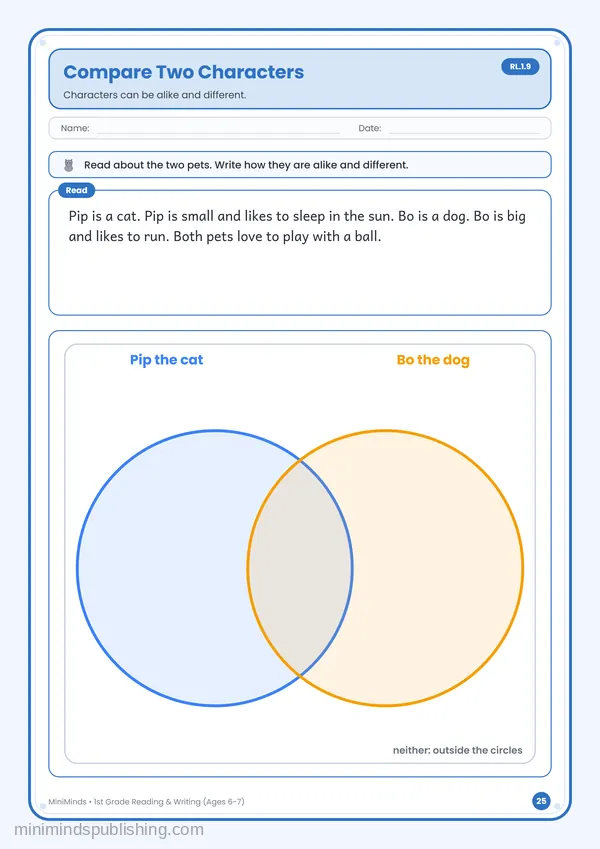
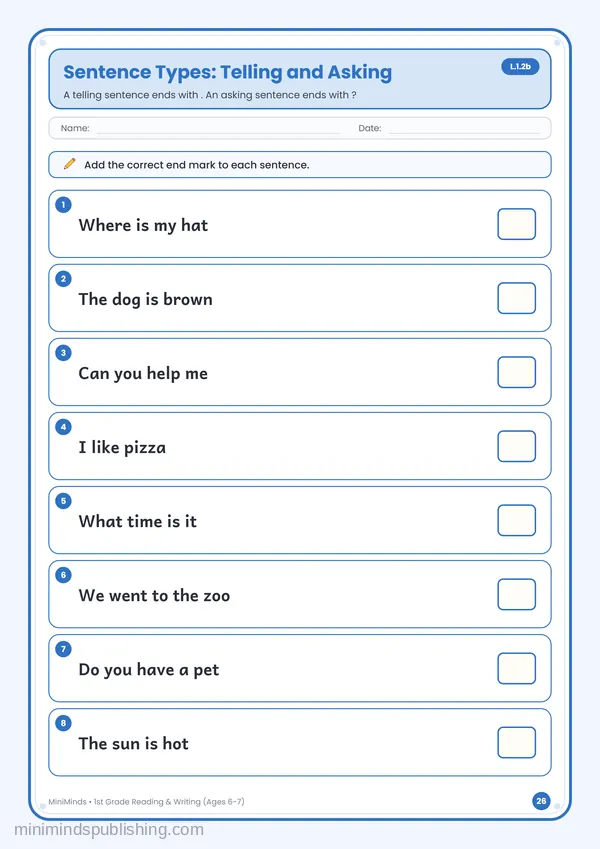
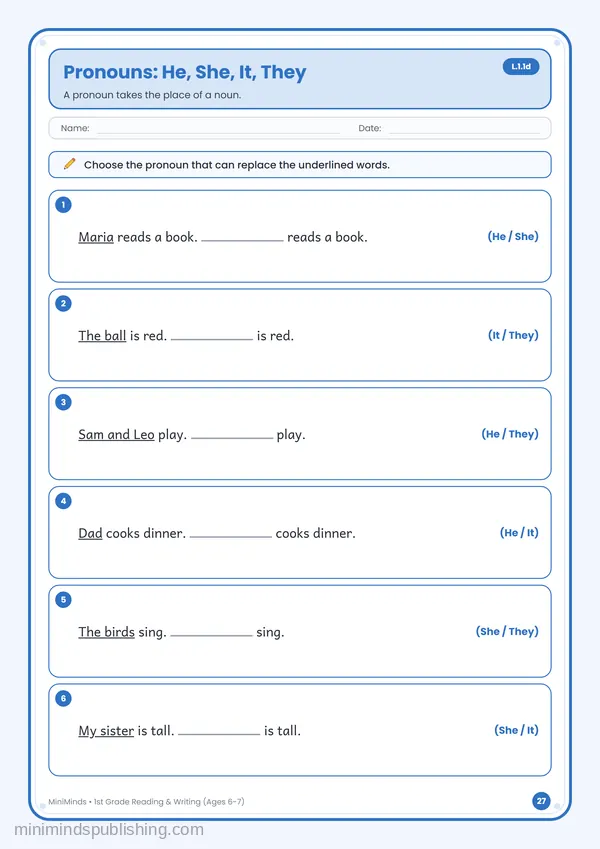
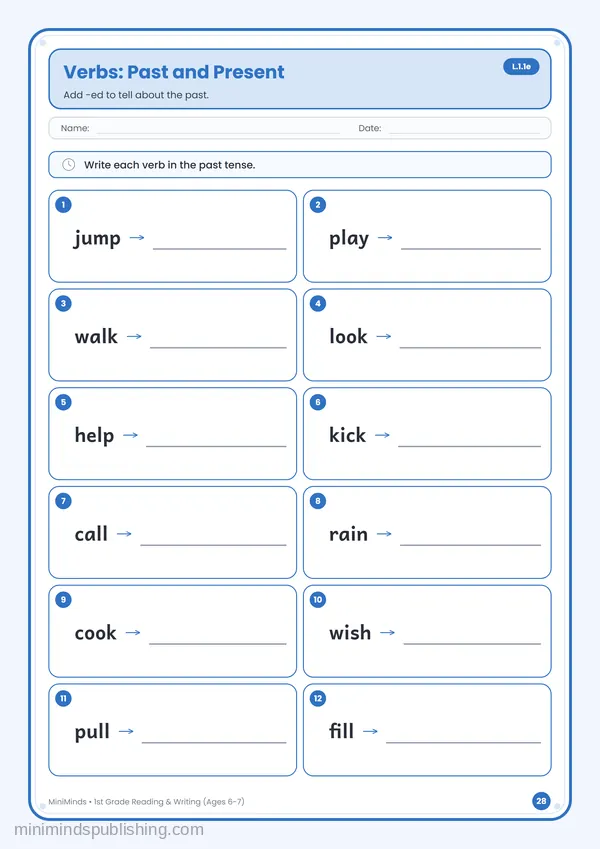
These 1st grade reading and writing worksheets cover the year phonics gets systematic and comprehension begins: word families, short and long vowels with silent e, beginning blends, consonant digraphs, nouns and verbs, plurals with -s and -es, describing words, capital letters and end marks, a first-next-last writing planner, plus reading passages — stories and non-fiction texts — with questions on key details, story elements, sequence and main idea.
The passages are the part that matters most. First grade is where reading stops being about decoding words and starts being about understanding them, and a child who decodes fluently but cannot answer a question about what they read needs the comprehension sheets more than the phonics ones.
What these 30 worksheets cover
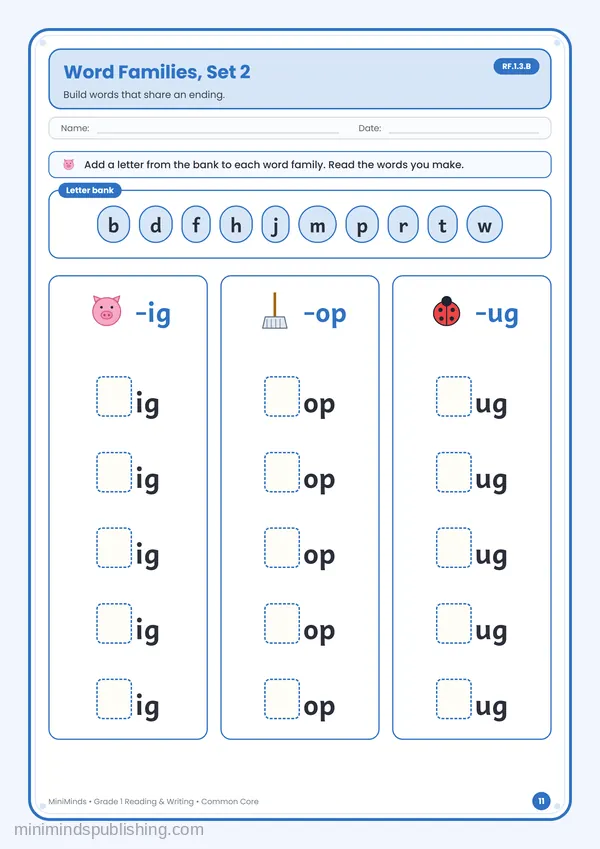
- Word families and common spelling patterns (RF.1.3.B)
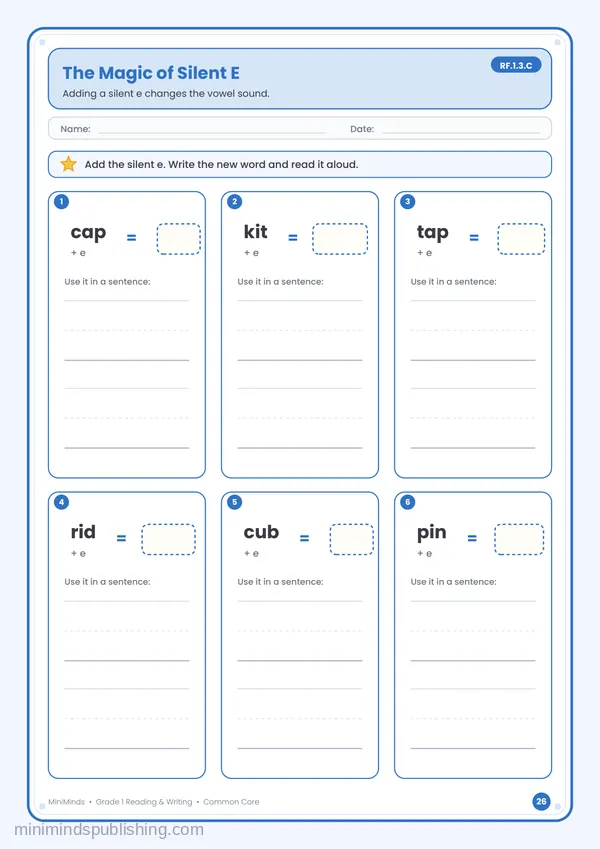
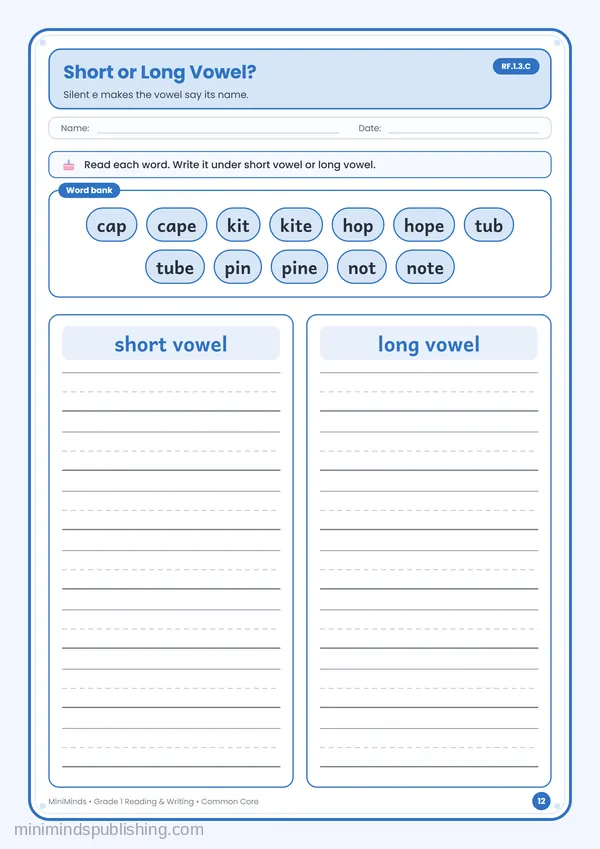
- Silent e and how it changes the vowel (RF.1.3.C)
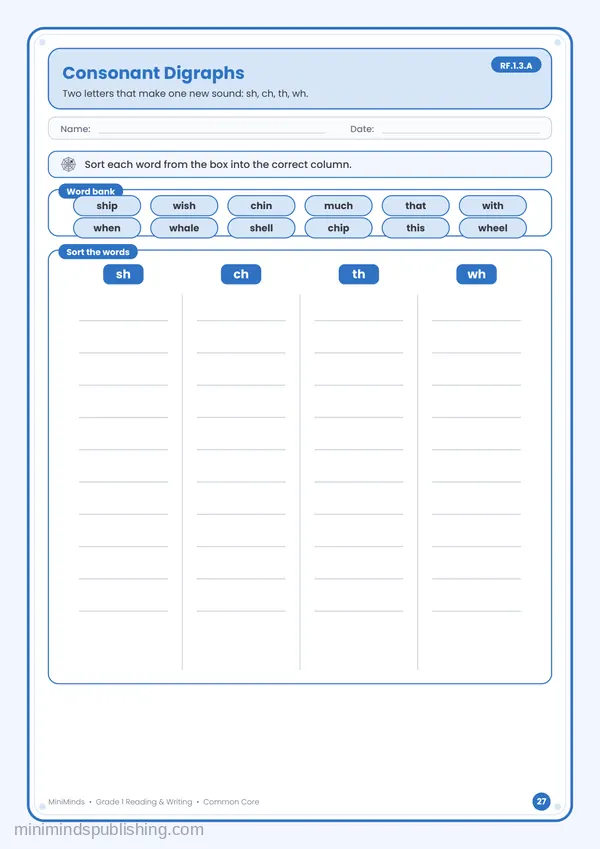
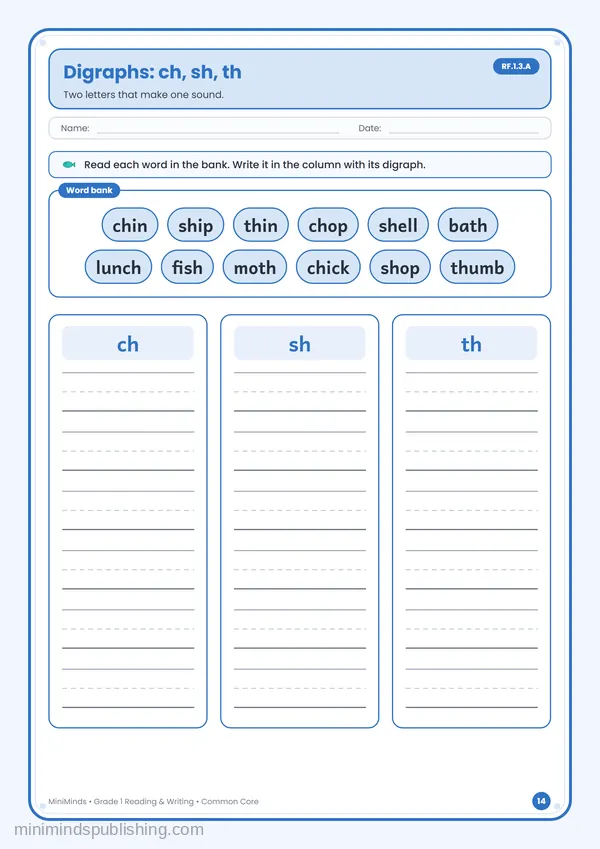
- Consonant digraphs: sh, ch, th, wh (RF.1.3.A)
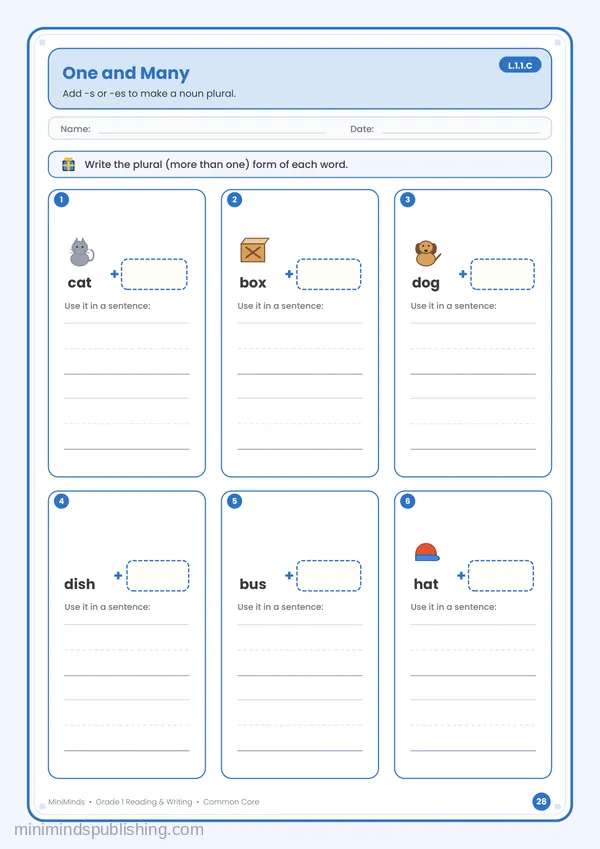
- Singular and plural nouns (L.1.1.C)
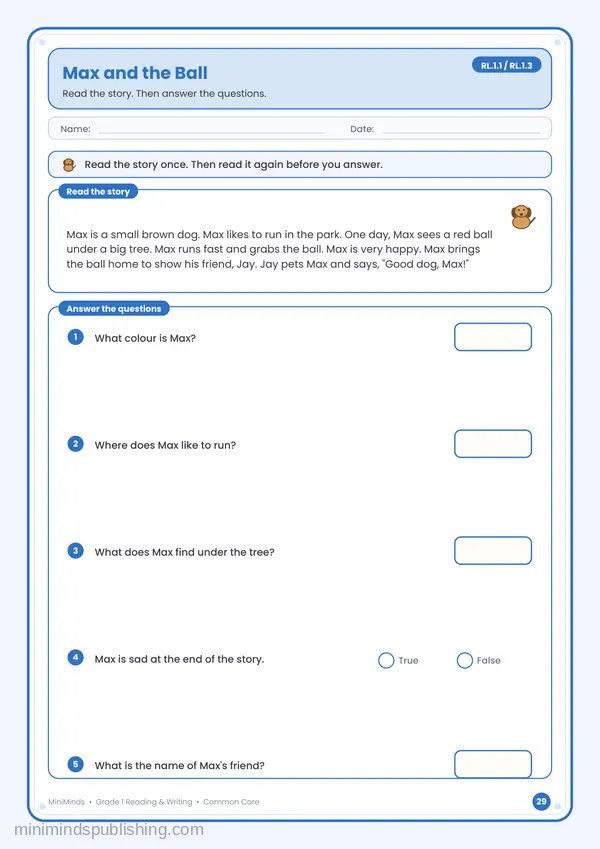
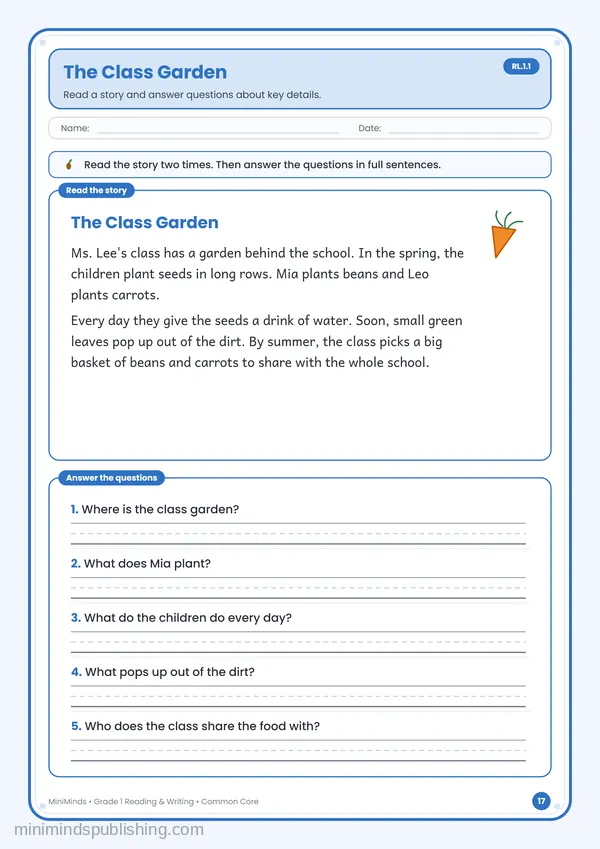
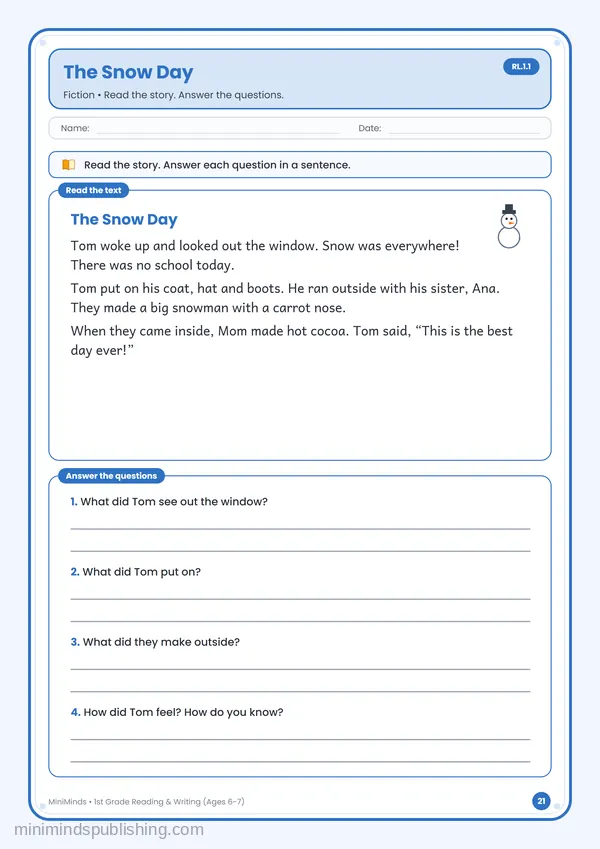
- A fiction passage with comprehension questions (RL.1.1, RL.1.3)
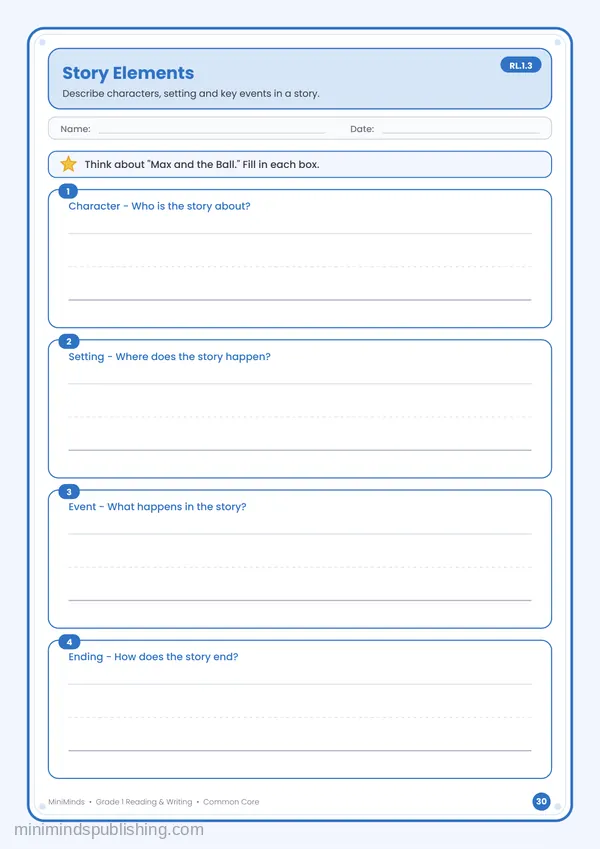
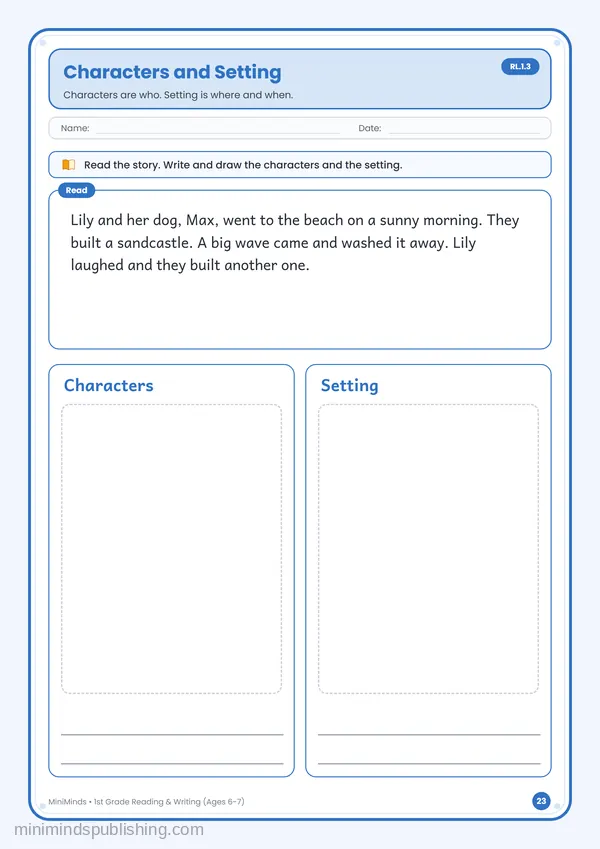
- Story elements — character, setting, events (RL.1.3)
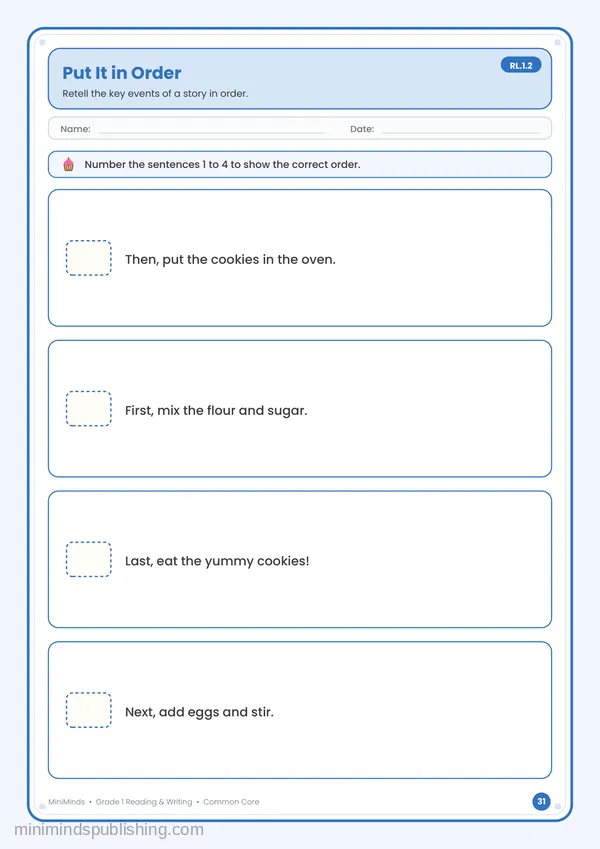
- Putting events in order (RL.1.2)
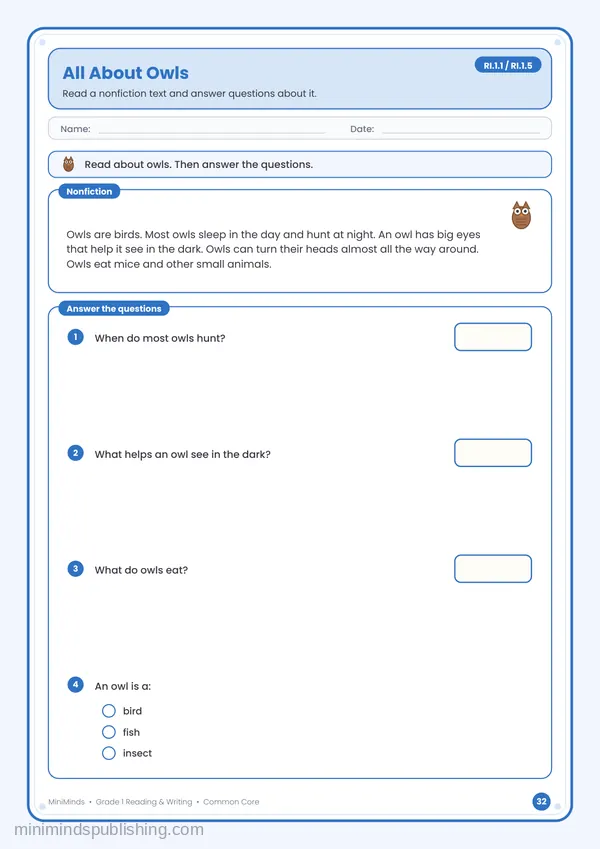
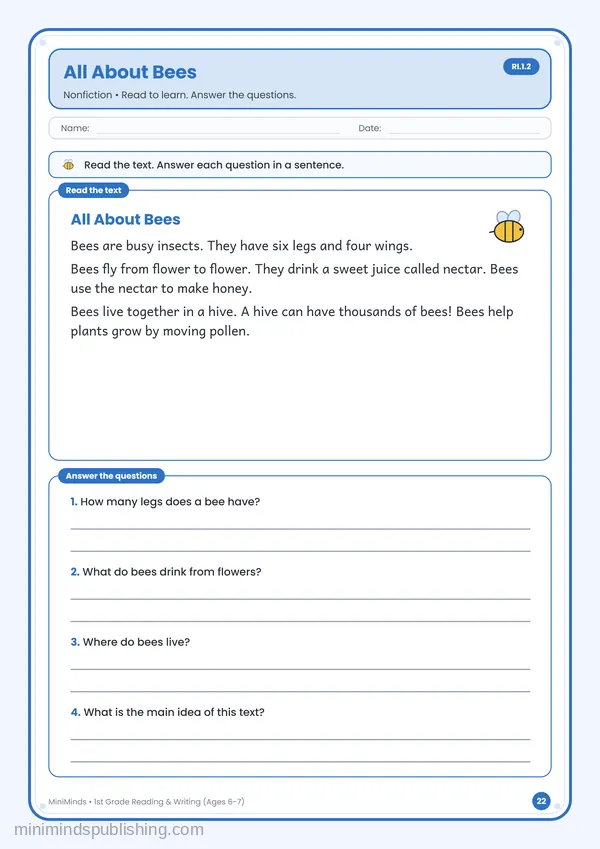
- A non-fiction passage about owls (RI.1.1, RI.1.5)
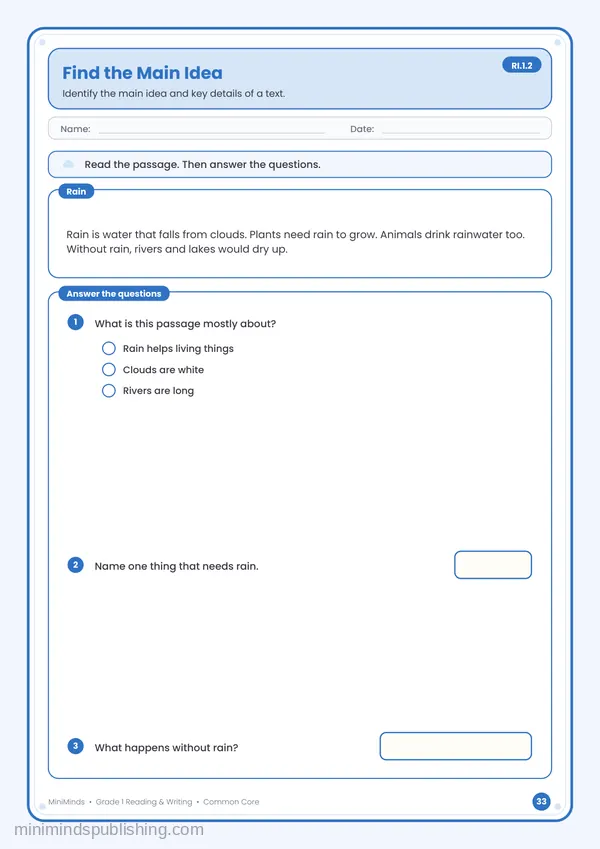
- Finding the main idea of an informational text (RI.1.2)
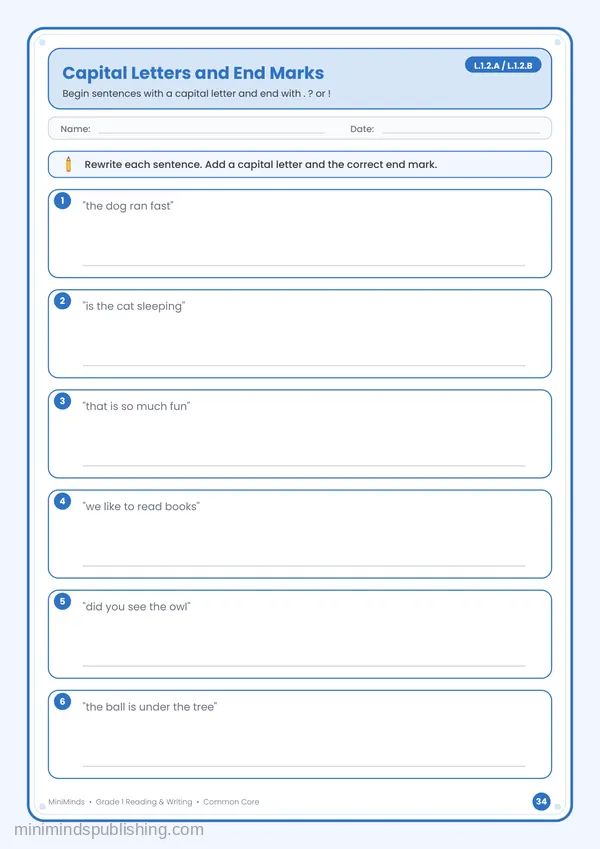
- Capital letters and end punctuation (L.1.2.A, L.1.2.B)
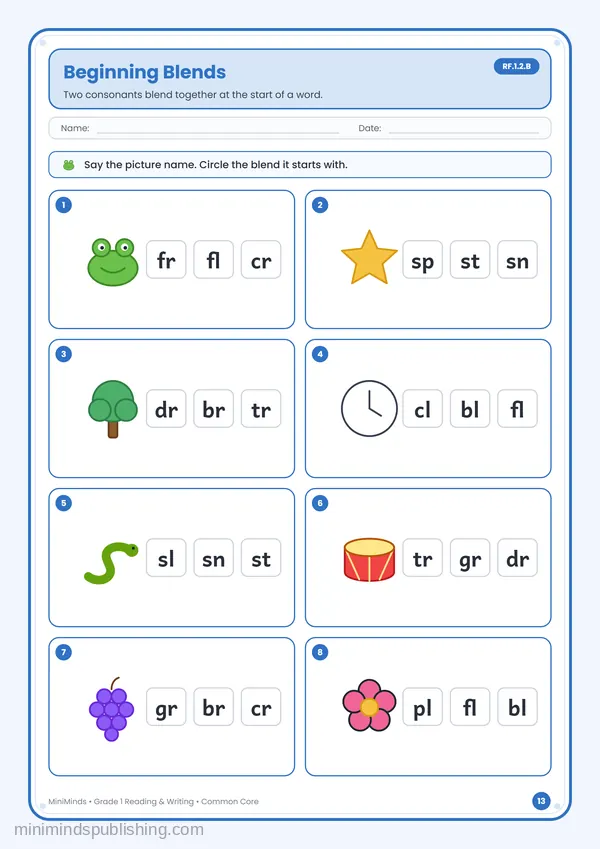
- Beginning blends: fr, st, tr, cl, sn, dr, gr, fl (RF.1.2.B)
- Sorting short and long vowel words (RF.1.3.C)
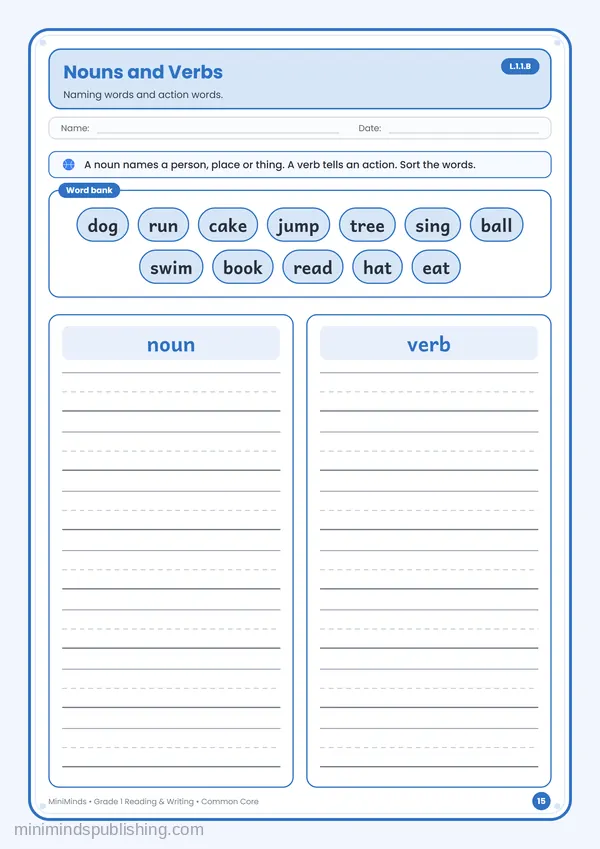
- Nouns and verbs (L.1.1.B)
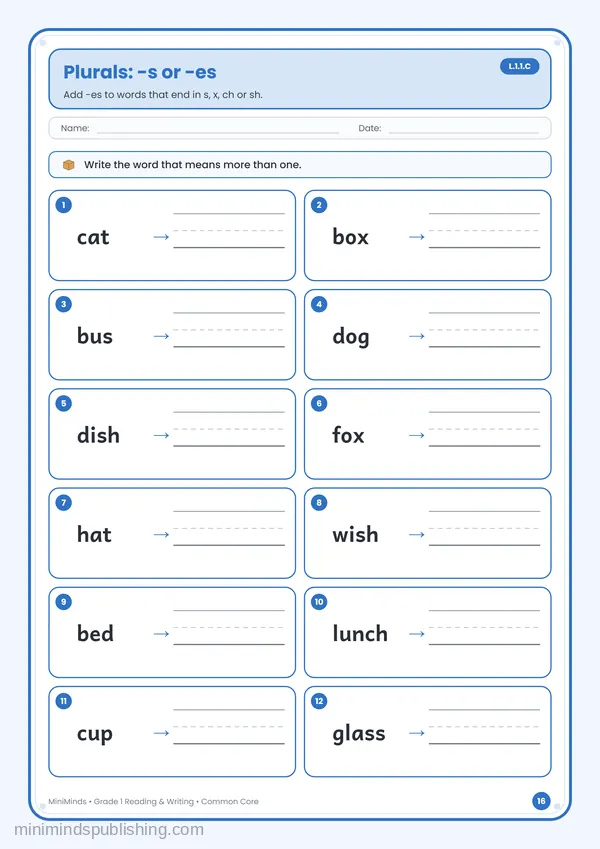
- Plurals with -s and -es (L.1.1.C)
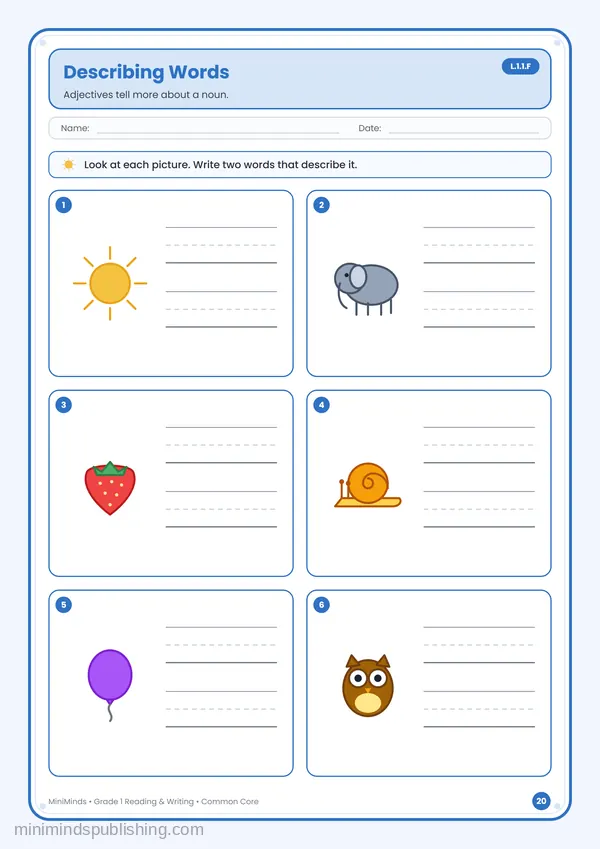
- Describing words / adjectives (L.1.1.F)
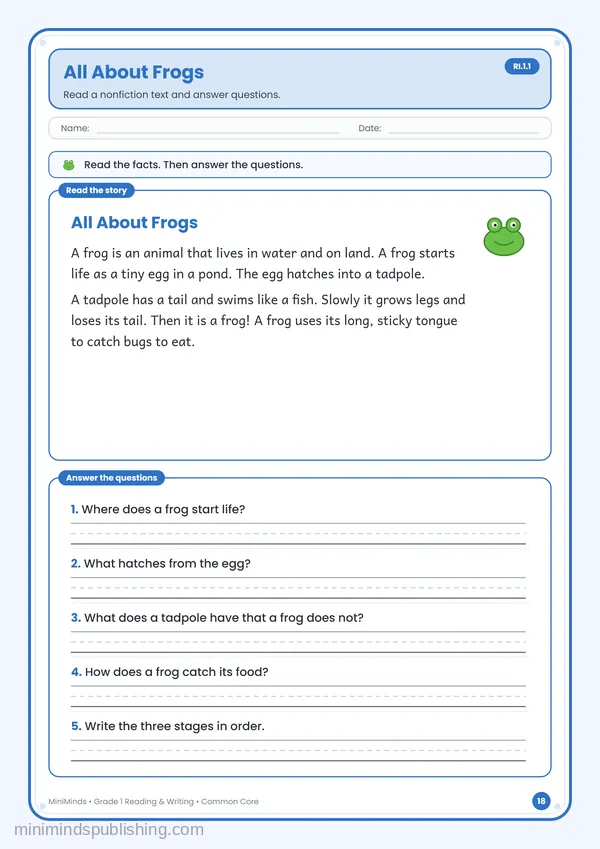
- Two more passages: "The Class Garden" (RL.1.1) and "All About Frogs" (RI.1.1)
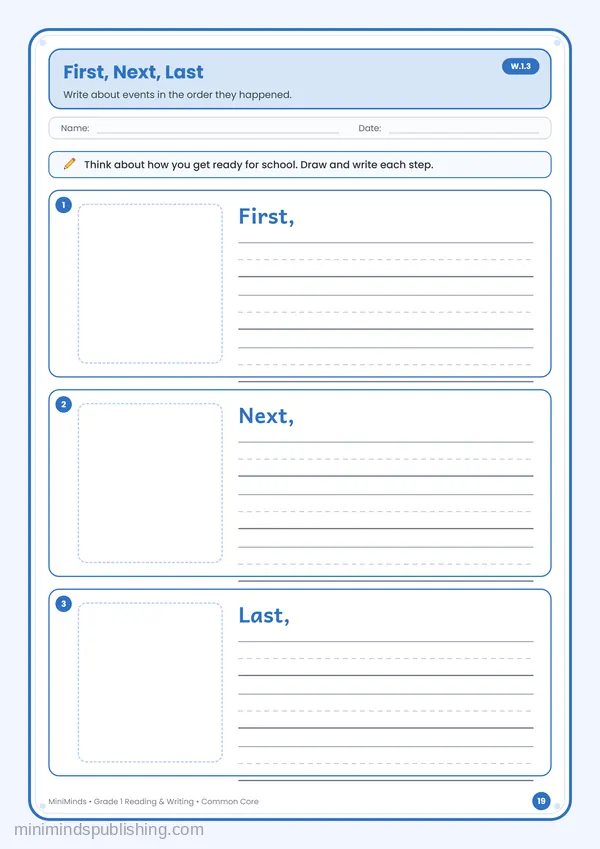
- Writing events in order with First, Next, Last (W.1.3)
All worksheet sets
How to get the most out of them
- 1
Do "The Magic of Silent E" with a pencil in hand: have your child write the word without the e, read it, then add the e and read it again. Hearing the vowel change themselves is what makes the rule stick.
- 2
Read each passage twice. Once for the story, once for the questions. Almost every first-grade comprehension error comes from answering after a single read.
- 3
Do not skip the non-fiction passage. Informational text is roughly half of what is assessed from first grade onward and is the kind children get least practice with at home.
- 4
For "Capital Letters and End Marks", use your child's own writing as the follow-up exercise. Correcting their sentence teaches more than correcting a stranger's.
1st Grade Reading & Writing Worksheets — questions parents ask
- What reading level should a 1st grader reach?
- By the end of first grade most children read simple texts fluently enough to answer questions about them — decoding regular words, handling digraphs and silent e, and retelling key details. This set practises each of those.
- What is the difference between RL and RI standards?
- RL covers literature — stories, characters, plot. RI covers informational text — facts, main ideas, text features. Both are assessed from first grade, and this set includes a passage for each: "Max and the Ball" for RL, "All About Owls" for RI.
- My child reads well but cannot answer the questions. Which sheets help?
- Start with "Story Elements" and "Put It in Order", then "Find the Main Idea". Fluent decoding with weak comprehension is common and specific — it responds to retelling practice, not to more phonics.
- Can the worksheets and coloring pages be done online, without printing?
- Yes. Every sheet can also be completed online: open it in the free MiniMinds studio and fill it in, write, draw or color on a tablet (iPad, Android, Chromebook), phone, laptop or desktop computer — with a finger, stylus or mouse, no app or account needed. Finished pages can be printed or saved as an image.
Next steps after 1st Grade Reading & Writing Worksheets
Keep practising in Fun & Learn
Take a coloring break
📚 Want the printed book? From the MiniMinds bookshelf
Paperbacks on Amazon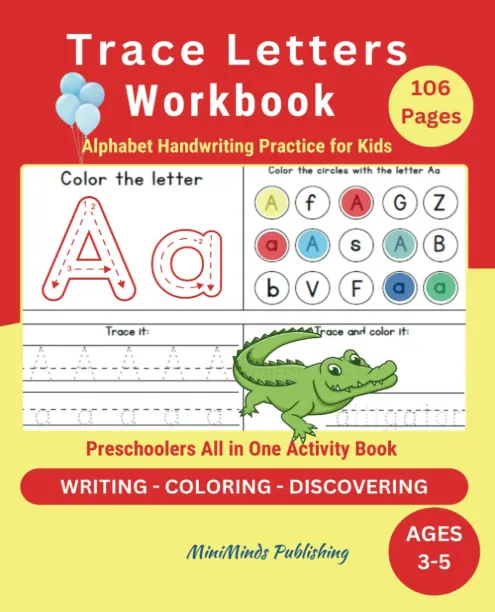 Trace Letters Alphabet Handwriting Practice for Kids Ages 3-5 Workbook: Preschoolers All in One Activity Book Writing Coloring DiscoveringView on Amazon →
 I Love My Books: Reading Log for Girls, Ages 6-12 HardcoverView on Amazon →
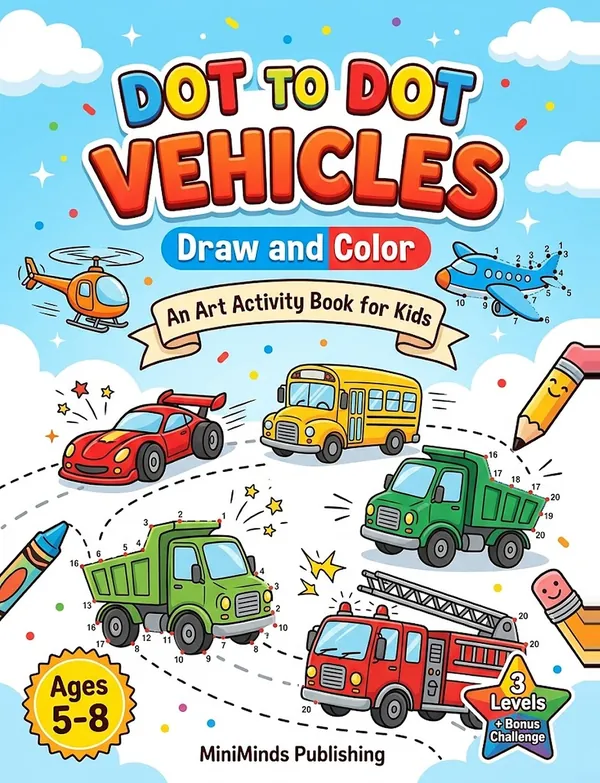 Dot to Dot: Draw and Color: An Art Activity Book for Kids PaperbackView on Amazon →