1st Grade Math Worksheets
Facts to 20, count to 120, tens and ones, time, measuring and tally charts. · 1.OA / 1.NBT / 1.MD / 1.G
All 30 worksheets
Tap a sheet to open it full size
Save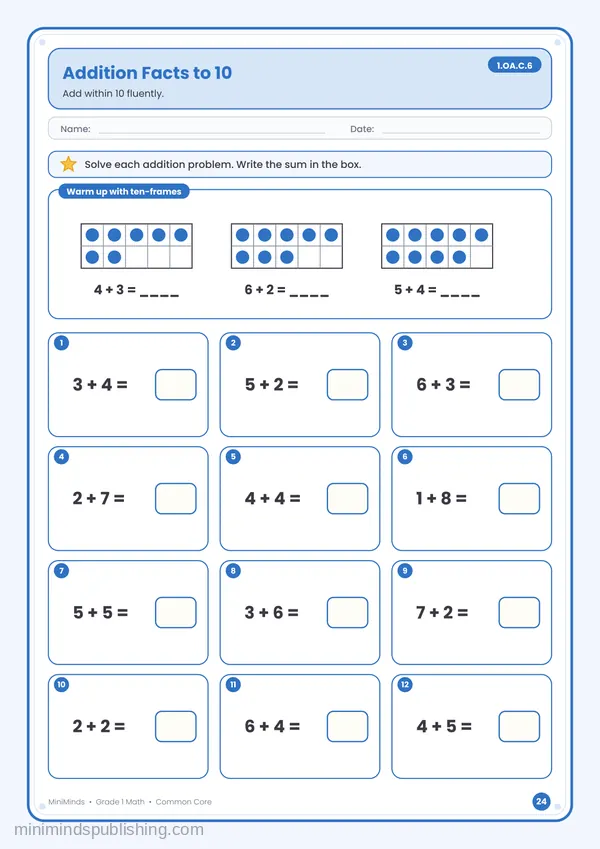
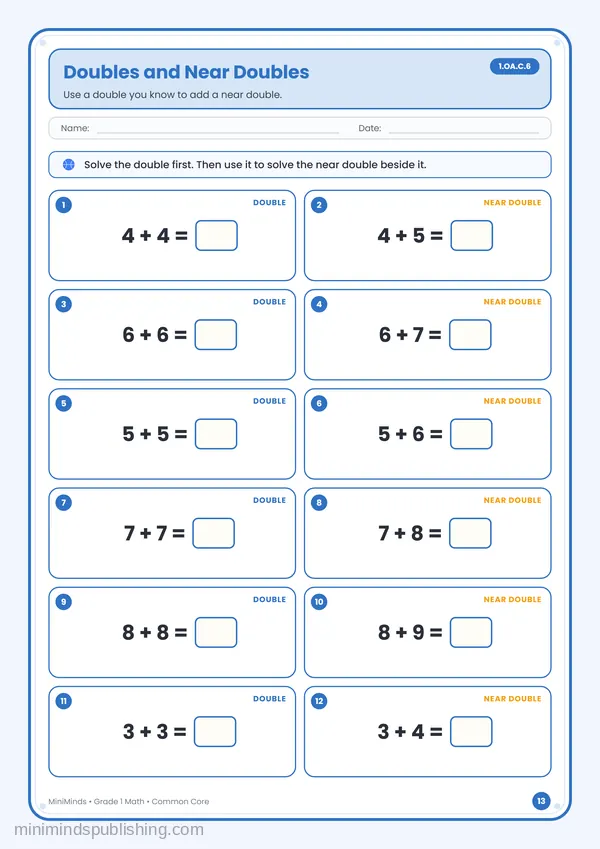
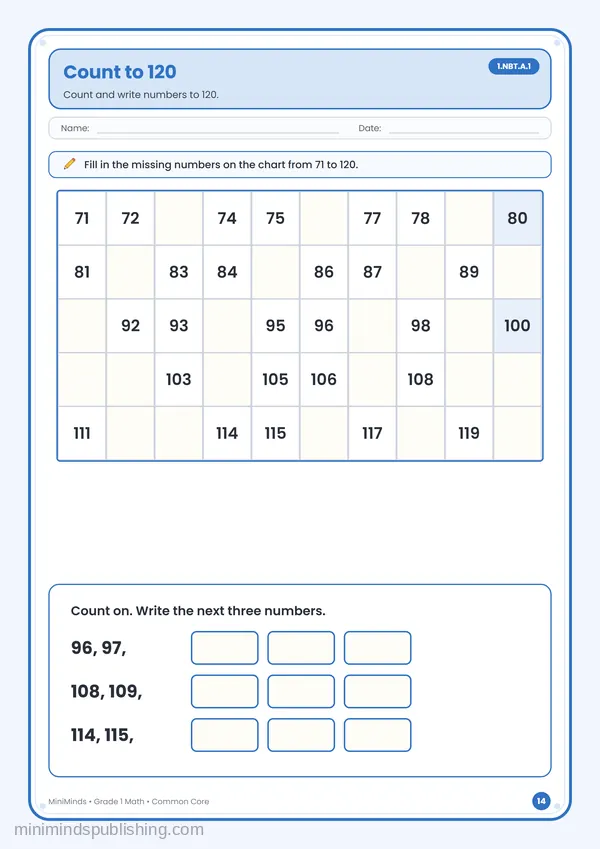
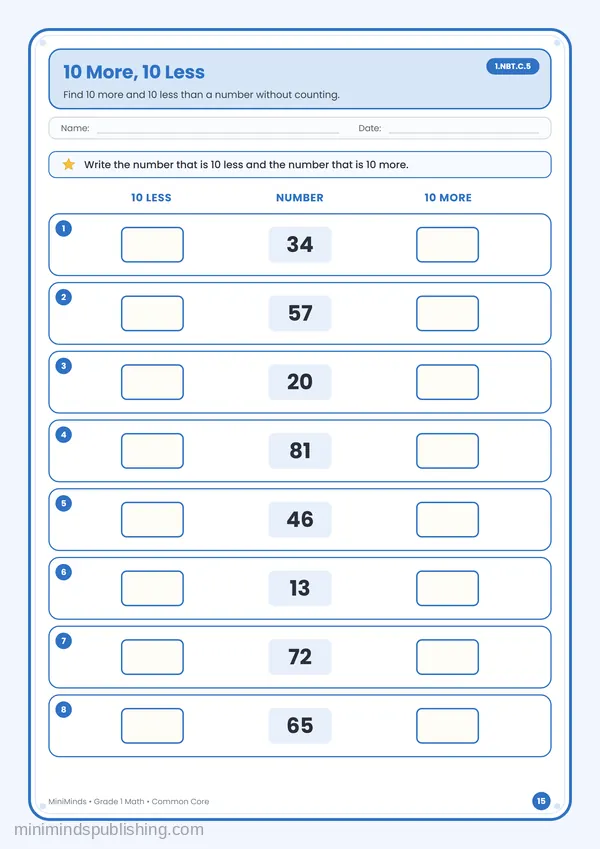
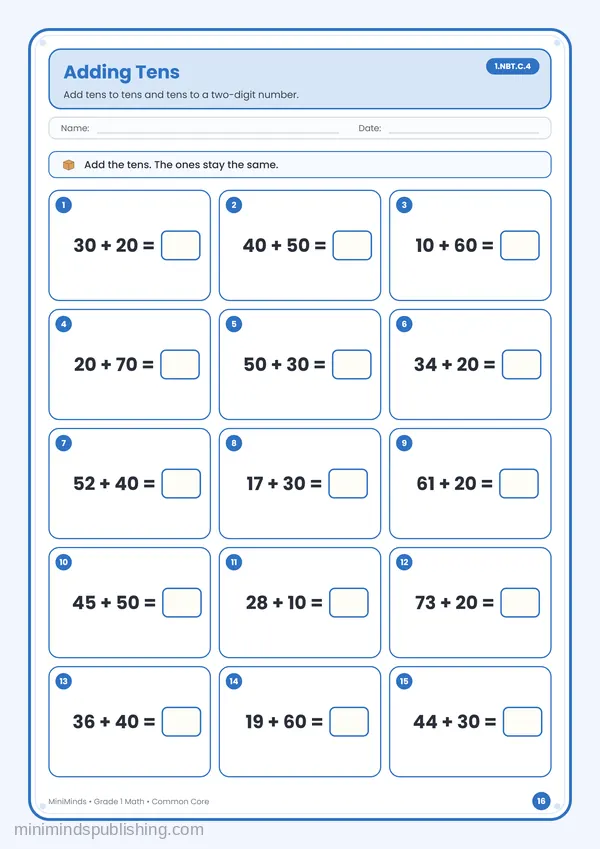
About these 1st grade math worksheets
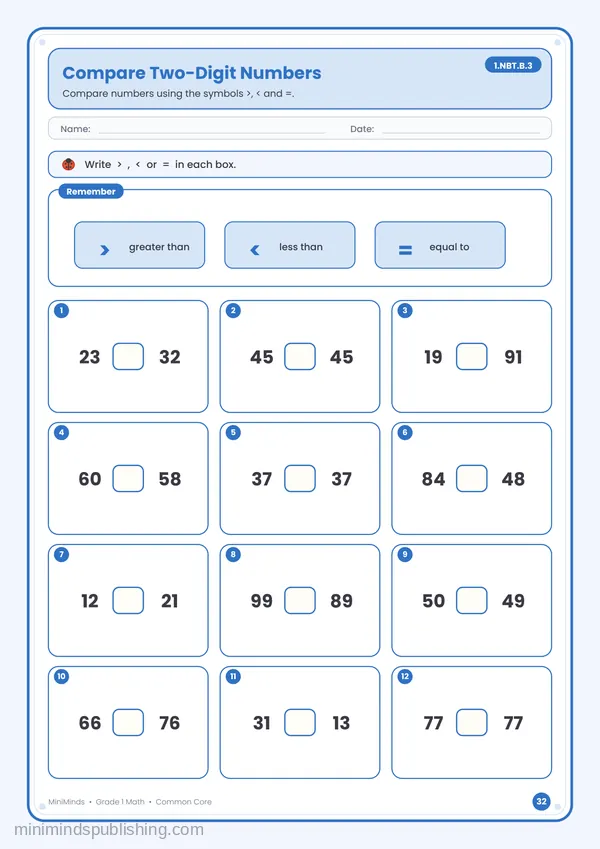
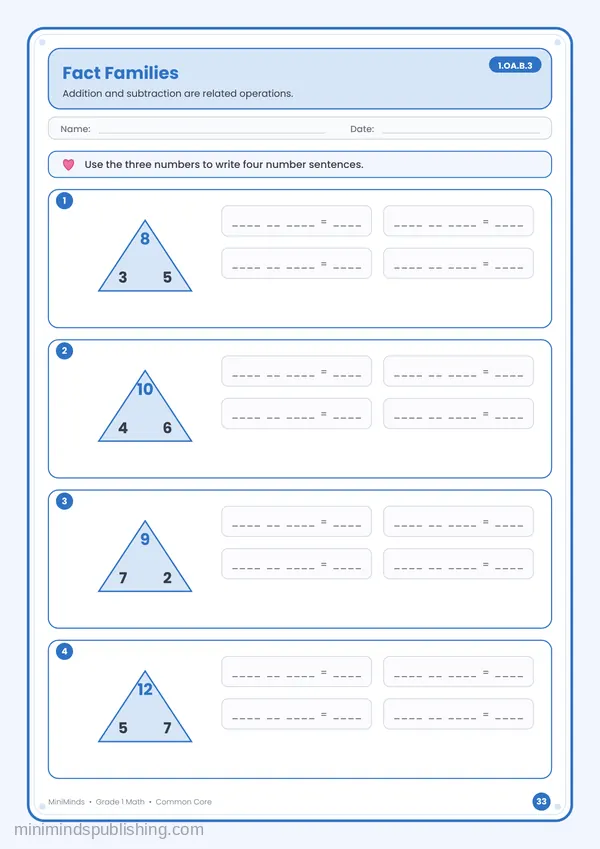
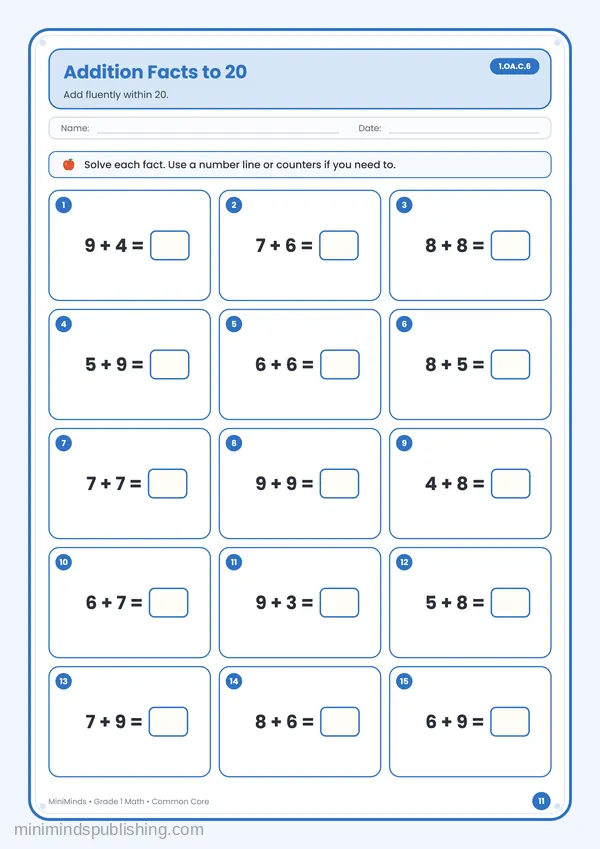
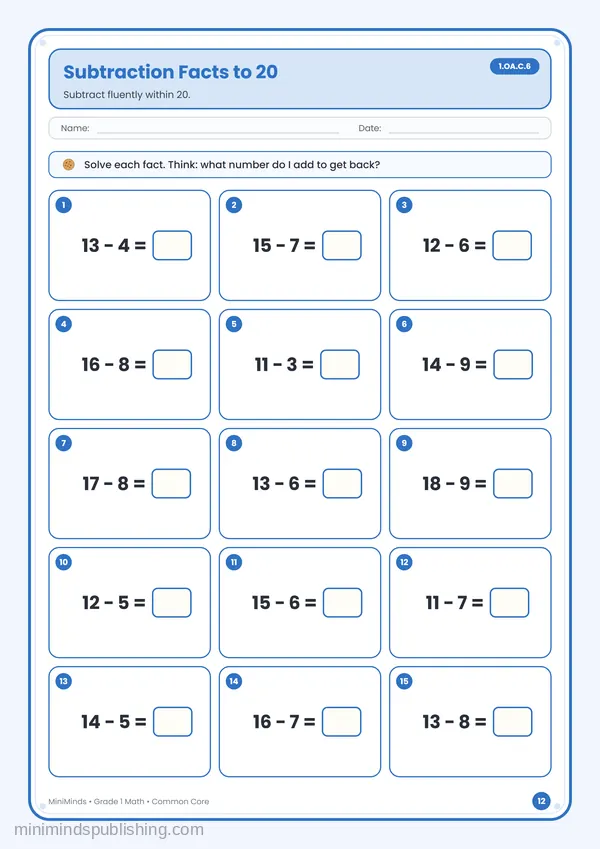
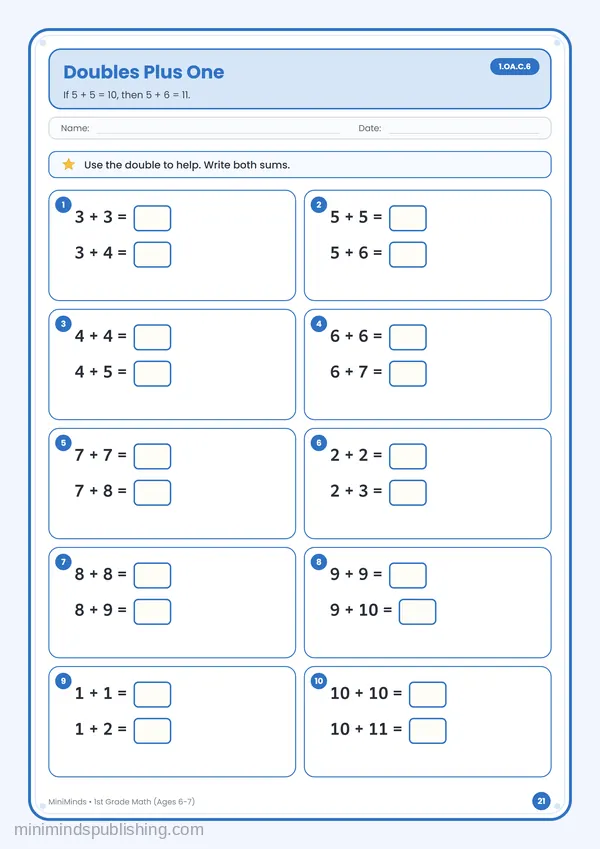
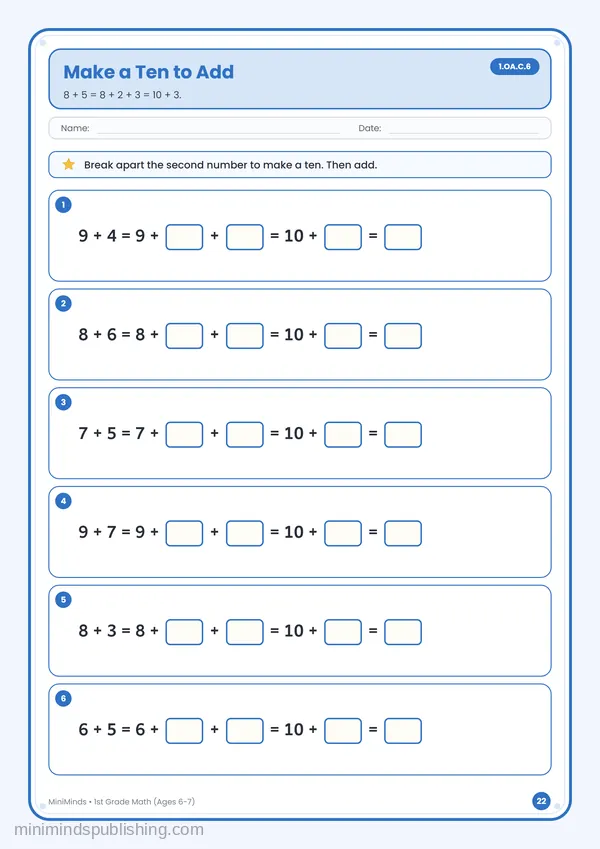
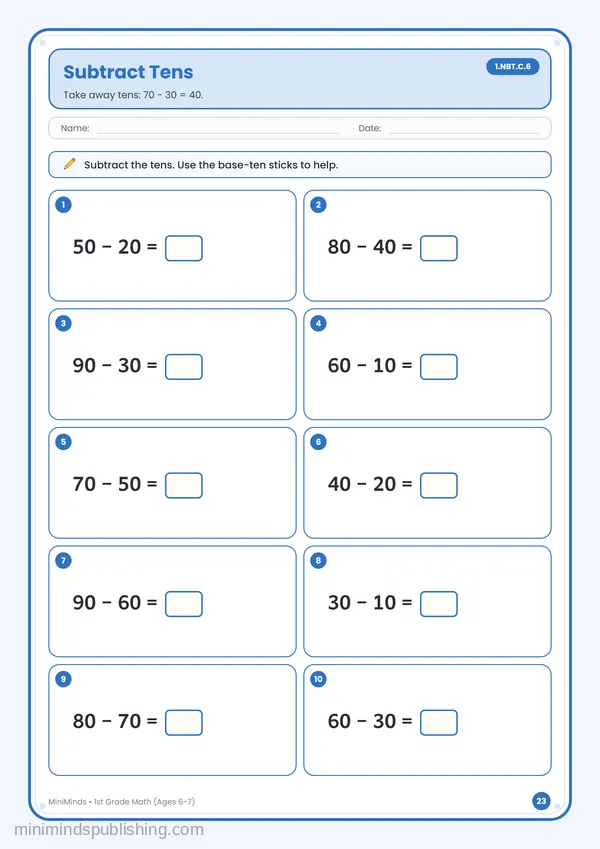
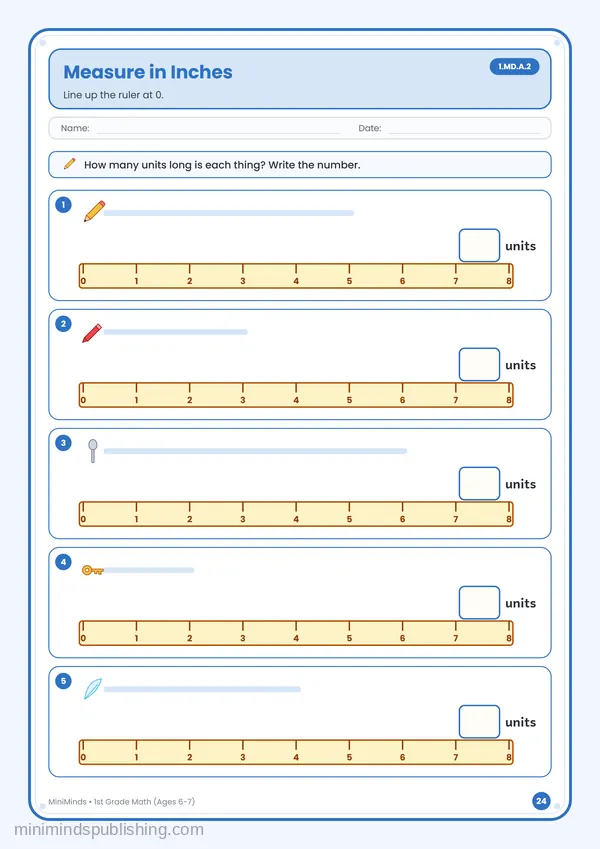
These 1st grade math worksheets cover the year as it is actually assessed: addition and subtraction facts to 10 and 20, doubles and near doubles, adding three numbers, missing addends, fact families, counting to 120, tens and ones, 10 more and 10 less, adding tens, comparing two-digit numbers, word problems, measuring with cubes, telling time to the half hour, reading a tally chart, and halves and fourths. Each sheet prints its Common Core code, so it can be matched to a specific lesson rather than used as generic practice.
First grade is the year fluency starts to matter. The facts sheets here are untimed on purpose — accuracy first, speed later — but they are built so the same page can be re-printed and timed once the answers are reliable.
What these 30 worksheets cover
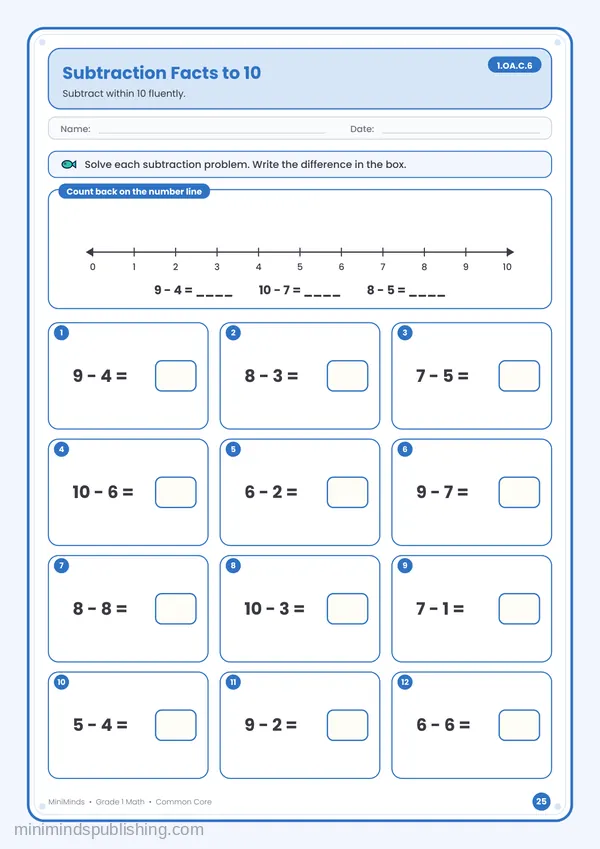
- Addition and subtraction facts to 10 and fluency to 20 (1.OA.C.6)
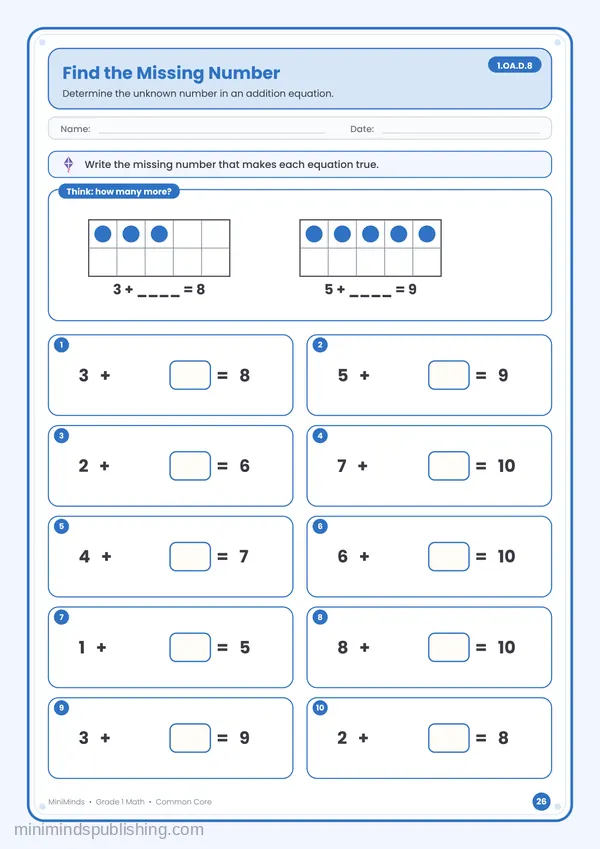
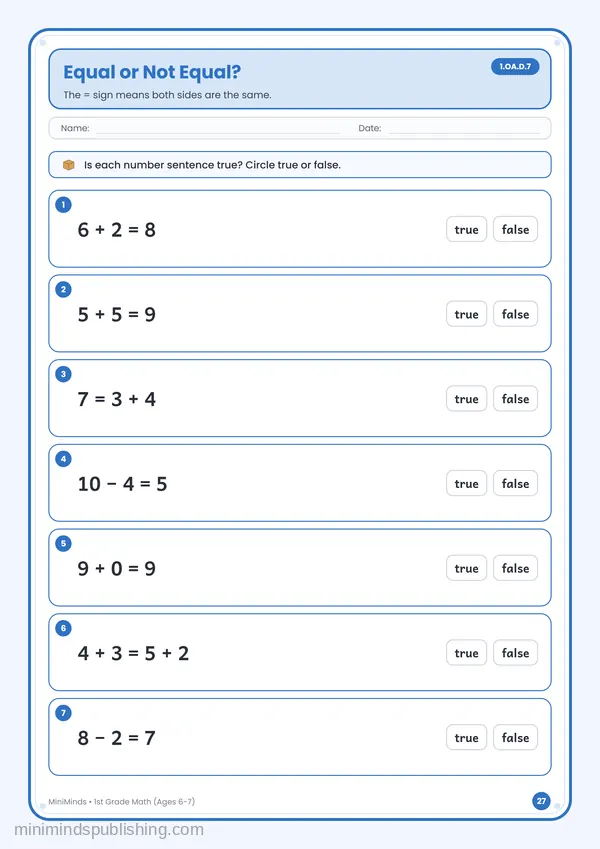
- Finding the missing number in an equation (1.OA.D.8)
- Fact families and the link between adding and subtracting (1.OA.B.3)
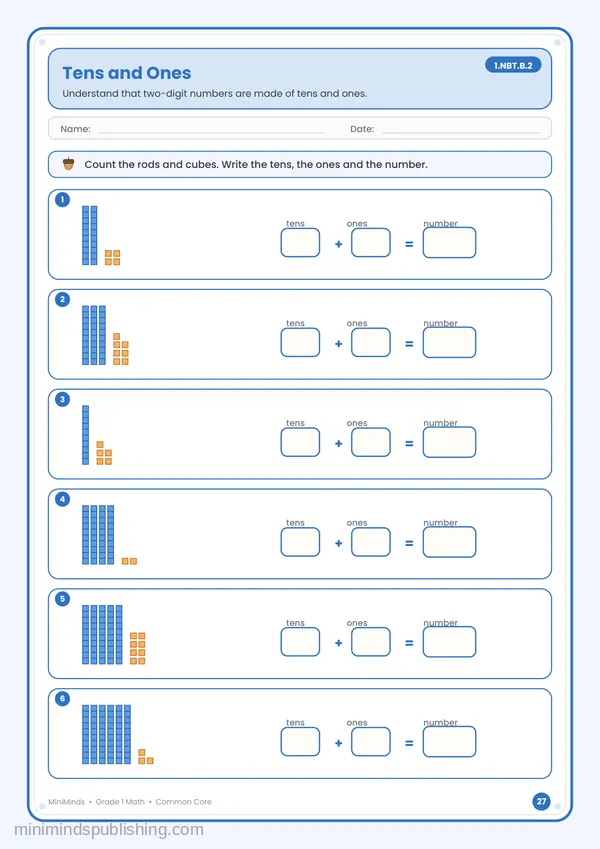
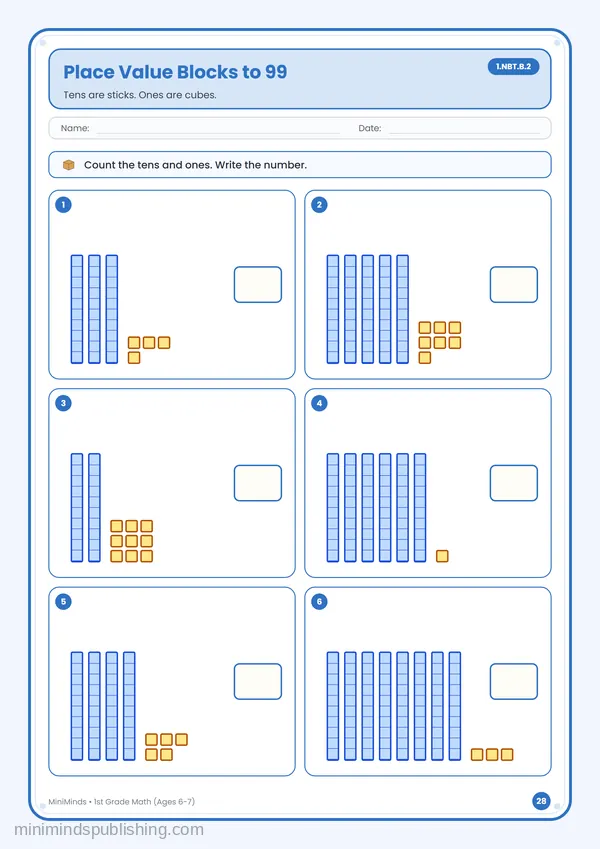
- Place value: tens and ones (1.NBT.B.2)
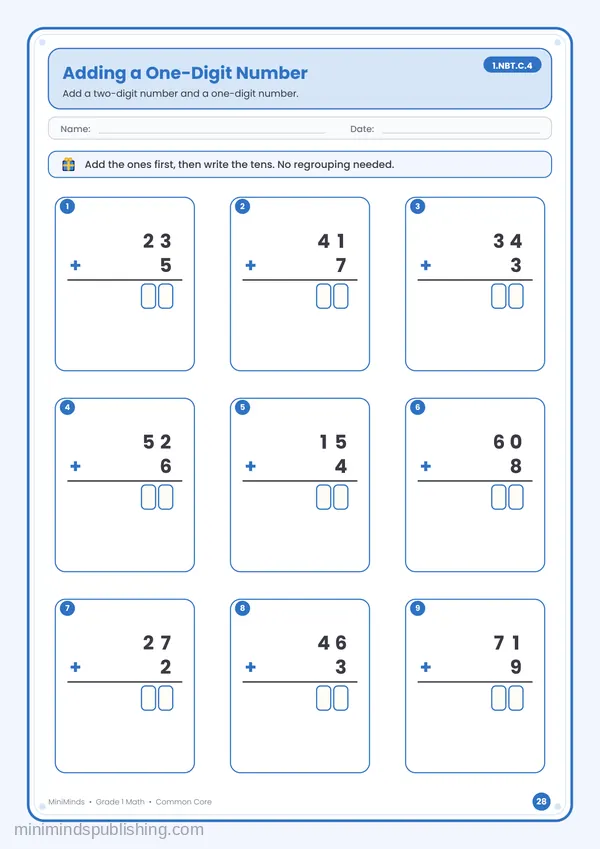
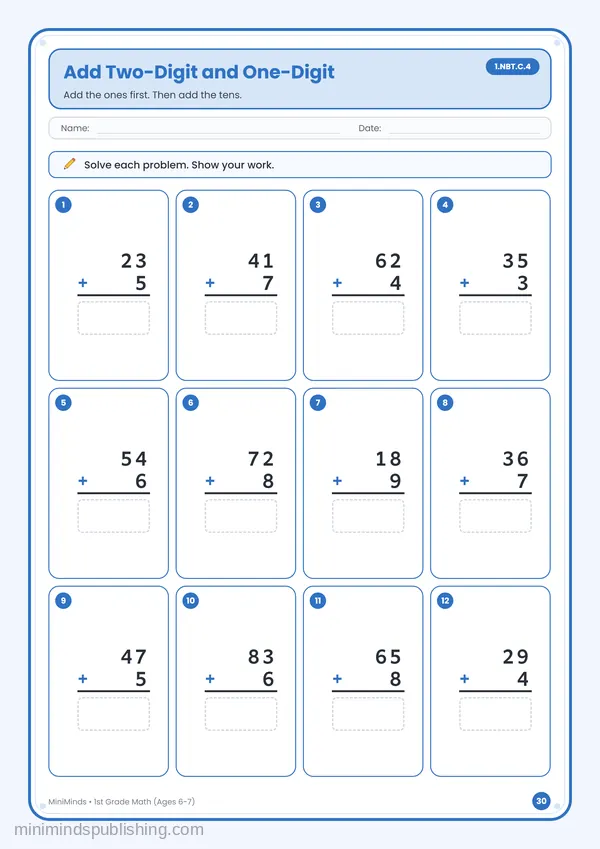
- Adding a one-digit number to a two-digit number (1.NBT.C.4)
- Comparing two-digit numbers with >, < and = (1.NBT.B.3)
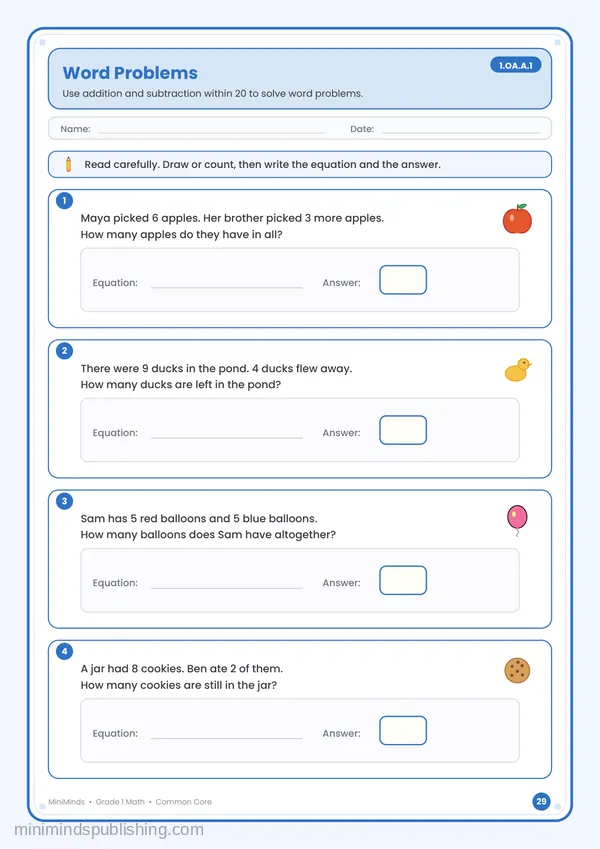
- One-step word problems (1.OA.A.1)
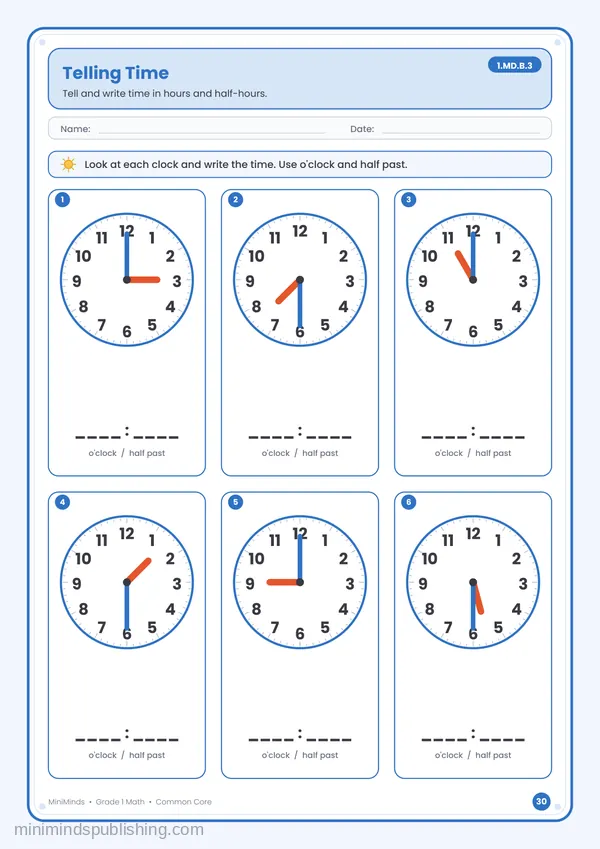
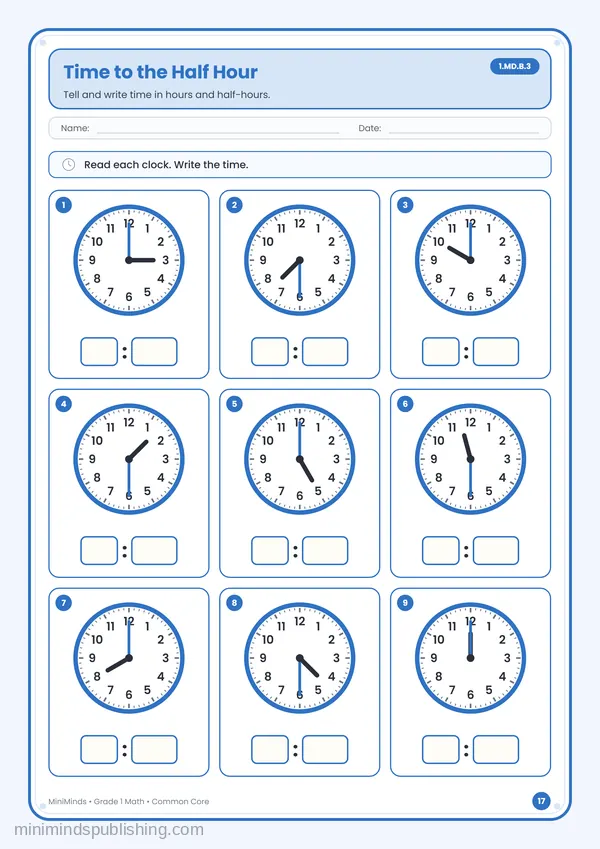
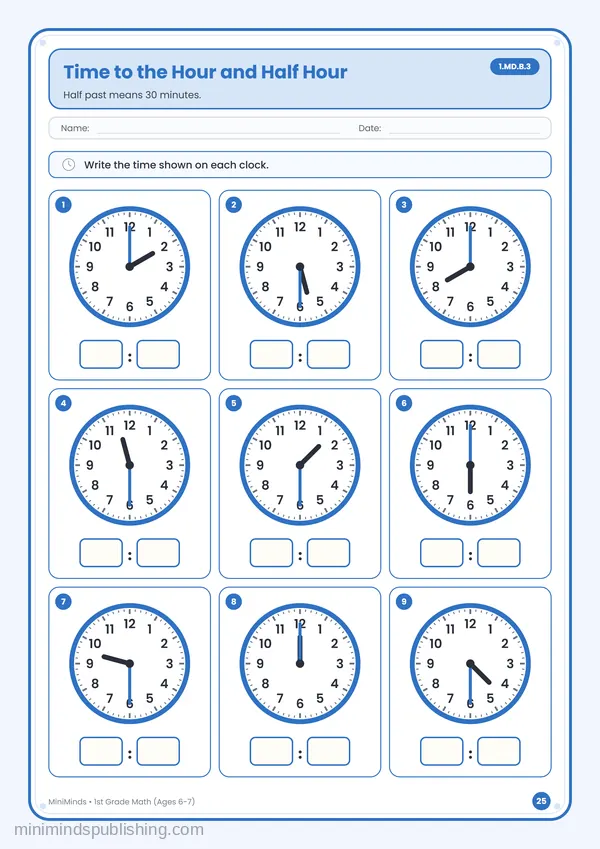
- Telling time to the hour and half hour (1.MD.B.3)
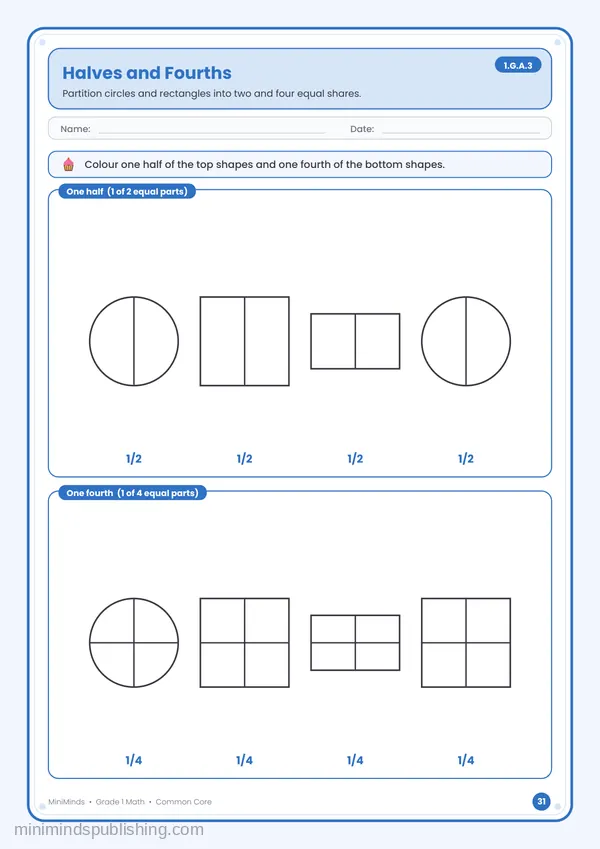
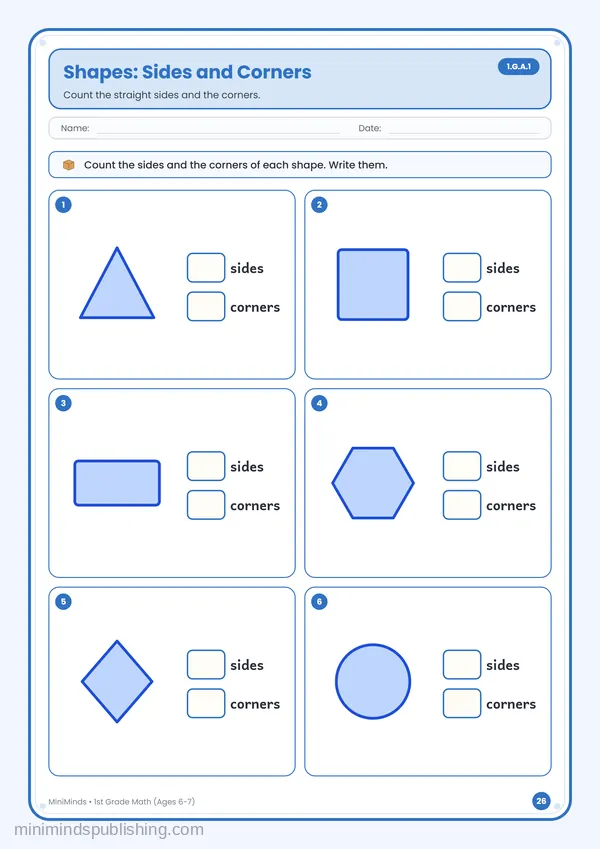
- Partitioning shapes into halves and fourths (1.G.A.3)
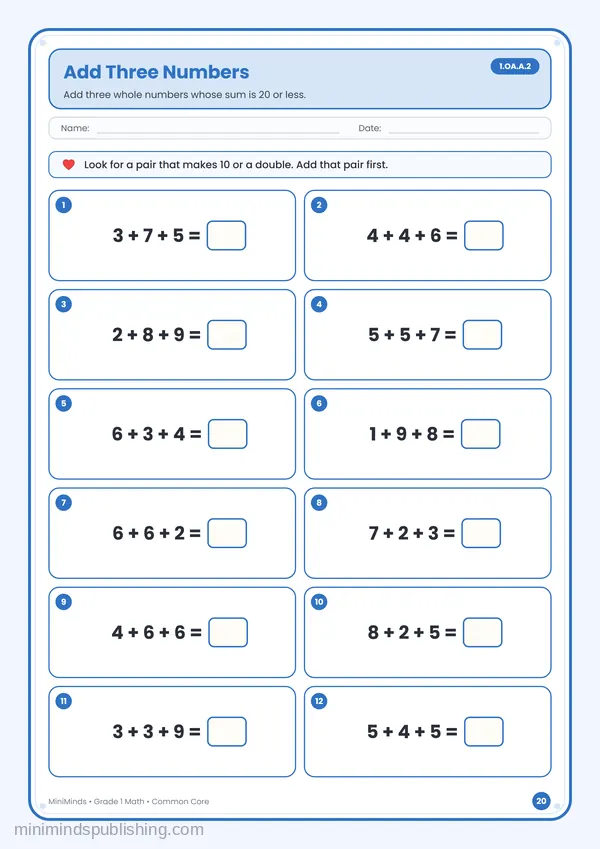
- Doubles, near doubles and adding three numbers (1.OA.C.6, 1.OA.A.2)
- Counting and writing numbers to 120 (1.NBT.A.1)
- Finding 10 more and 10 less, and adding tens (1.NBT.C.5, 1.NBT.C.4)
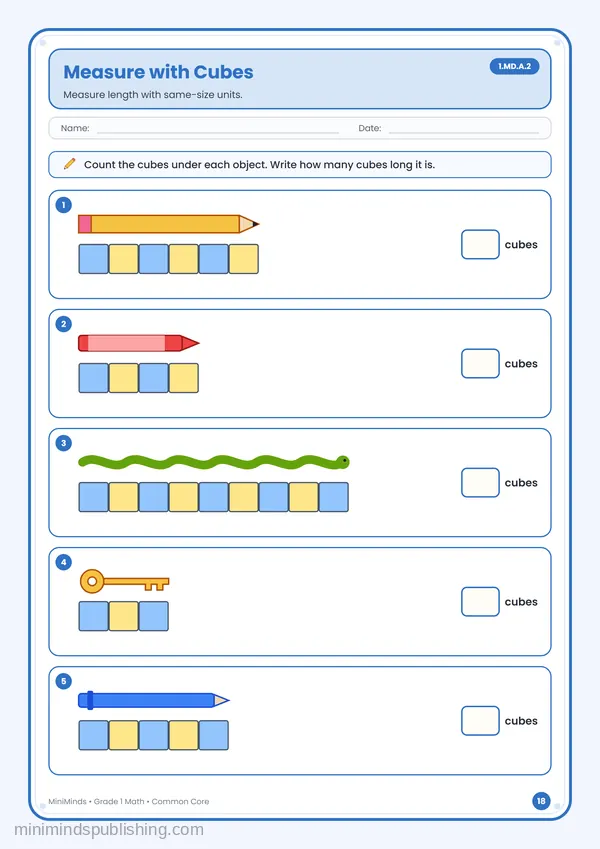
- Measuring length with cubes (1.MD.A.2)
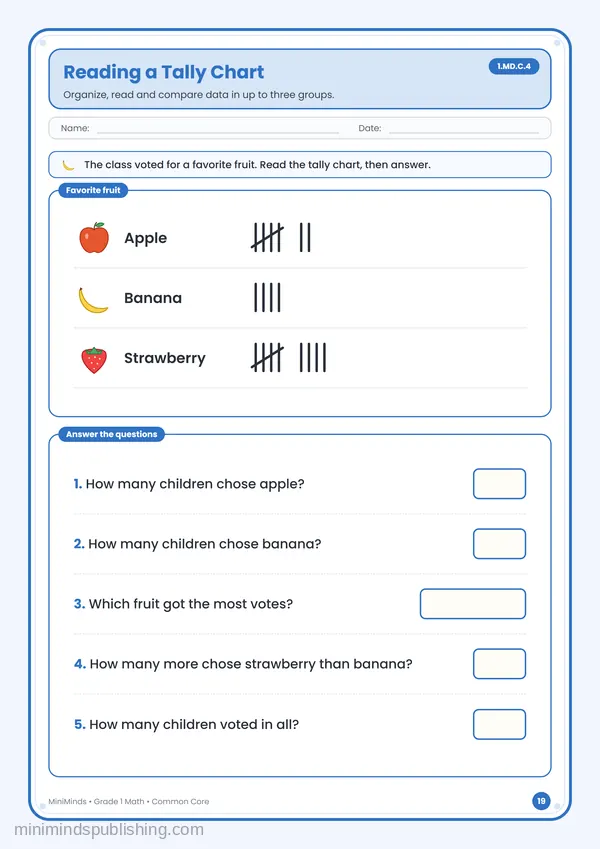
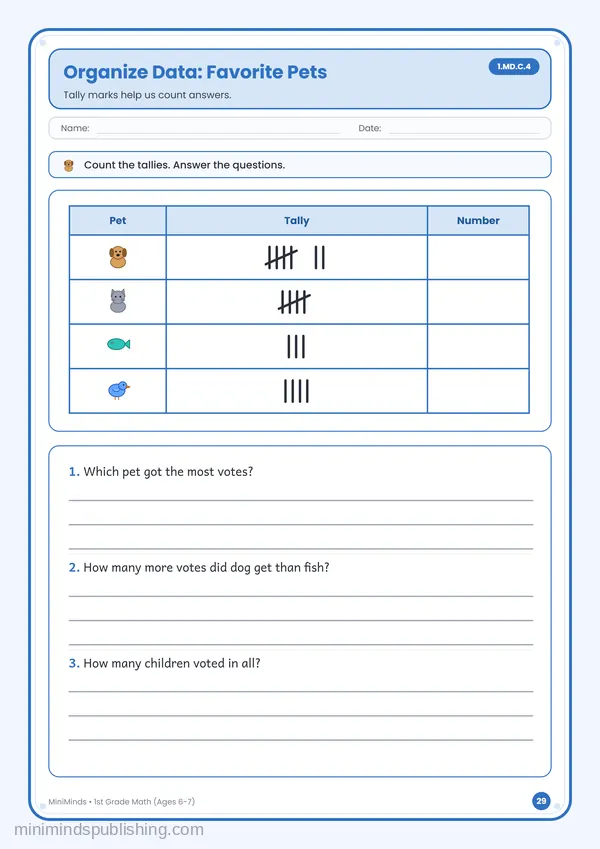
- Reading a tally chart (1.MD.C.4)
All worksheet sets
How to get the most out of them
- 1
Use "Fact Families" as the bridge sheet. A child who sees that 3 + 4 = 7 and 7 − 4 = 3 are the same fact stops treating subtraction as a separate thing to memorise, which halves the work.
- 2
For word problems, have your child underline the question before touching the numbers. Most first-grade word-problem errors are reading errors, not arithmetic ones.
- 3
Do "Tens and Ones" before "Compare Two-Digit Numbers". Comparing 47 and 74 is guesswork until place value is solid.
- 4
On "Telling Time", read the analogue clock aloud as "half past three" as well as "three thirty". Children who only learn the digital form struggle when the wording changes on a test.
1st Grade Math Worksheets — questions parents ask
- What maths should a 1st grader master?
- Add and subtract fluently within 10, solve one-step word problems within 20, understand tens and ones, compare two-digit numbers, tell time to the half hour, and split shapes into halves and fourths. Every one of those skills appears in this set.
- Are these worksheets timed or test-style?
- No. They are untimed practice pages. Standards like 1.OA.C.6 do expect fluency by the end of the year, so once your child is accurate you can re-print a facts sheet and time it — but timing before accuracy tends to produce guessing rather than fluency.
- My child reverses numbers and struggles with the missing-number sheet. What now?
- Reversals are normal to about age seven and are not related to the missing-addend difficulty. For missing addends, go back to "Fact Families" and to making ten — the missing number is much easier once addition and subtraction are understood as one relationship.
- Can the worksheets and coloring pages be done online, without printing?
- Yes. Every sheet can also be completed online: open it in the free MiniMinds studio and fill it in, write, draw or color on a tablet (iPad, Android, Chromebook), phone, laptop or desktop computer — with a finger, stylus or mouse, no app or account needed. Finished pages can be printed or saved as an image.
Next steps after 1st Grade Math Worksheets
Keep practising in Fun & Learn
- Number IdentificationAges 3–6
- Measuring ThingsAges 4–7
- Shape ActivitiesAges 4–7
- SizesAges 3–6
- SudokuAges 3–6