Pre-K Reading & Writing Worksheets
Letters A-Z, letter hunts, beginning sounds, syllables, rhyme and pre-writing. · Head Start Early Learning Outcomes
All 30 worksheets
Tap a sheet to open it full size
Save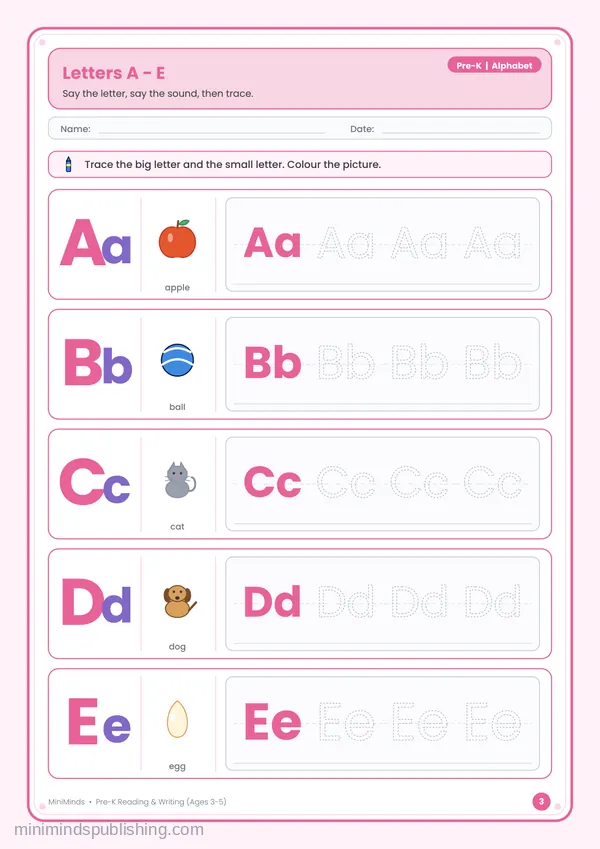
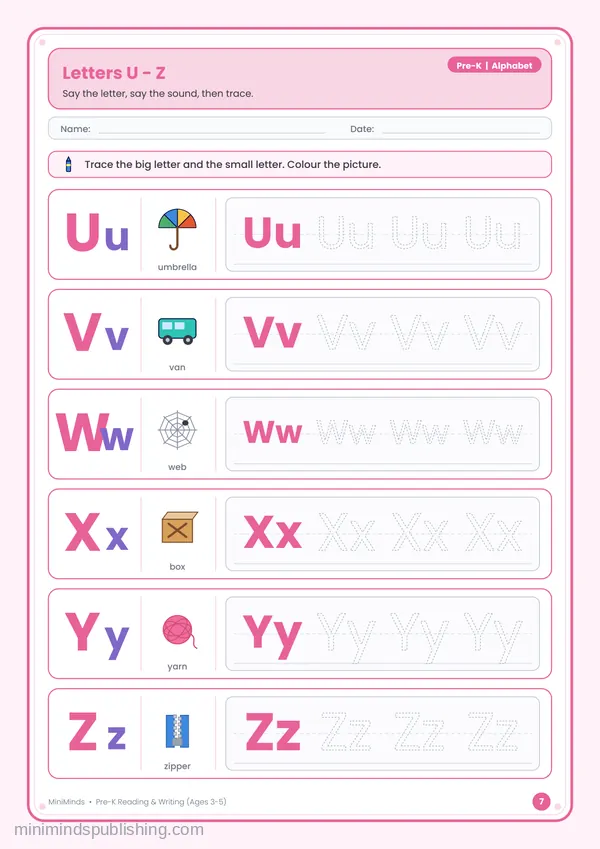
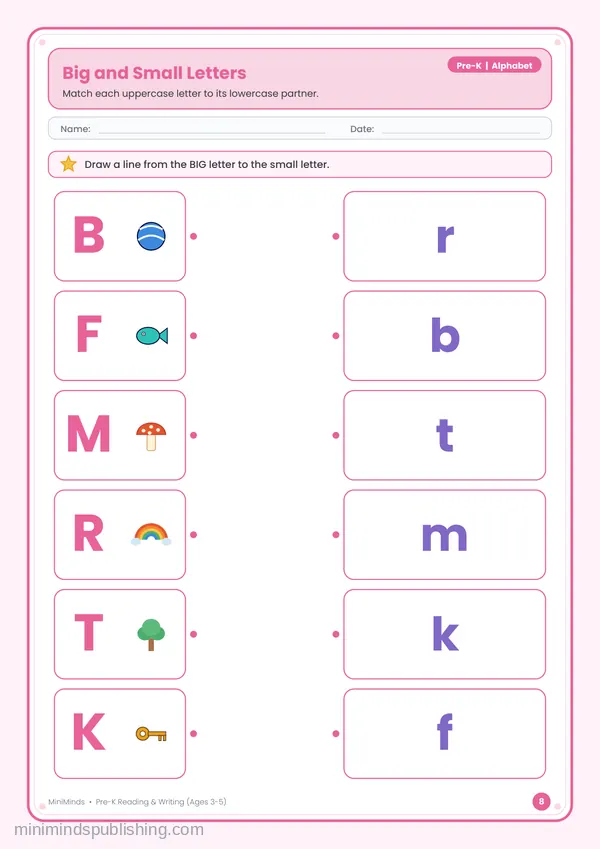
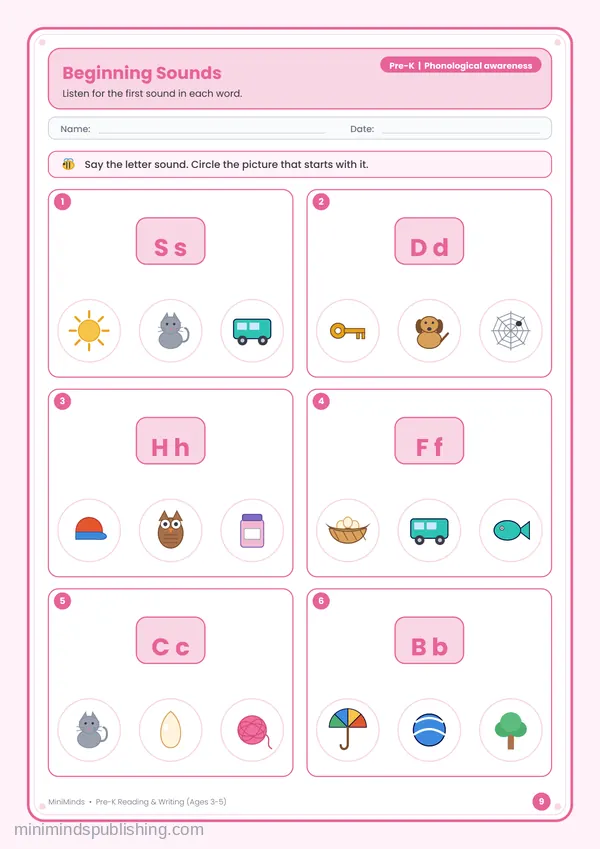
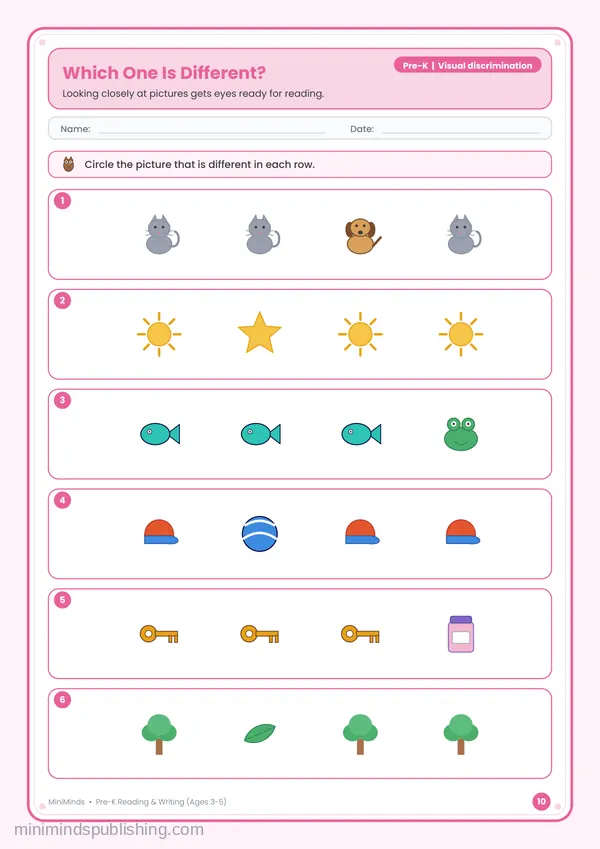
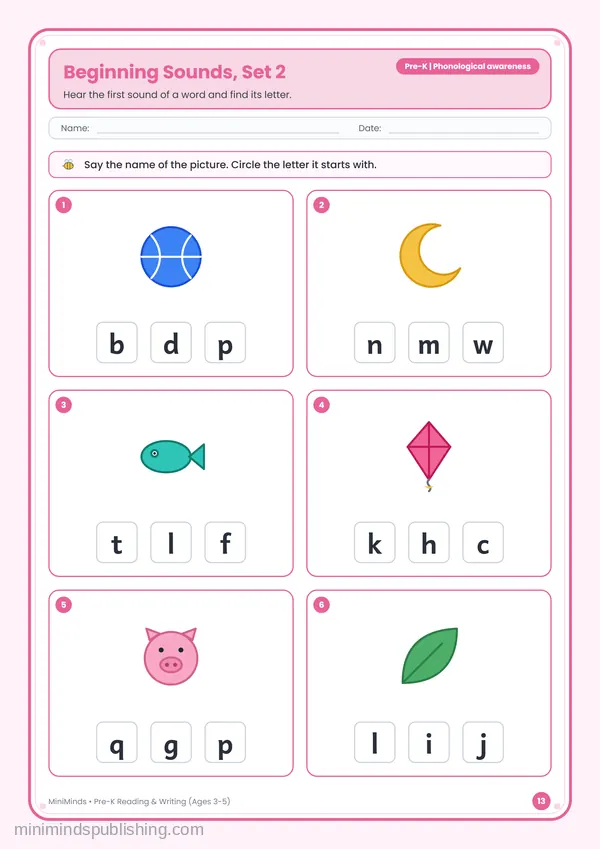
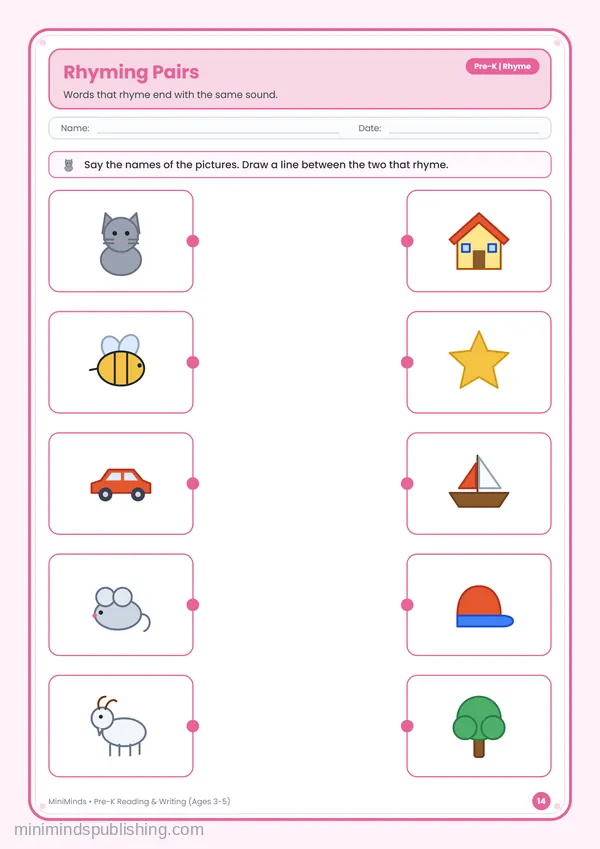
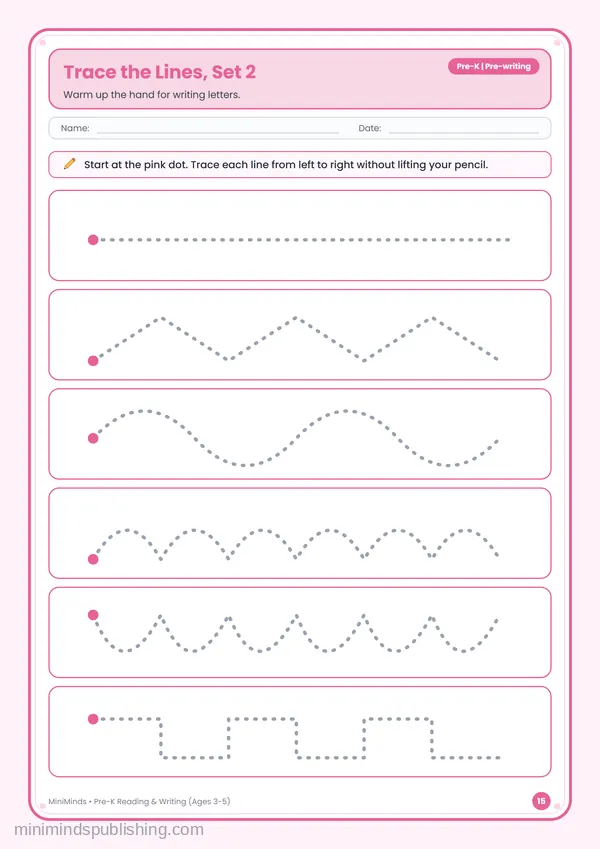
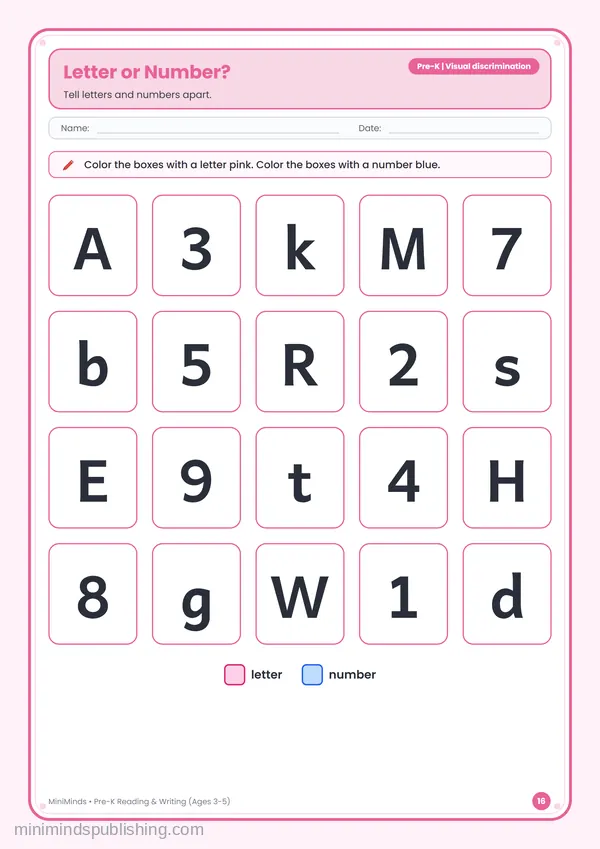
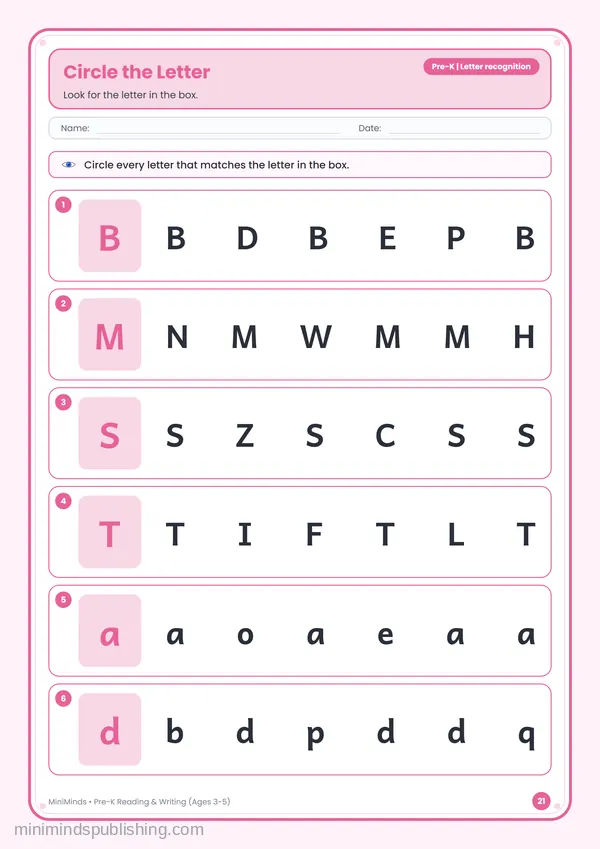
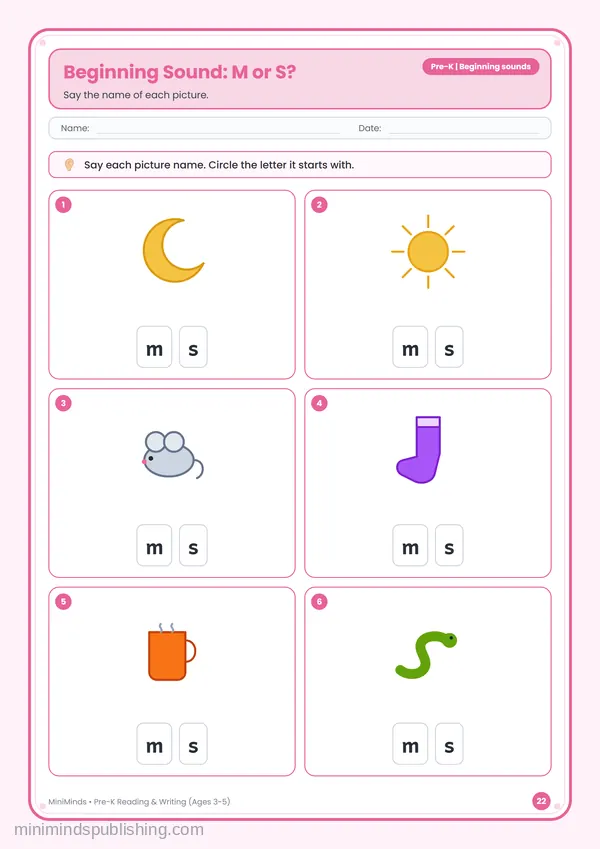
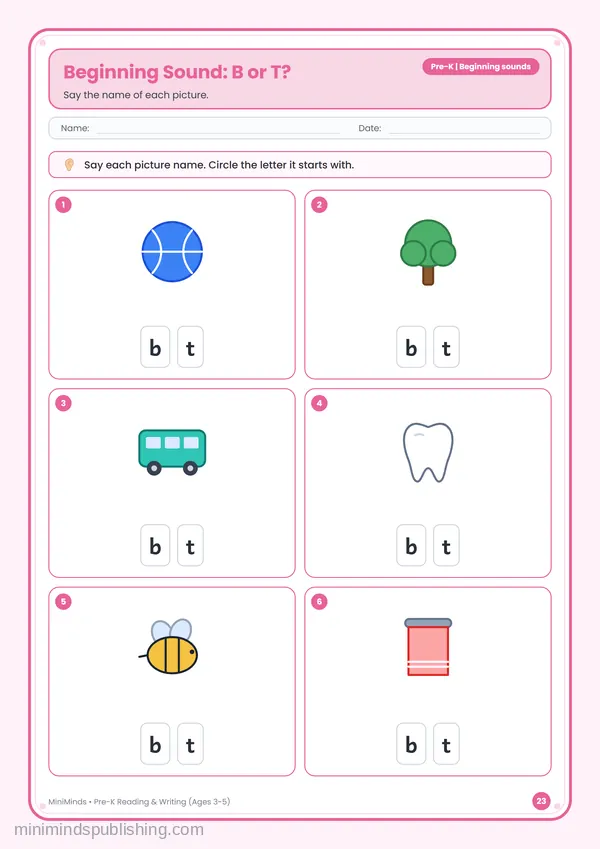
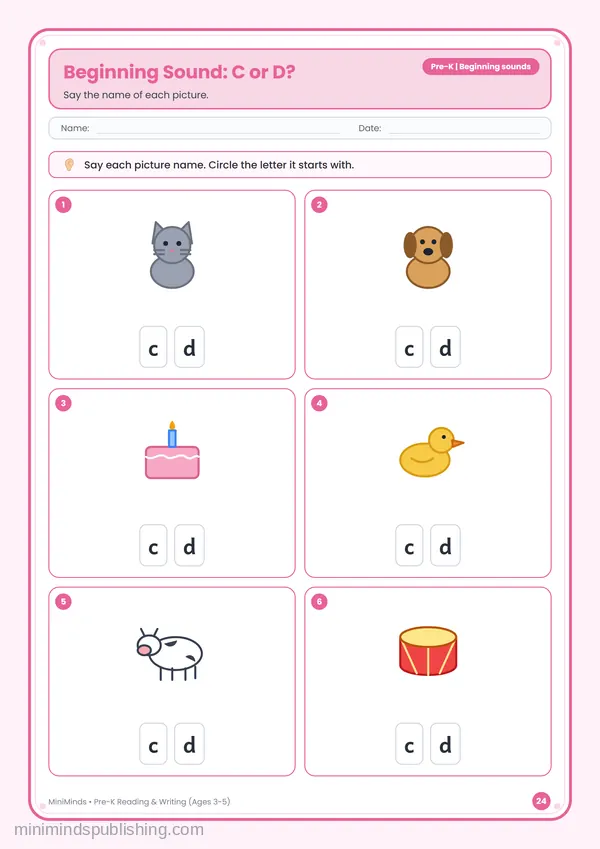
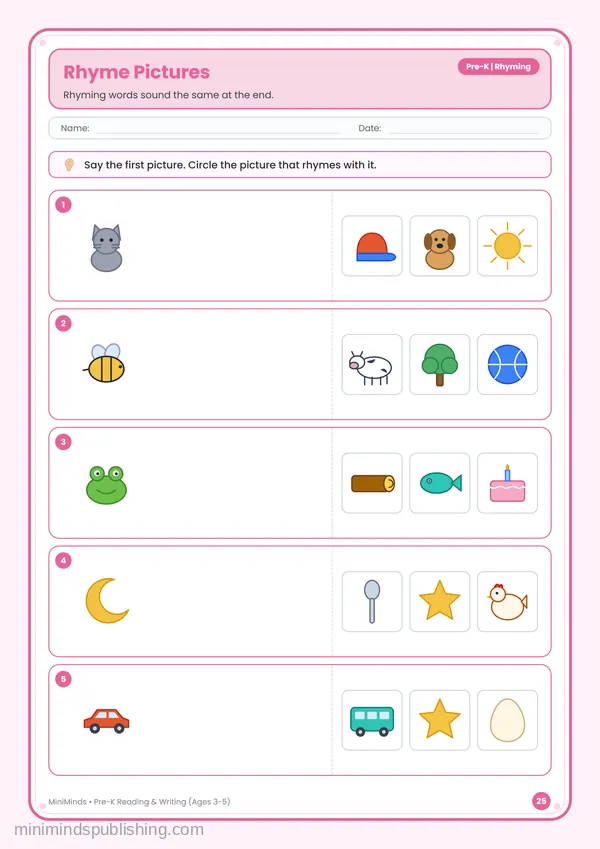
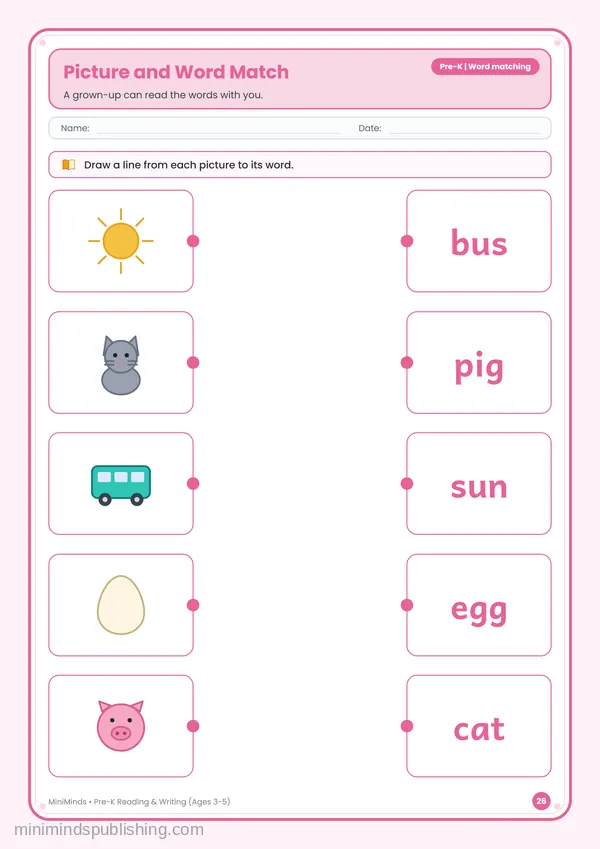
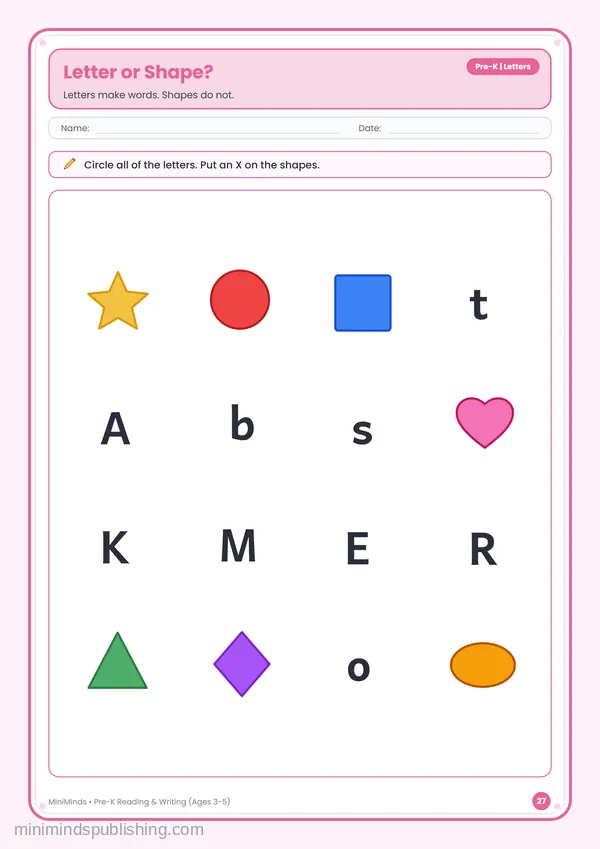
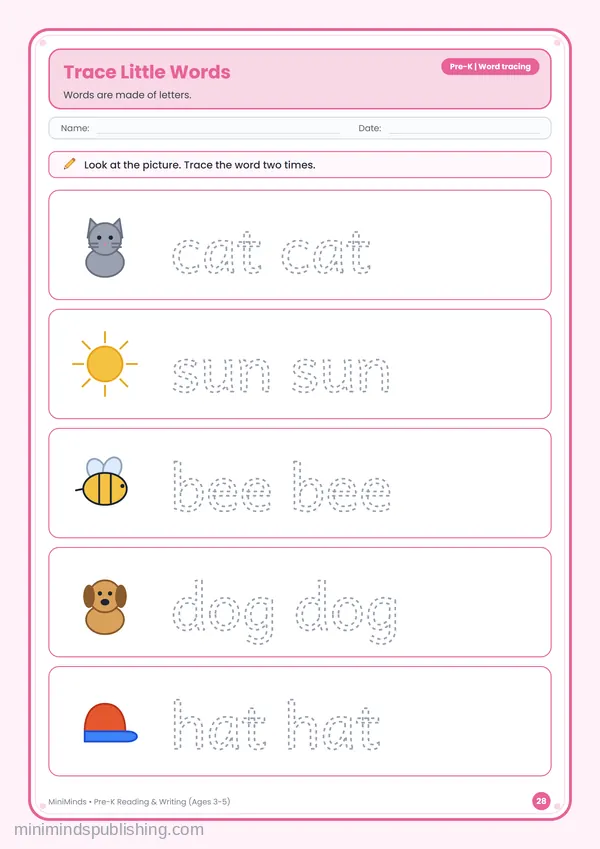
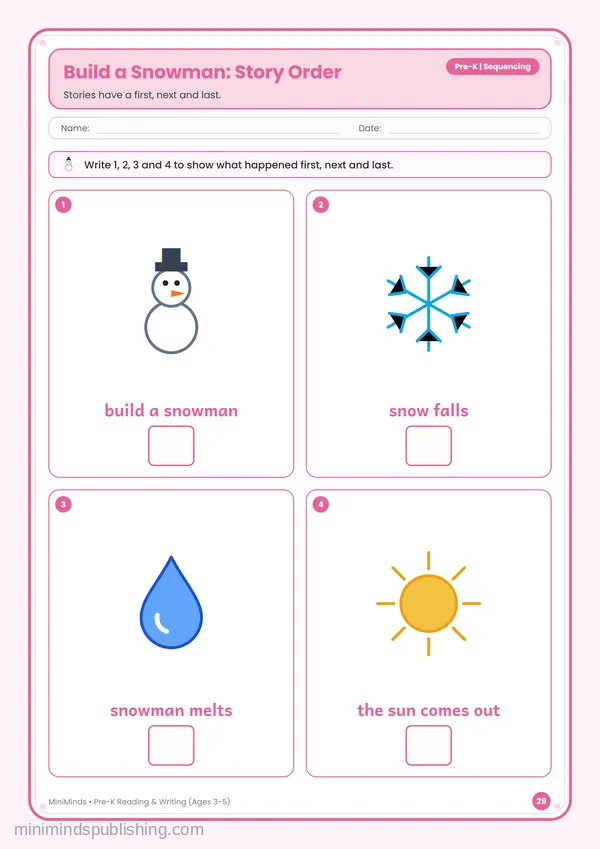
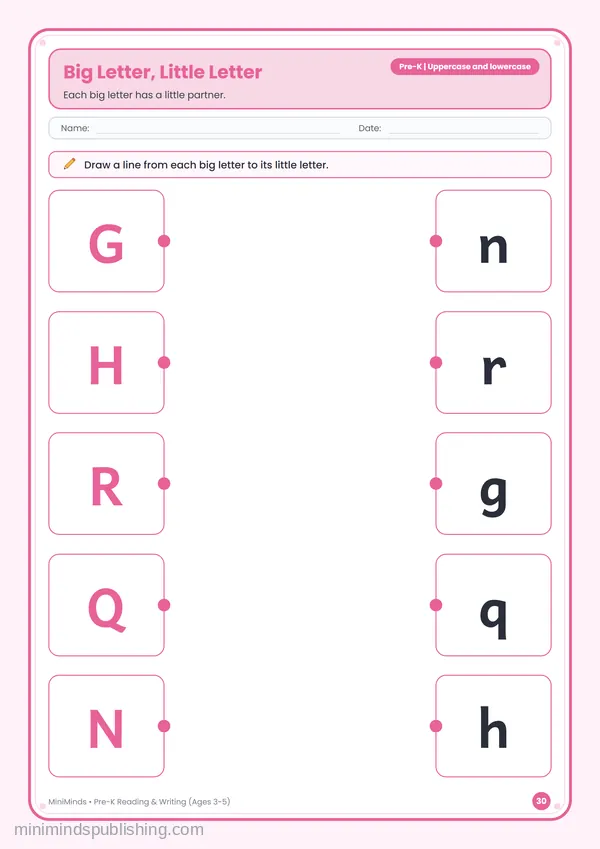
About these pre-k reading & writing worksheets
These Pre-K reading and writing worksheets take a three-to-five-year-old through the whole alphabet in five sheets, then move to the skills that actually predict later reading: hunting for letters, matching uppercase to lowercase, hearing first sounds, clapping syllables, spotting the odd one out, telling letters from numbers, recognising rhyme, and controlling a pencil along lines and paths well enough to write.
There is no reading of words here, and that is deliberate. At this age the strongest predictors of reading success are letter-sound knowledge and phonological awareness — hearing that "cat" and "hat" end the same — not early word reading. Pre-K sits below the Common Core, so these follow the Head Start Early Learning Outcomes Framework.
What these 30 worksheets cover
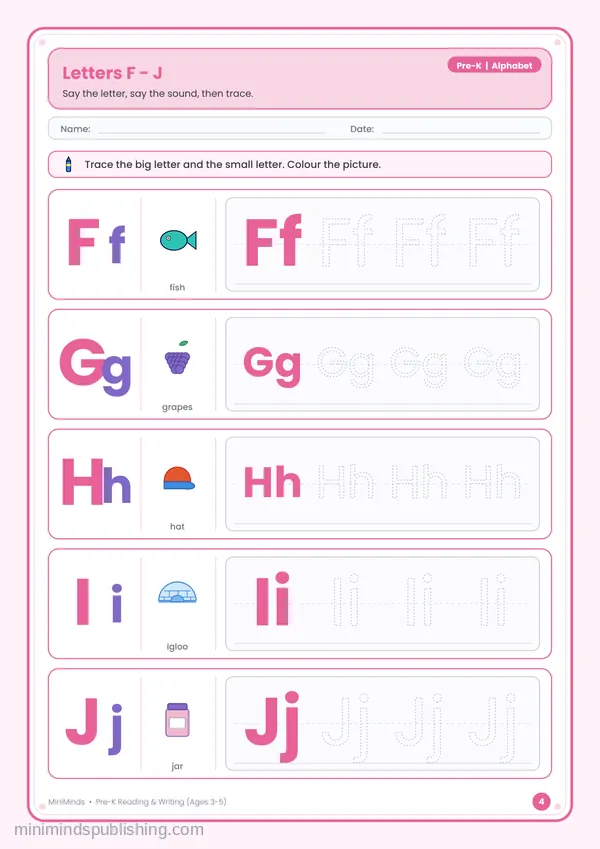
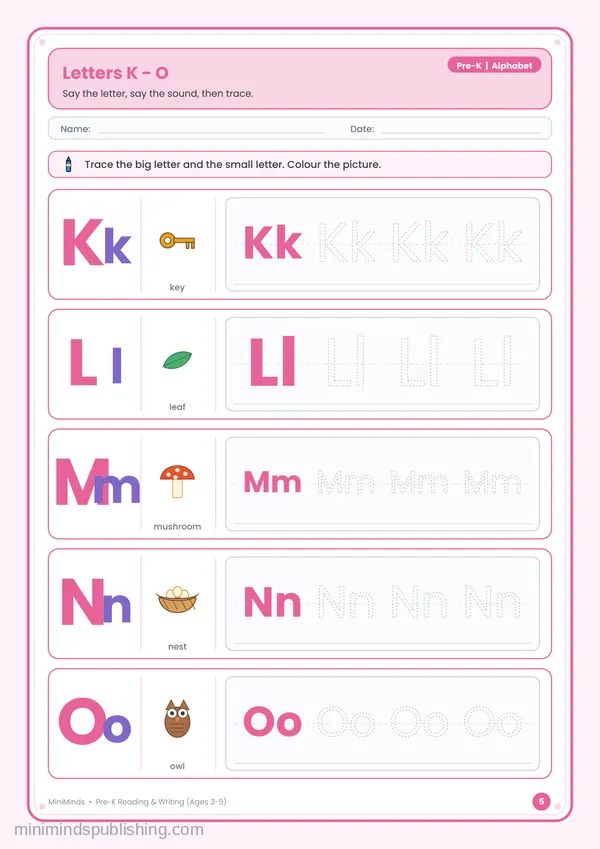
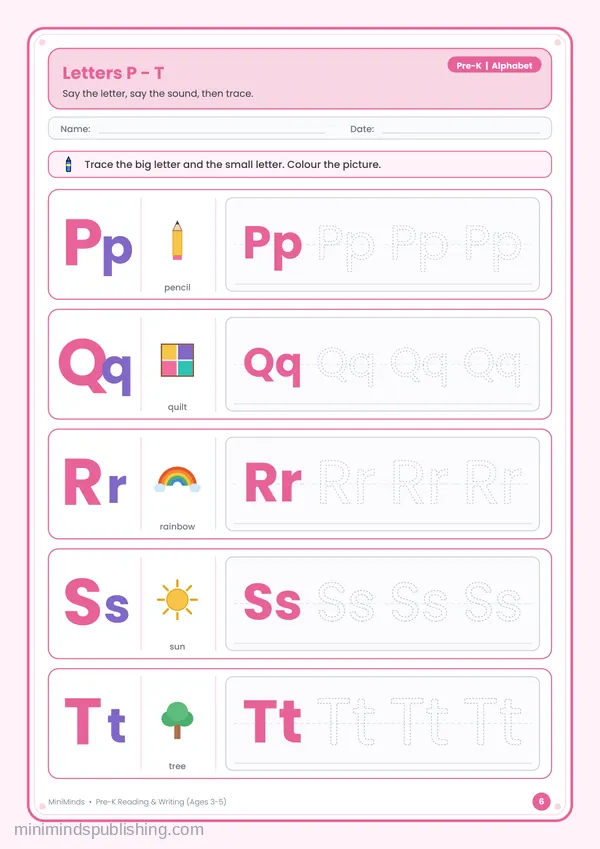
- The full alphabet across five sheets: A-E, F-J, K-O, P-T, U-Z
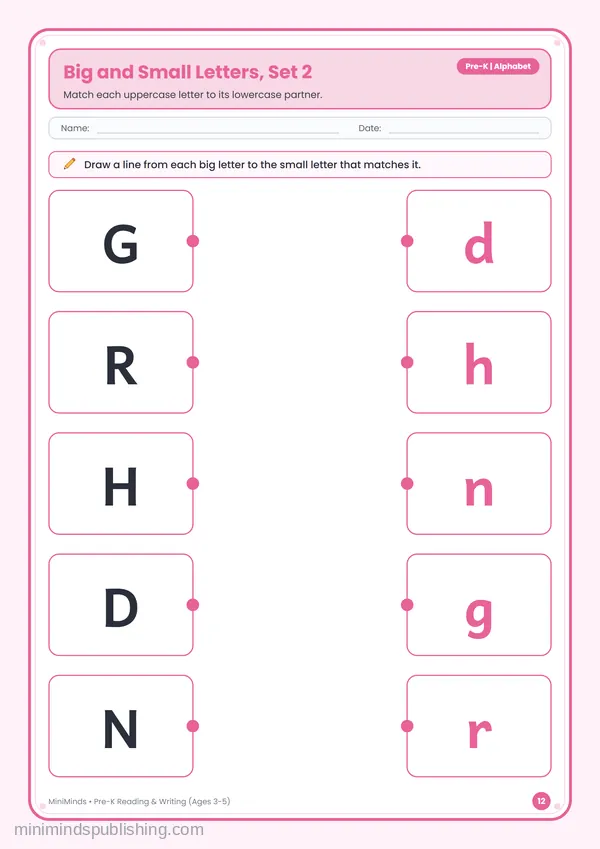
- Matching uppercase letters to their lowercase partners
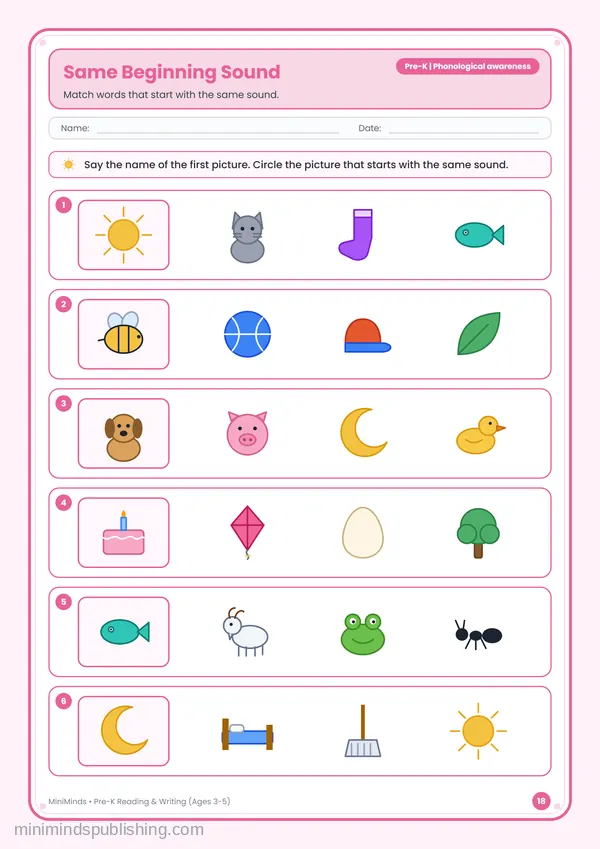
- Identifying the beginning sound of a spoken word
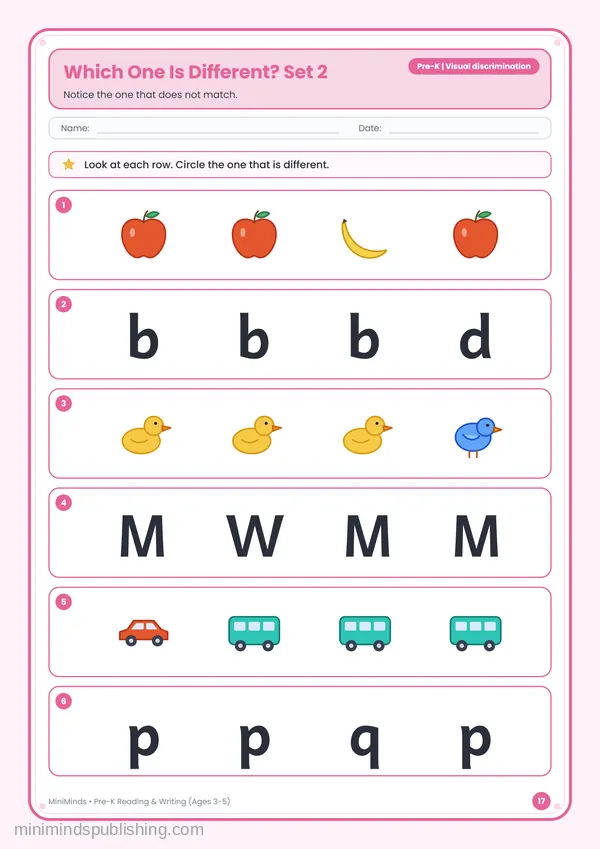
- Visual discrimination — finding the one that is different
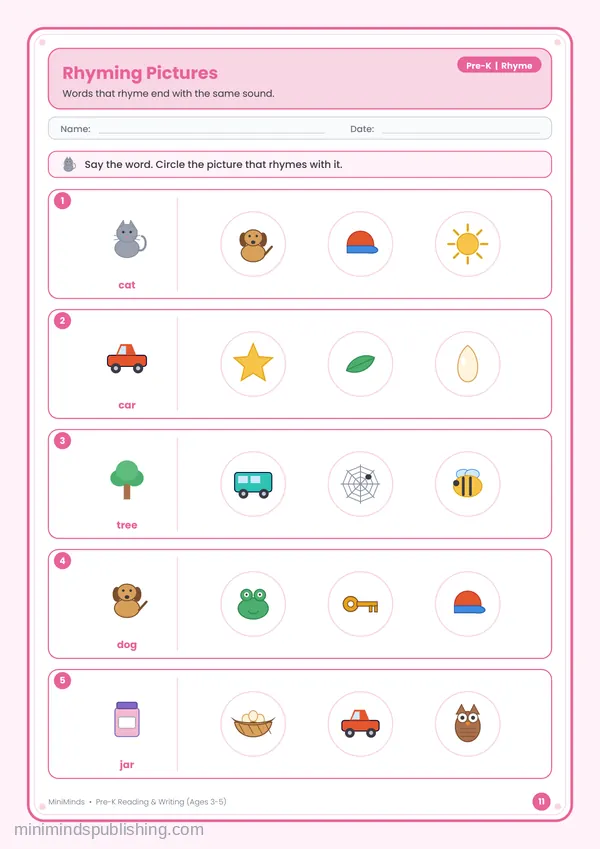
- Recognising rhyming pictures
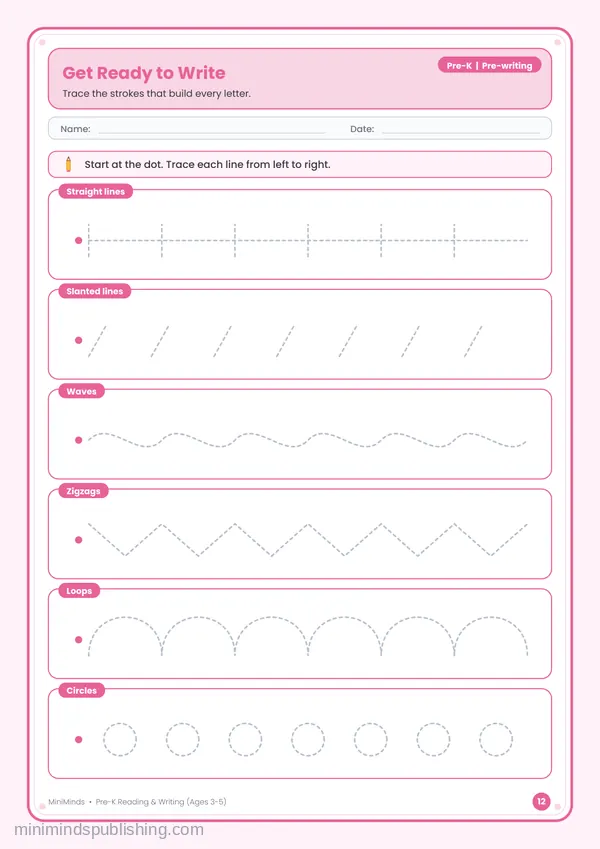
- Pre-writing strokes: lines, curves and loops before letters
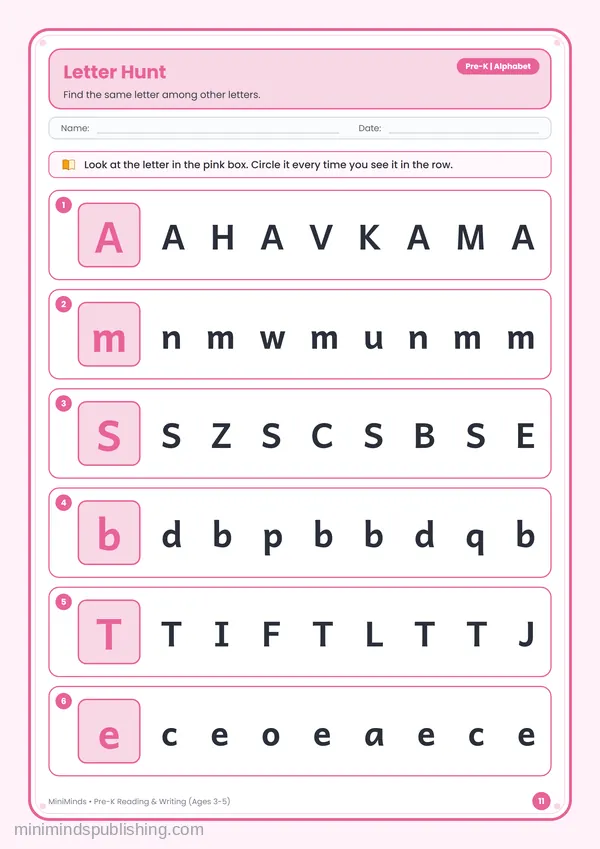
- Letter hunts: finding one letter among look-alikes
- Matching pictures that start with the same sound
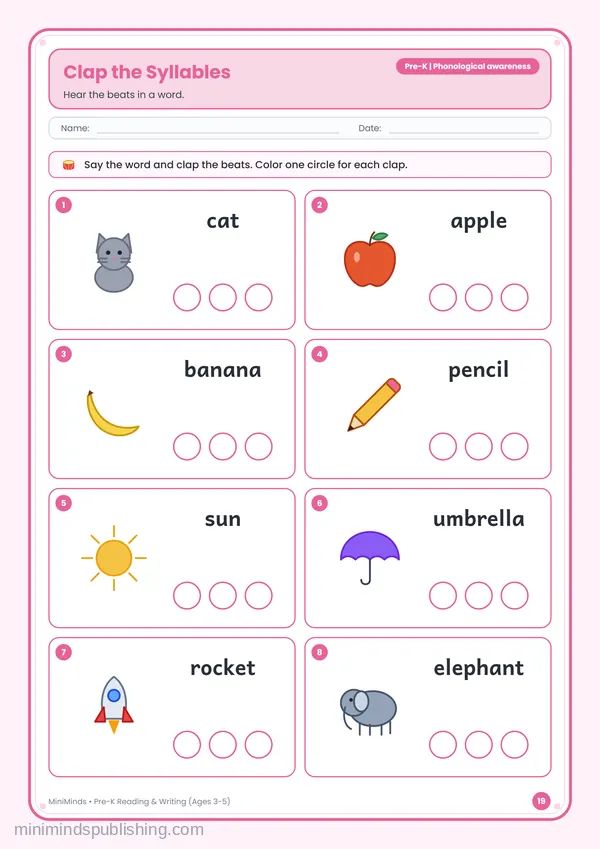
- Clapping syllables and matching rhyming pairs
- Telling letters apart from numbers
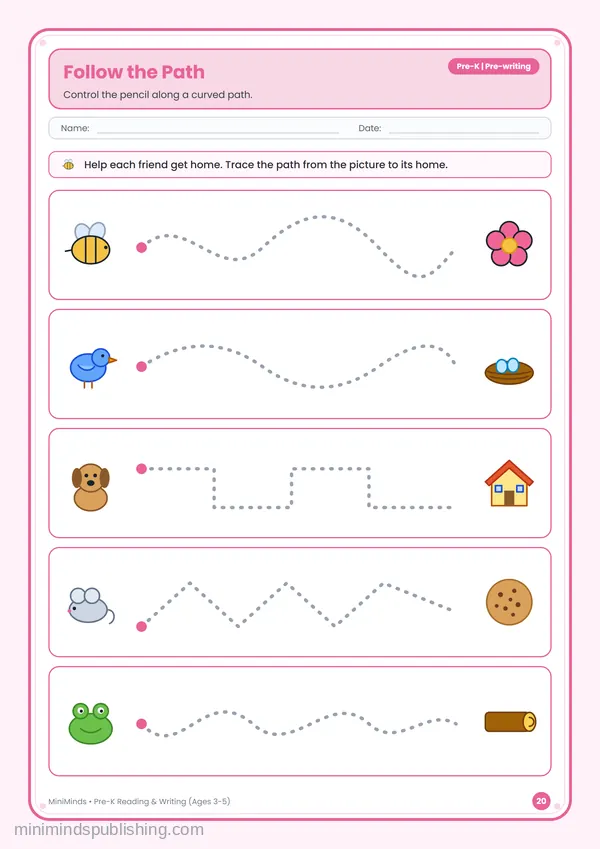
- Following curved and zigzag paths with a pencil
All worksheet sets
How to get the most out of them
- 1
Say the letter sound, not the letter name, when you work through the alphabet sheets. "Mmm" transfers to reading; "em" does not, and children taught names first often have to unlearn them.
- 2
Do "Rhyming Pictures" out loud with the page turned away first. Rhyme is a listening skill — if the child is looking at the pictures they will match by category instead of by sound.
- 3
Save "Get Ready to Write" for whenever handwriting looks effortful. The stroke shapes on it are the components of every lowercase letter, so time spent there pays off across all twenty-six.
- 4
Five letters at a sitting is plenty. Doing the whole alphabet in one session is how a child decides letters are a chore.
Pre-K Reading & Writing Worksheets — questions parents ask
- Should I teach letter names or letter sounds first?
- Sounds. Letter-sound knowledge is the stronger predictor of later reading, and it is what these sheets are built around. Names come easily afterwards, usually without being taught directly.
- What should a child know before kindergarten?
- Recognise most letters, produce the sounds for many of them, hear beginning sounds and rhymes, write their own first name, and hold a pencil with reasonable control. This set covers all of that except name writing.
- My four-year-old cannot hold a pencil properly. Should I push it?
- No. Do the letter and sound sheets in the online studio with a finger instead, and keep pencil work to "Get Ready to Write" in short bursts. Grip matures on its own timeline, and pushing it mainly teaches a child to avoid writing.
- Can the worksheets and coloring pages be done online, without printing?
- Yes. Every sheet can also be completed online: open it in the free MiniMinds studio and fill it in, write, draw or color on a tablet (iPad, Android, Chromebook), phone, laptop or desktop computer — with a finger, stylus or mouse, no app or account needed. Finished pages can be printed or saved as an image.
Next steps after Pre-K Reading & Writing Worksheets
Keep practising in Fun & Learn
Take a coloring break
📚 Want the printed book? From the MiniMinds bookshelf
Paperbacks on Amazon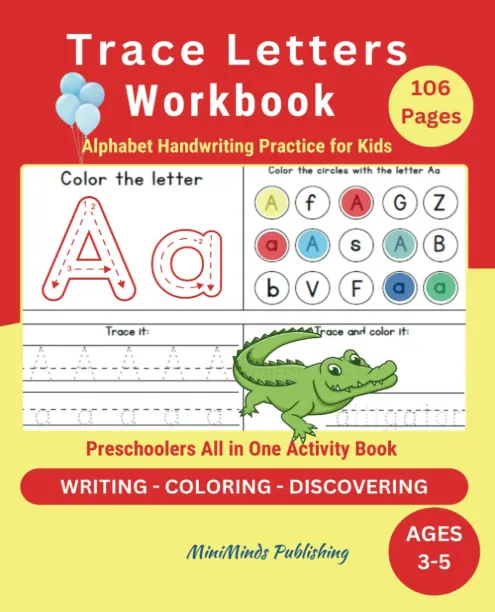 Trace Letters Alphabet Handwriting Practice for Kids Ages 3-5 Workbook: Preschoolers All in One Activity Book Writing Coloring DiscoveringView on Amazon →
 I Love My Books: Reading Log for Girls, Ages 6-12 HardcoverView on Amazon →
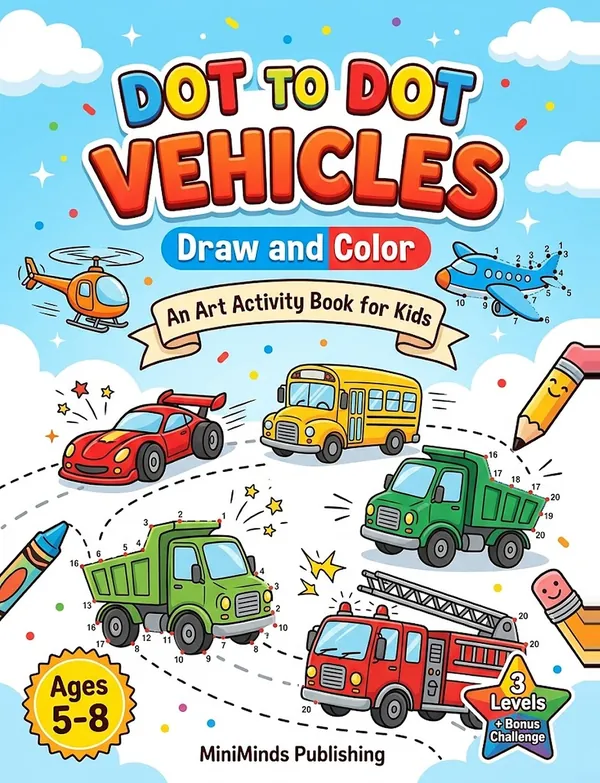 Dot to Dot: Draw and Color: An Art Activity Book for Kids PaperbackView on Amazon →