2nd Grade Reading & Writing Worksheets
Vowel teams, prefixes, compound words, irregular verbs, passages and opinions. · RF.2 / L.2 / RL.2 / W.2
All 31 worksheets
Tap a sheet to open it full size
Save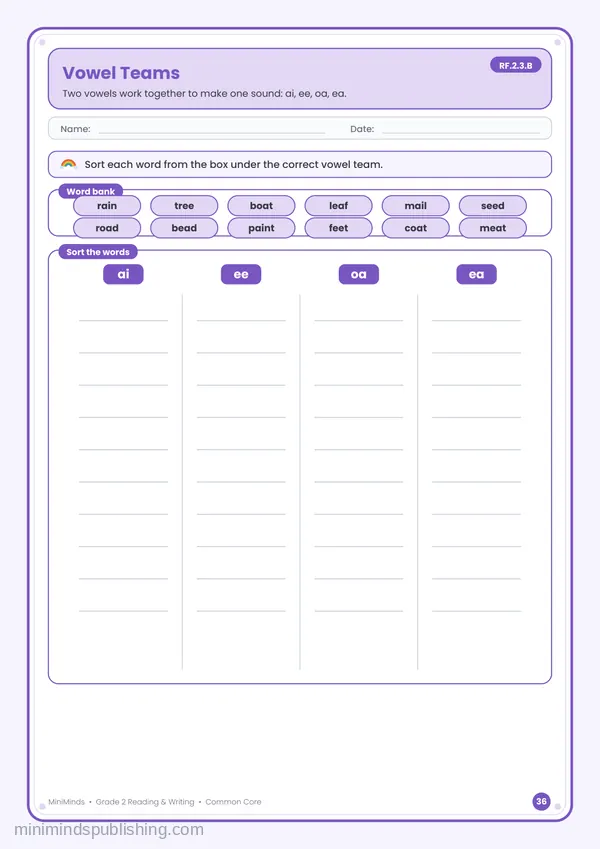
About these 2nd grade reading & writing worksheets
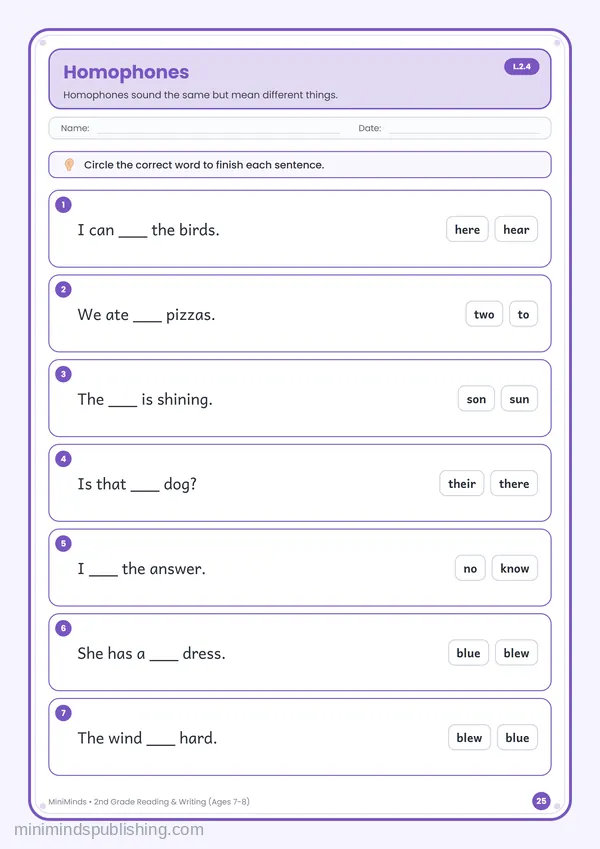
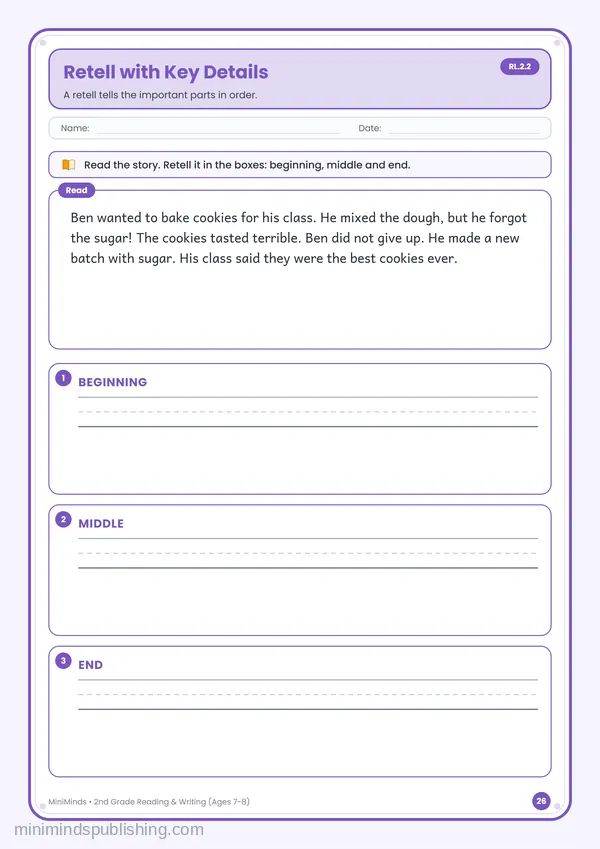
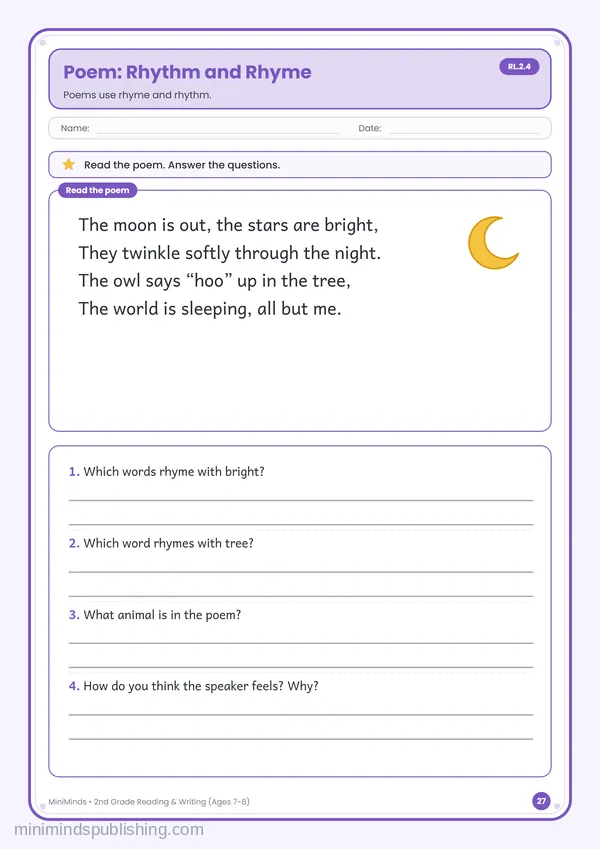
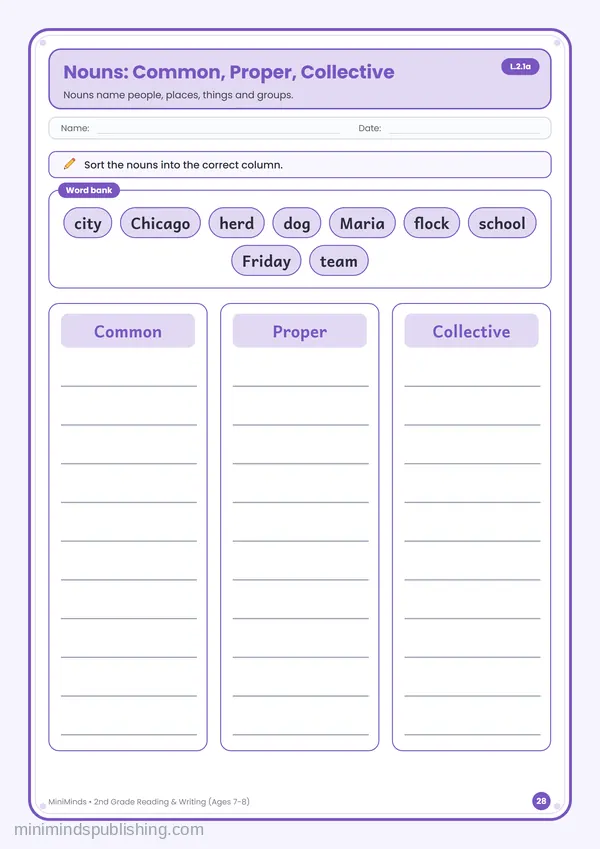
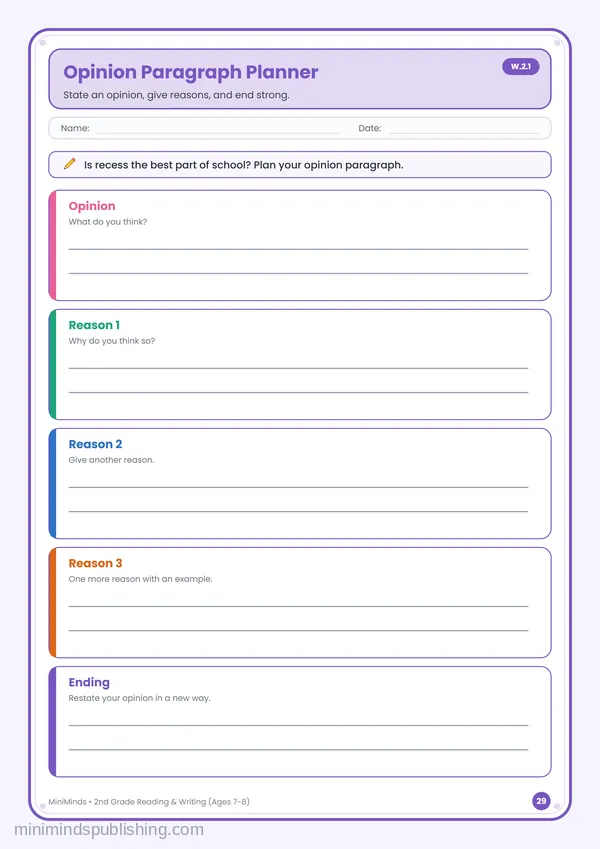
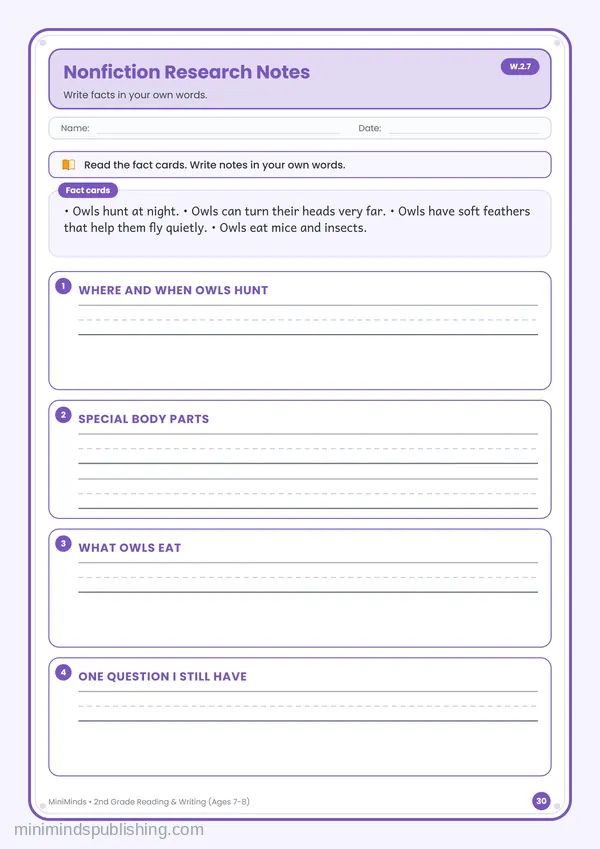
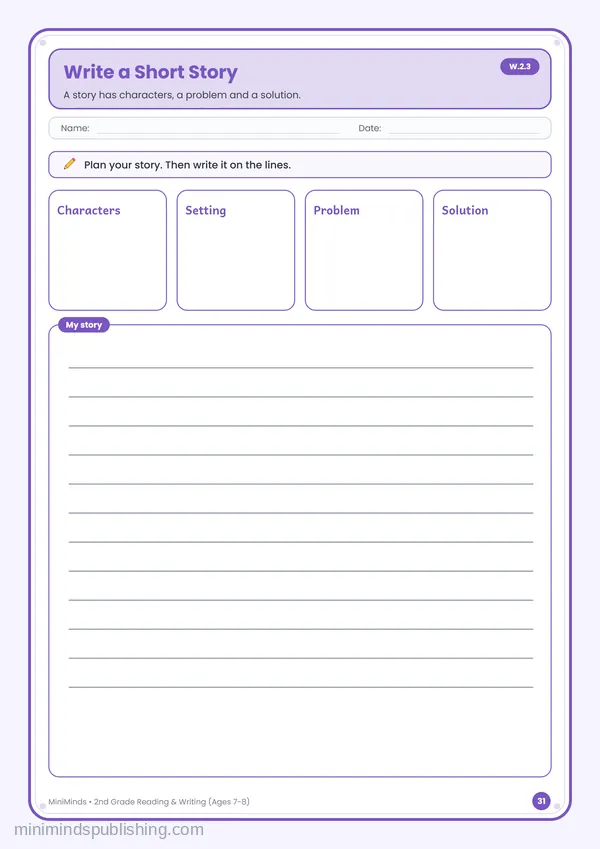
These 2nd grade reading and writing worksheets cover the shift from learning to read to reading to learn: vowel teams, r-controlled vowels, prefixes and suffixes, compound words, synonyms and antonyms, contractions, irregular plurals and past-tense verbs, adjectives and adverbs, complete sentences, full passages with comprehension questions, main idea, cause and effect, compare and contrast, fact versus opinion, a story map and an opinion-writing planner.
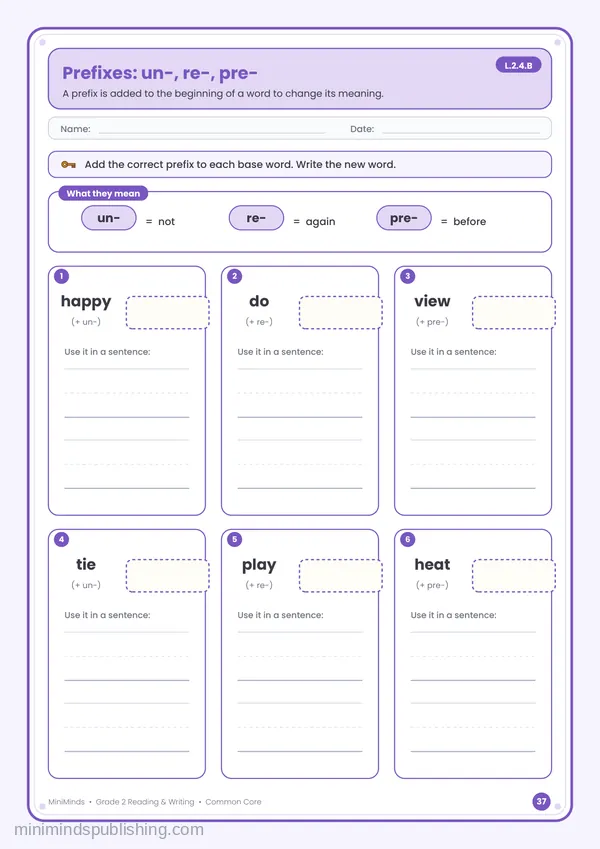
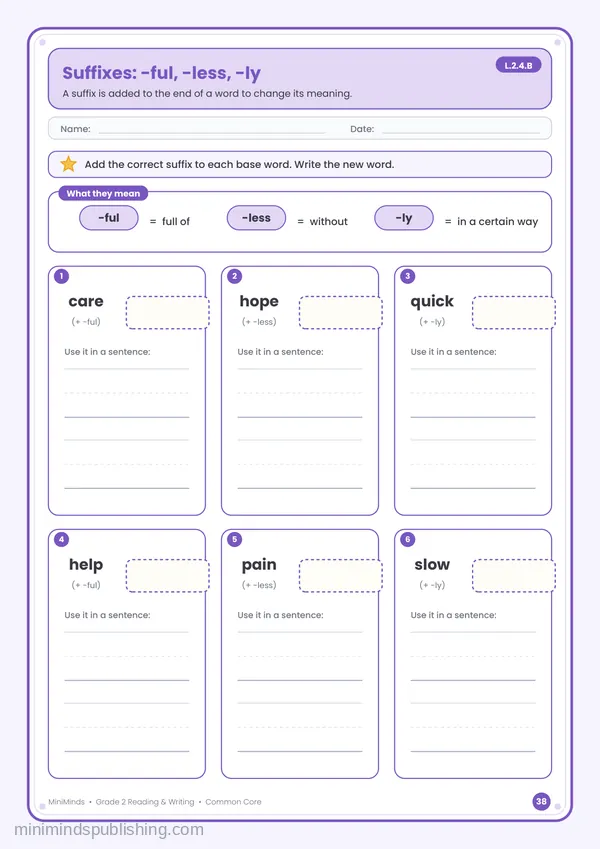
Prefixes and suffixes are the highest-value sheets in the set. A child who knows that un- means not and -less means without can work out the meaning of words they have never seen, which is how vocabulary grows from second grade onwards — far faster than learning words one at a time.
What these 31 worksheets cover
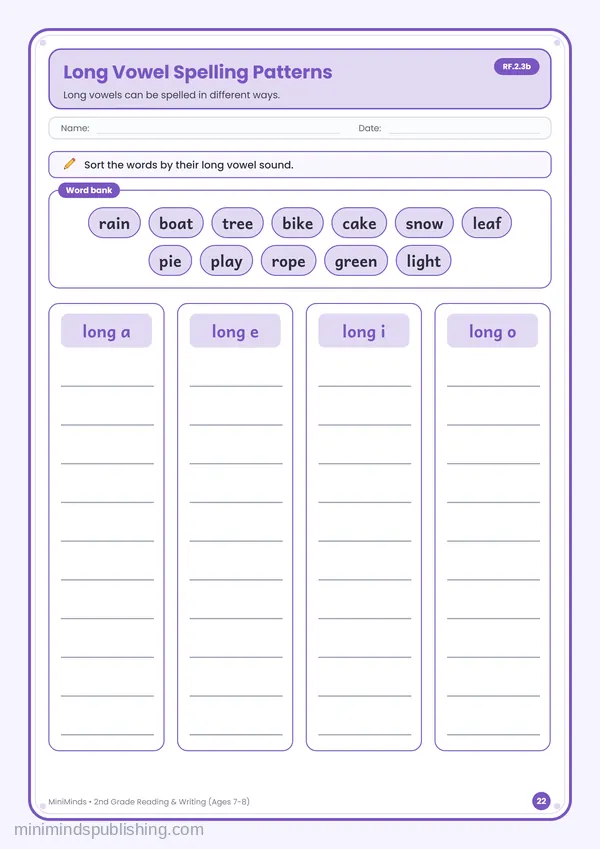
- Vowel teams: ai, ea, oa, ee and friends (RF.2.3.B)
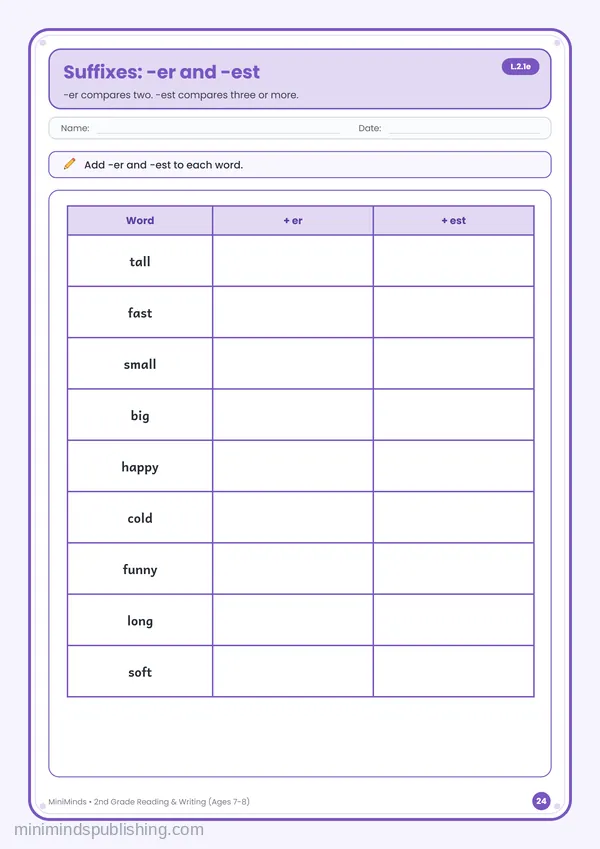
- Prefixes un-, re-, pre- and suffixes -ful, -less, -ly (L.2.4.B)
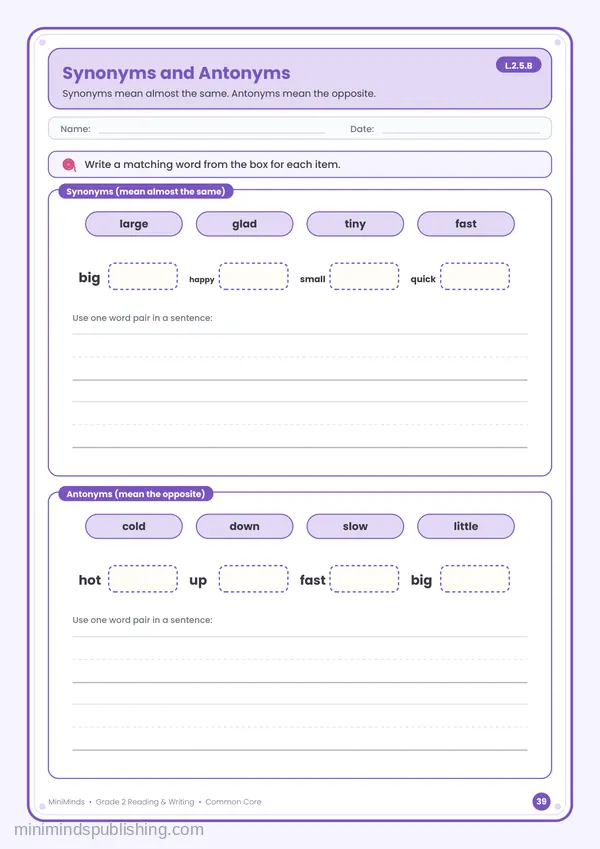
- Synonyms and antonyms (L.2.5.B)
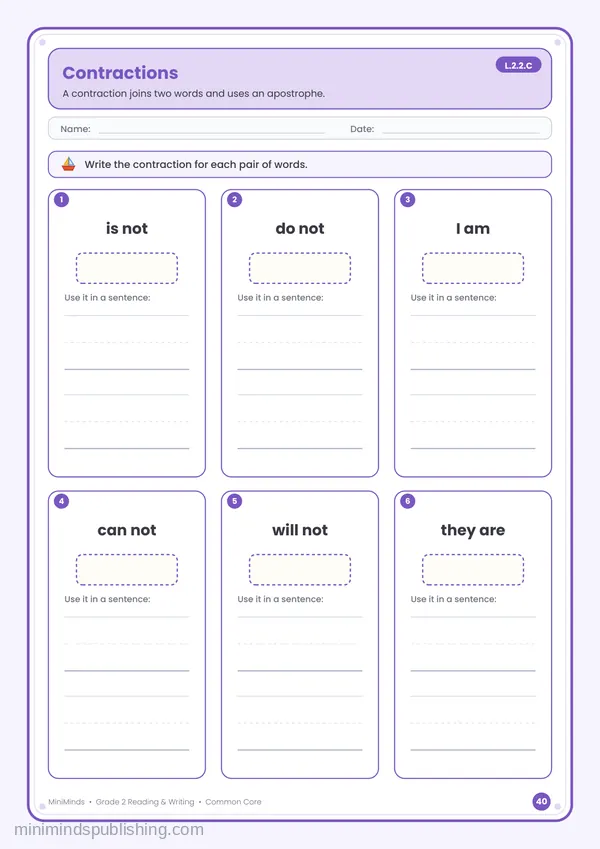
- Contractions (L.2.2.C)
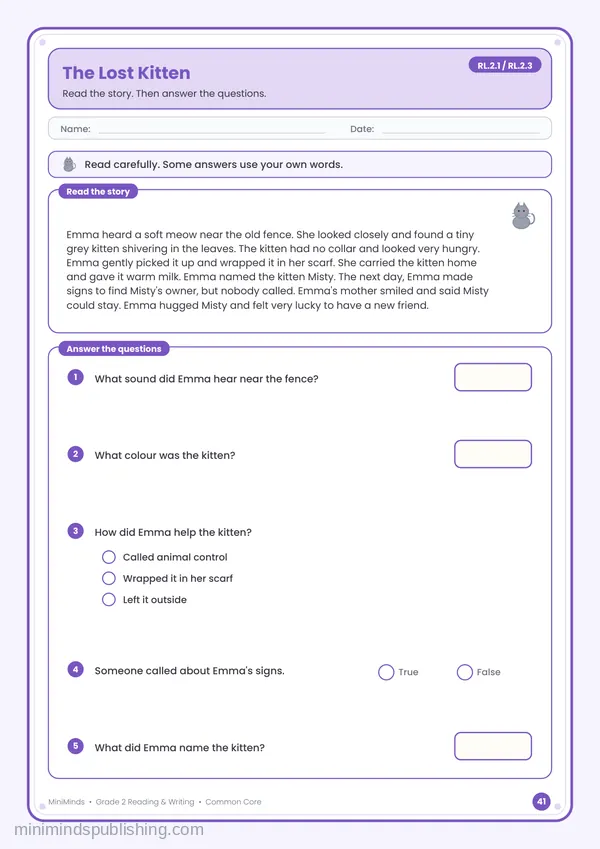
- A fiction passage with comprehension questions (RL.2.1, RL.2.3)
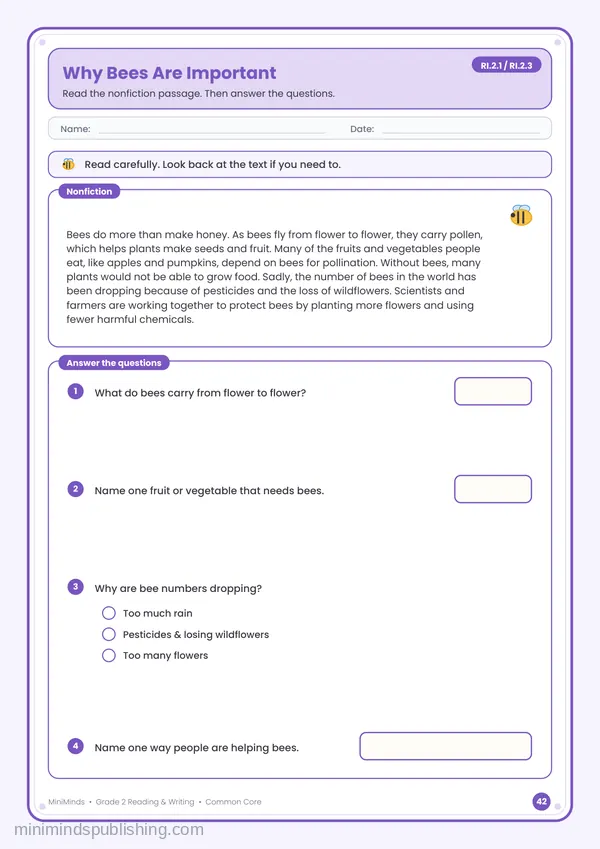
- A non-fiction passage about bees (RI.2.1, RI.2.3)
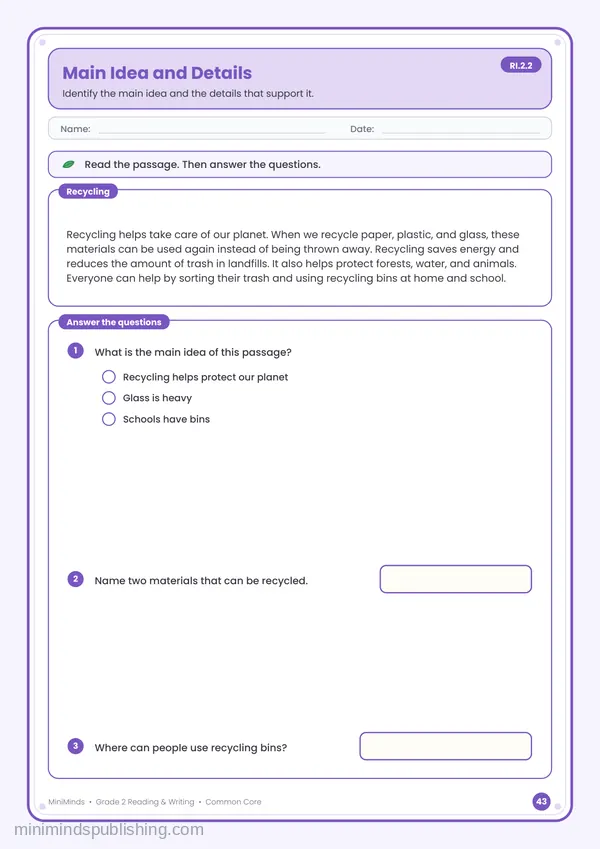
- Main idea and supporting details (RI.2.2)
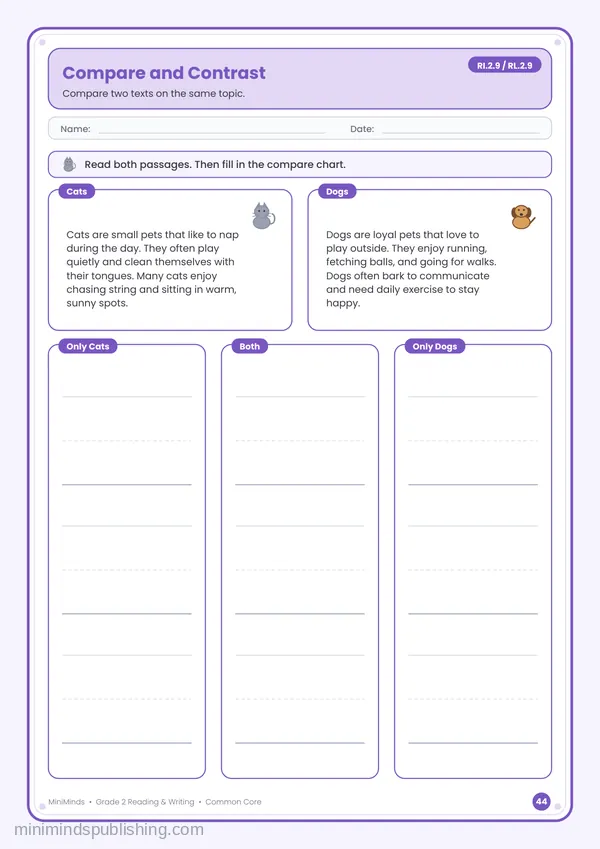
- Comparing and contrasting two texts (RI.2.9, RL.2.9)
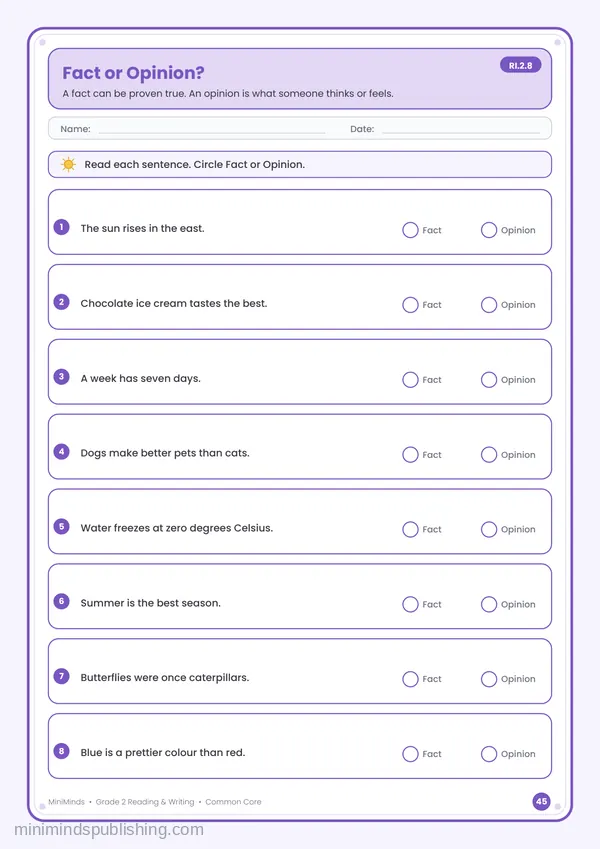
- Distinguishing fact from opinion (RI.2.8)
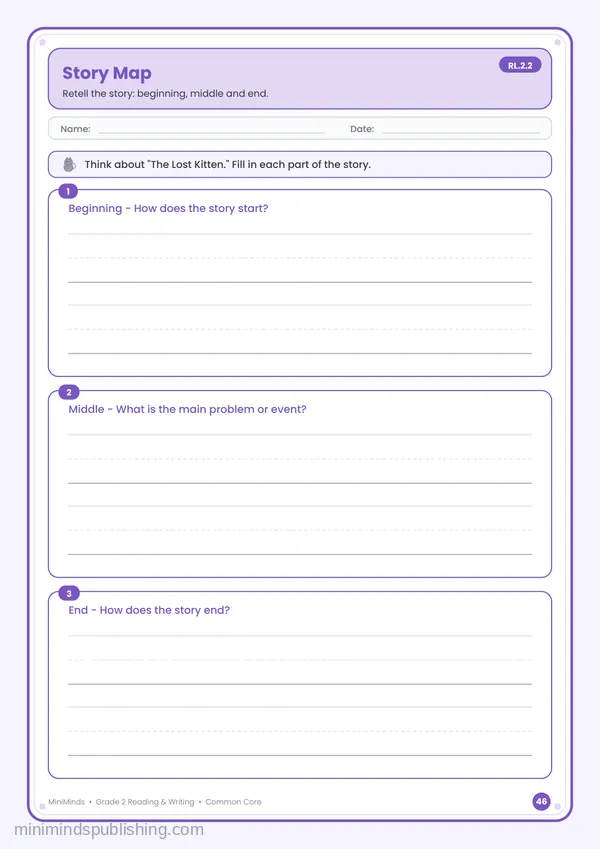
- Story mapping for planning writing (RL.2.2)
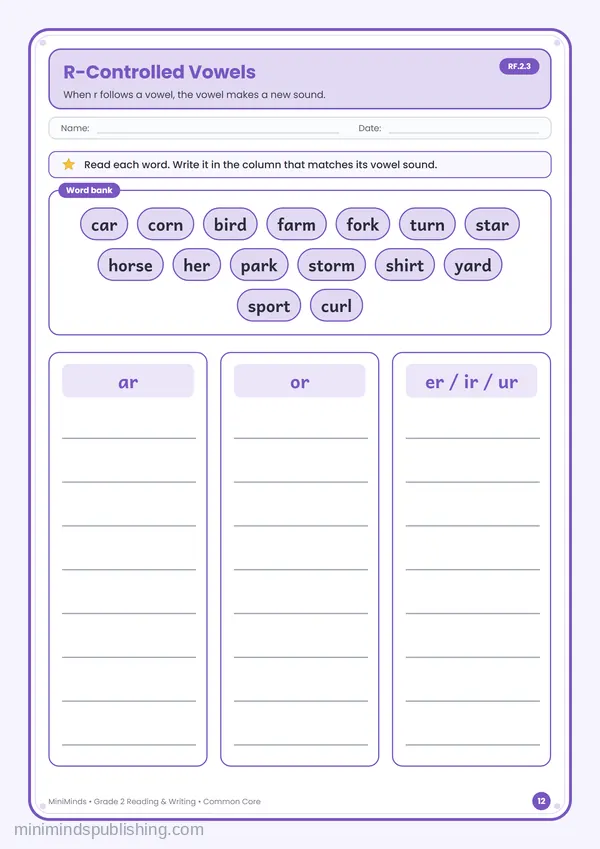
- R-controlled vowels: ar, or, er, ir, ur (RF.2.3)
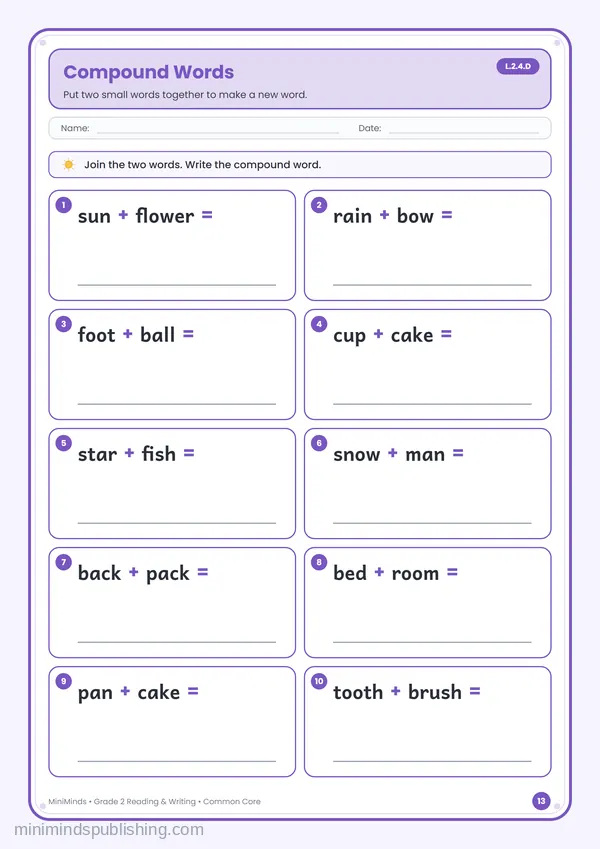
- Compound words (L.2.4.D)
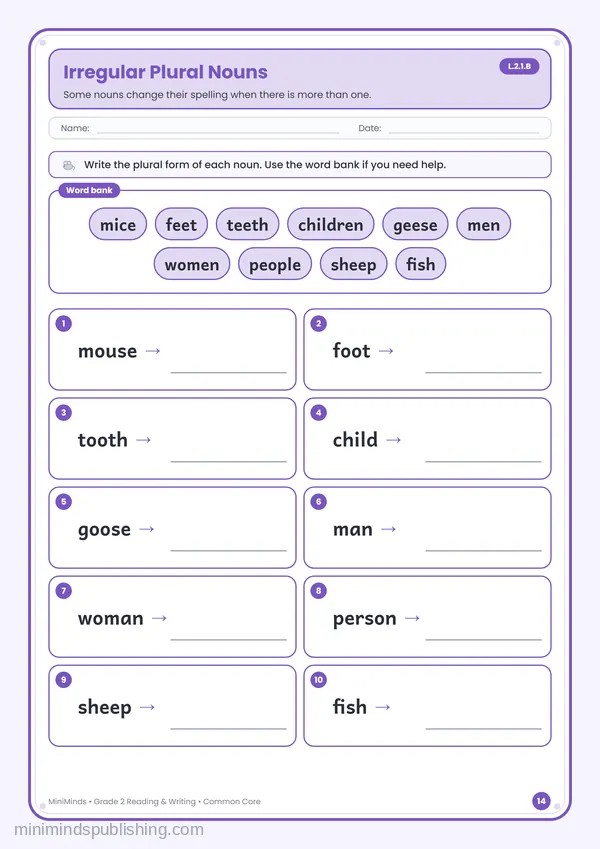
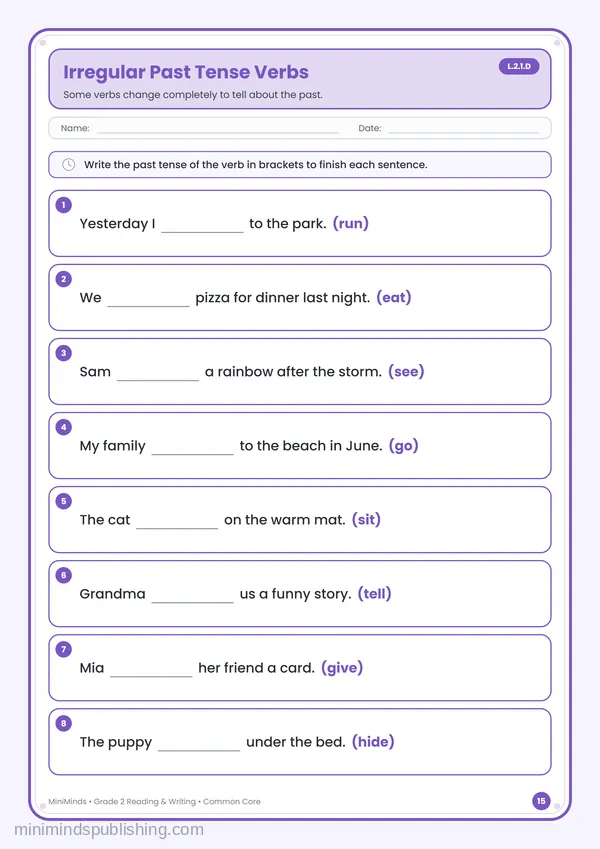
- Irregular plural nouns and irregular past-tense verbs (L.2.1.B, L.2.1.D)
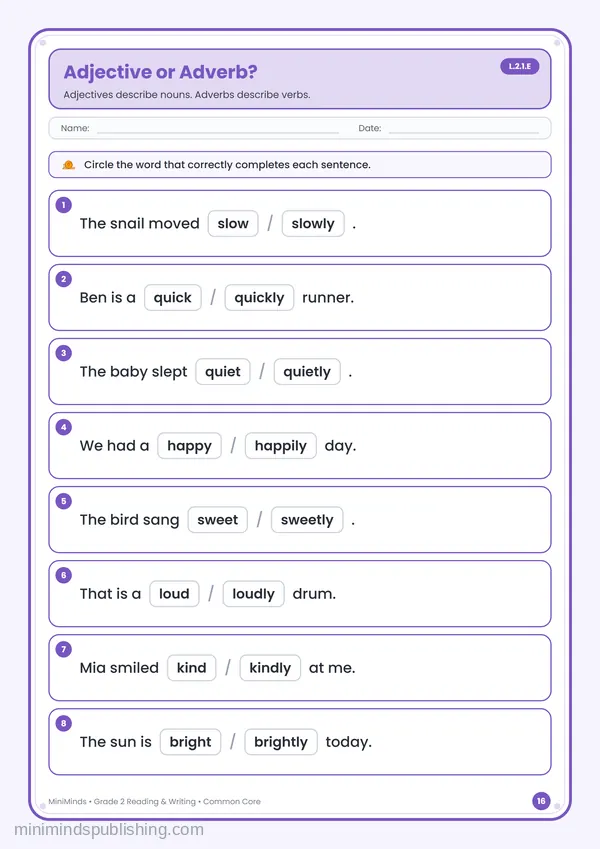
- Choosing between an adjective and an adverb (L.2.1.E)
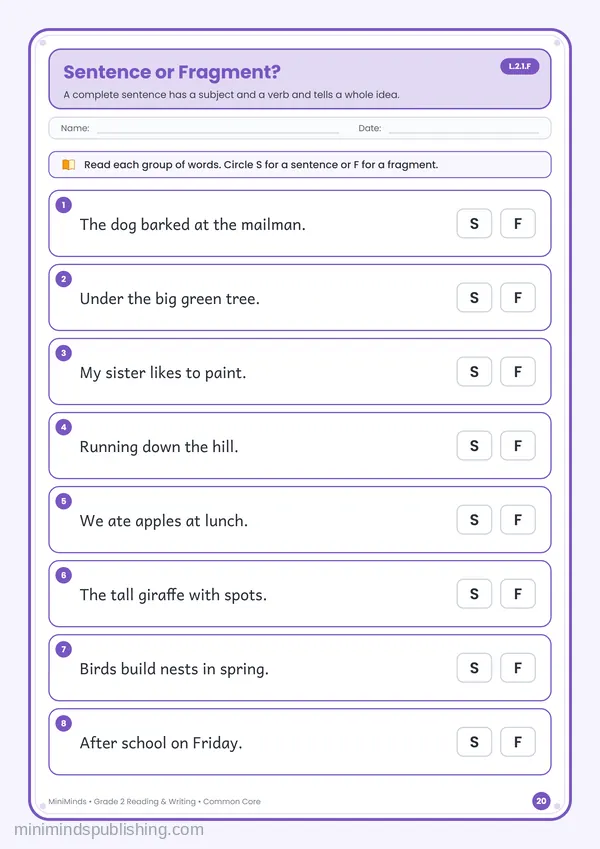
- Complete sentences versus fragments (L.2.1.F)
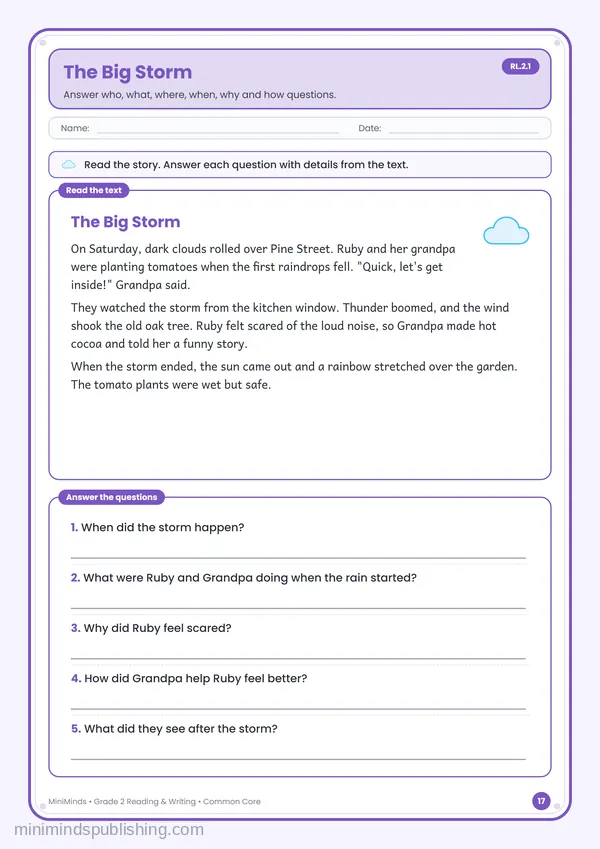
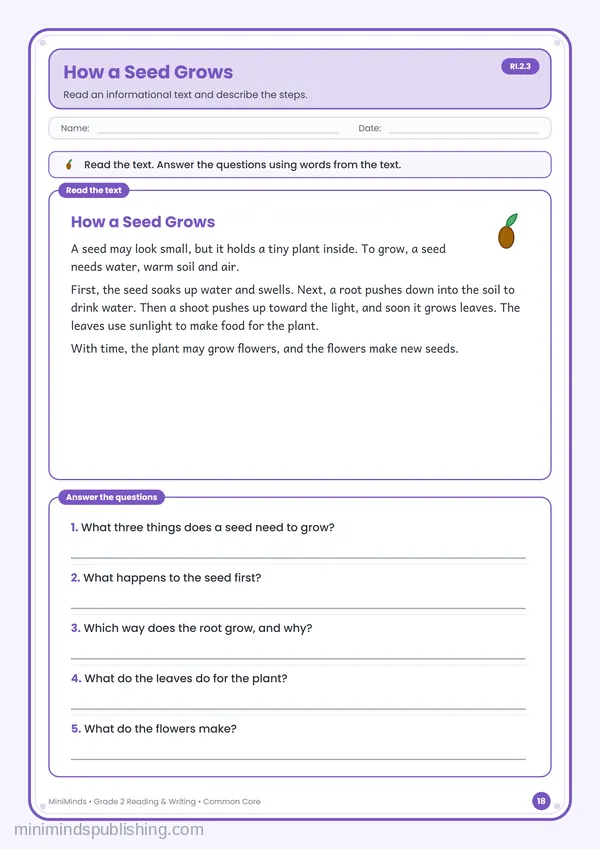
- Two more passages: "The Big Storm" (RL.2.1) and "How a Seed Grows" (RI.2.3)
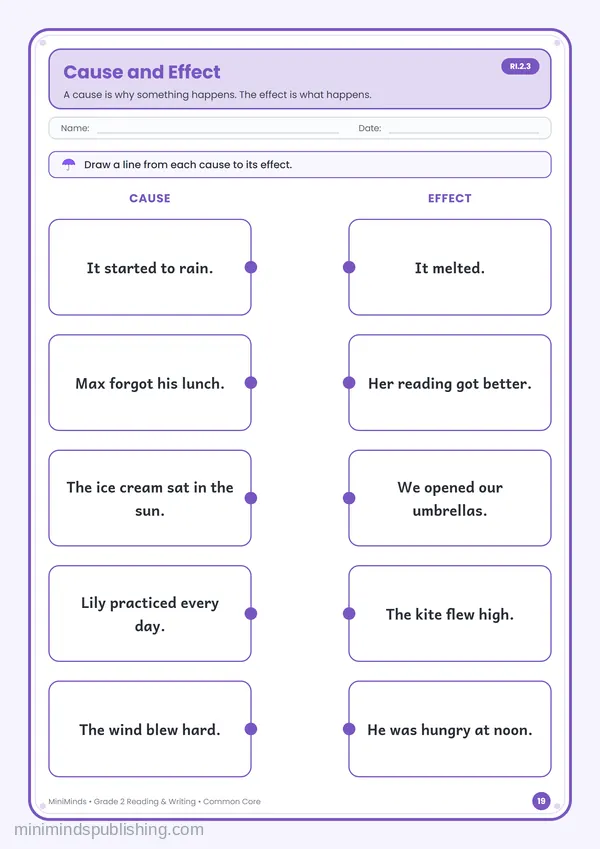
- Cause and effect (RI.2.3)
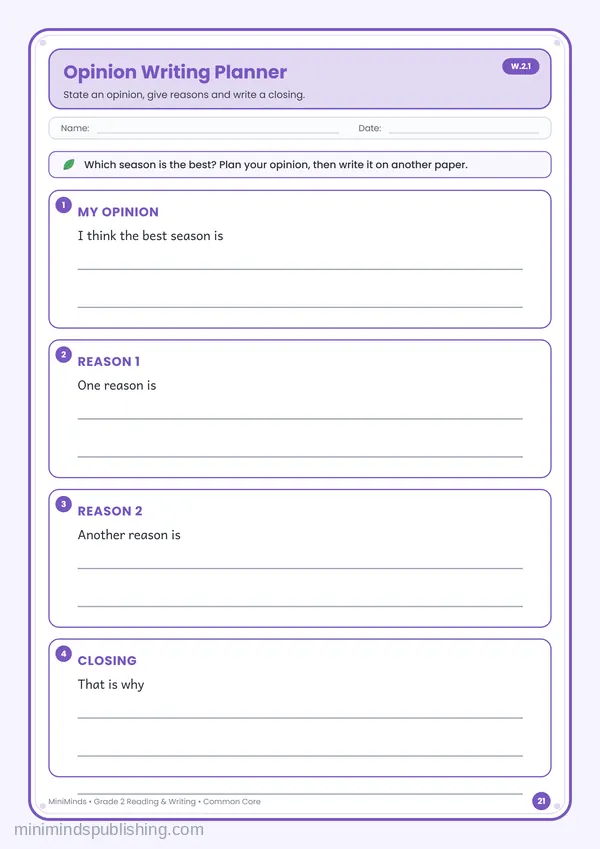
- Planning an opinion piece with reasons (W.2.1)
All worksheet sets
How to get the most out of them
- 1
Treat the prefix and suffix sheets as vocabulary tools, not spelling exercises. After finishing, ask your child to work out an unfamiliar word — "rebuild", "harmless" — using the parts. That transfer is the point.
- 2
Use "Story Map" before your child writes anything, not after they read. It works better as a planning frame for their own story than as a comprehension check.
- 3
"Fact or Opinion?" is worth doing slowly and out loud. It is the earliest critical-reading skill on the list and the one that most rewards discussion rather than filling in boxes.
- 4
For "Compare and Contrast", let them use both passages in this set — the kitten story and the bees article. Comparing a fiction and a non-fiction text is exactly what RI.2.9 asks for.
2nd Grade Reading & Writing Worksheets — questions parents ask
- What should a 2nd grader be able to read and write?
- Read grade-level text accurately and with expression, work out unfamiliar words using prefixes, suffixes and vowel patterns, identify the main idea and supporting details, and write a short narrative with a beginning, middle and end. This set covers each of those.
- Which sheets help most with vocabulary?
- "Prefixes: un-, re-, pre-", "Suffixes: -ful, -less, -ly" and "Synonyms and Antonyms". Word-part knowledge lets a child infer meanings independently, which grows vocabulary faster than memorising word lists.
- Are the reading passages included, or do I need a book?
- Included. "The Lost Kitten", "Why Bees Are Important", "The Big Storm" and "How a Seed Grows" are complete passages printed on the sheet with their questions underneath — nothing else is needed.
- Can the worksheets and coloring pages be done online, without printing?
- Yes. Every sheet can also be completed online: open it in the free MiniMinds studio and fill it in, write, draw or color on a tablet (iPad, Android, Chromebook), phone, laptop or desktop computer — with a finger, stylus or mouse, no app or account needed. Finished pages can be printed or saved as an image.
Next steps after 2nd Grade Reading & Writing Worksheets
Keep practising in Fun & Learn
Take a coloring break
📚 Want the printed book? From the MiniMinds bookshelf
Paperbacks on Amazon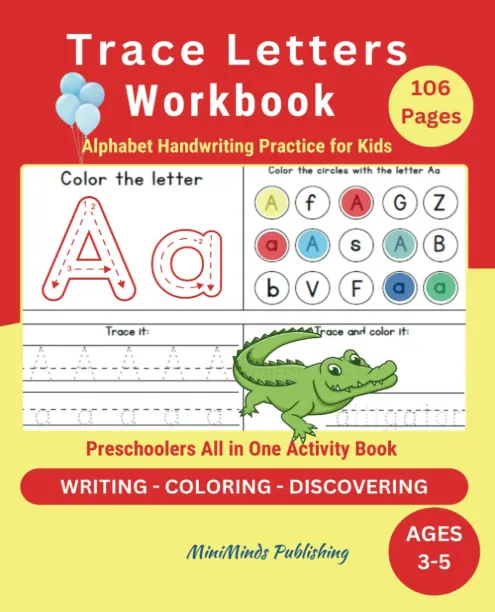 Trace Letters Alphabet Handwriting Practice for Kids Ages 3-5 Workbook: Preschoolers All in One Activity Book Writing Coloring DiscoveringView on Amazon →
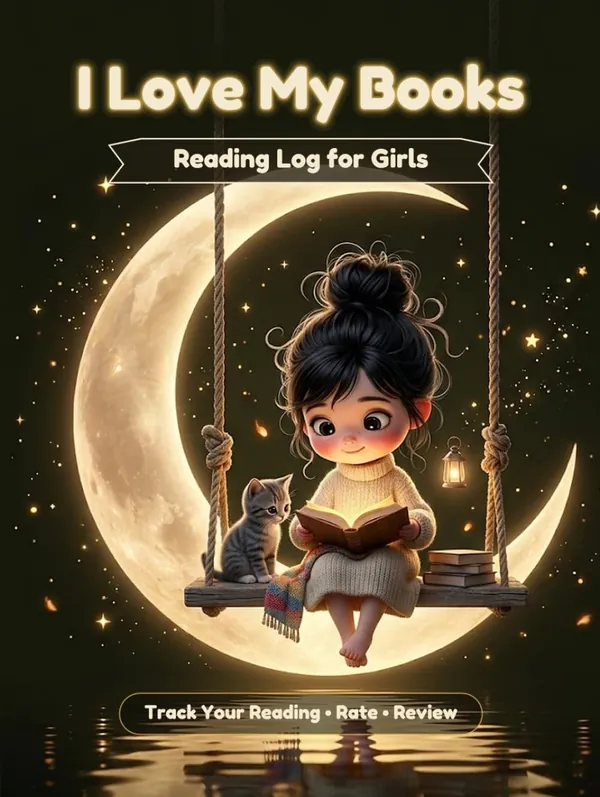 I Love My Books: Reading Log for Girls, Ages 6-12 HardcoverView on Amazon →
 Dot to Dot: Draw and Color: An Art Activity Book for Kids PaperbackView on Amazon →