Paediatric guidance says a school-age child should get about two hours of recreational screen time a day. CDC figures put the average ten-year-old at six. Almost every family reading this is somewhere in that gap, and almost every family thinks they are the only one.
Dr Samina Yousuf, a paediatrician at OSF HealthCare, set the guidance out plainly this year, and it is worth having the actual numbers rather than a vague sense of "too much":
- Under 2: no screen time, with video calls to family the exception.
- 2 to 5: up to an hour a day, and watched together rather than handed over.
- 5 to 17: generally no more than two hours a day, not counting homework.
Now the other column. CDC data on what children actually do: around six hours a day at ages 8 to 10, rising to nine at 11 to 14, and settling near seven and a half at 15 to 18.
The eleven-year-old is not slightly over. They are at four and a half times the guideline.
What a gap that size actually means
A number that far out stops being a target and starts being a verdict. Told to cut six hours to two, most parents do the arithmetic, conclude it is impossible this side of a house move, and quietly stop listening. The guidance was meant to help and instead it sorted families into "compliant" and "hopeless."
So it is worth being clear about what the two-hour figure is. It is a population-level guideline, not a diagnosis. No paediatrician thinks a child at two hours and one minute has crossed into harm. It marks roughly where, across a lot of children, the trade-offs start to tilt — and the trade-offs are the part worth your attention, not the stopwatch.
The most interesting thing the doctor said was not about hours
Buried inside a piece of quantity guidance is a quality observation, and it is the sharpest line in it. Dr Yousuf's summary of what she sees: "Impatience in real world interactions is one of the biggest results."
That is not a claim about six hours versus two. It is a claim about what a screen trains. A screen answers immediately, every time, and it never needs you to wait while someone finds their words. A conversation with a seven-year-old sibling does almost nothing but ask you to wait.
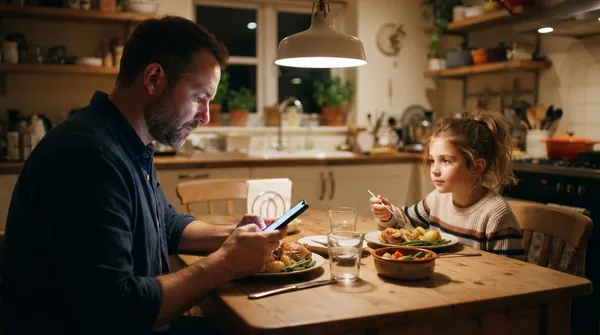
A child who spends most of their unstructured hours in the first environment gets very good at it, and correspondingly out of practice at the second. That shows up long before any of the outcomes on the standard worry list — the sleep, the mood, the school results — and you can see it at your own kitchen table without a single study.
Four changes that survive a real week
The recommendations that come with this guidance are unglamorous, and that is their strength. Every one of them is a change to the environment rather than a demand on willpower:
- Screens out of bedrooms. The single highest-yield rule in the whole list, because it removes the hours nobody is counting — the ones after lights out.
- Nothing on a screen for the two hours before bed. Partly the blue light; mostly that a wound-up brain does not fall asleep on schedule.
- Write the family plan down. healthychildren.org has a template. A plan made on a calm Sunday is a plan; a decision made at 6pm on a bad Wednesday is a surrender.
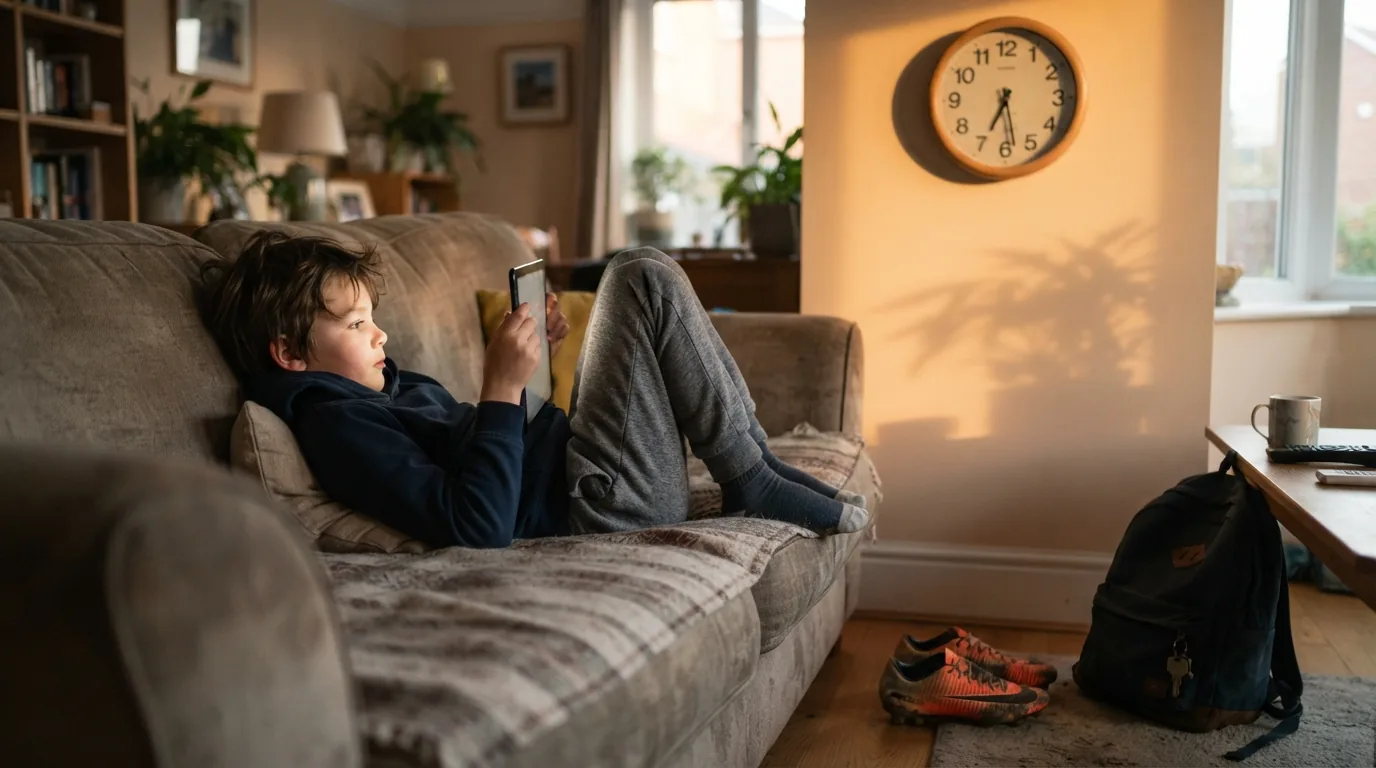
- Replace, do not just remove. An empty hour and a bored child find the nearest screen in the house. The football boots by the door are doing more work than the rule is.
Where to actually start
Not at two hours. If your child is at six, aiming for two next week guarantees a failure you will read as proof that nothing works.
Start with the bedroom, because it is a one-off decision rather than a nightly negotiation, and it reclaims the hours you cannot see. Then take one hour off the total and hold it for a month. Six to five is unimpressive on paper and it is the only kind of change that is still in place at Christmas.
And if you are nowhere near the guideline — most families are not. The number is a direction to walk in, not a line you have already failed to stand behind.