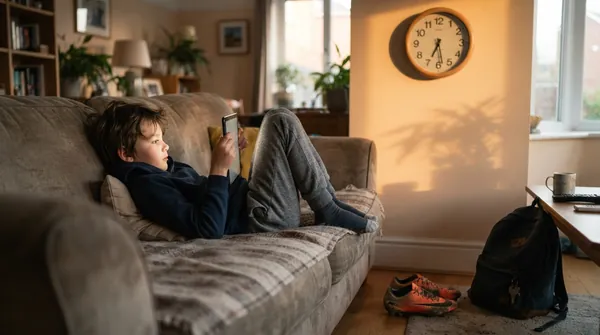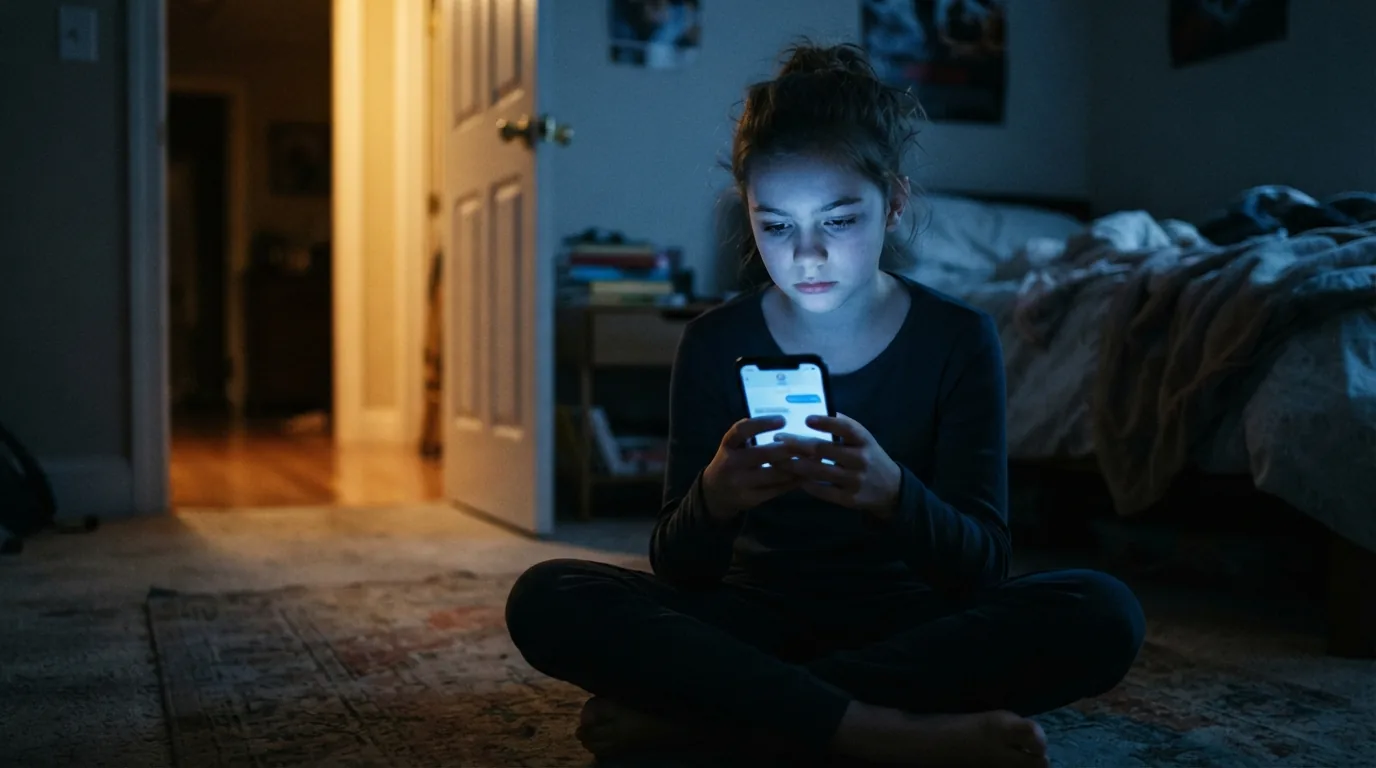
Every technology arrives with a gap between what children do and what parents think they do. This one opened faster than any of them.
A Common Sense Media census of AI use put numbers on it. 72% of teenagers have used an AI companion at least once. 52% use one regularly. It is not only teenagers: around 20% of preteens and 9% of eight and nine-year-olds have used AI chatbots too.
And the number that should get your attention: only 37% of parents know their teenager is using AI at all.
What a companion actually is
This is not a homework tool, and thinking of it as one is where most parents go wrong.
An AI companion is built to be a relationship. It remembers what you told it. It is never busy, never tired, never disappointed. It does not have a bad day and take it out on you. If you say something unkind it does not withdraw for a week the way a fourteen-year-old friend would.
For a lonely teenager that is not a gimmick. It is the most reliably warm thing in their day.
Why researchers are uneasy
A UNICEF policy brief published this year set out the concerns and compared how six jurisdictions are responding. The recurring worries are consistent across the field: the line blurring between real and artificial relationships, and the risk of emotional dependency, anxiety and low mood building around something that cannot actually hold a person.
There is also a harder edge to this. By January this year both Character.AI and Google had agreed to settle multiple lawsuits involving teenage mental health harms. This is no longer a theoretical debate about screen habits.
The conversation that works better than a ban
A ban tells a teenager that this topic is closed and that you are not somebody to bring it to. Given that the thing you are banning is a machine designed to always be available to talk, that is an unfortunate message.
What tends to work better:
- Ask what it is good at. Genuinely. "What do you use it for?" gets an answer. "Are you talking to a chatbot?" gets a shrug.
- Name the asymmetry once, without drama. It knows everything about them. It does not know them. It cannot be disappointed, which also means it cannot be proud.
- Watch for substitution, not usage. A teenager using AI to draft a message to a friend is fine. A teenager who tells the AI the thing first, and the friend never, is the pattern worth noticing.
- Be findable. The reason a machine wins is not that it is clever. It is that it is available at eleven at night without an appointment.
The uncomfortable version
If a child is choosing a chatbot for the hard conversations, the chatbot is not really the problem. It is the answer they found to a problem that was already there.
That is worth knowing before the conversation starts, because it changes the tone of it — from confiscation to curiosity, which is the only tone that gets an honest answer.