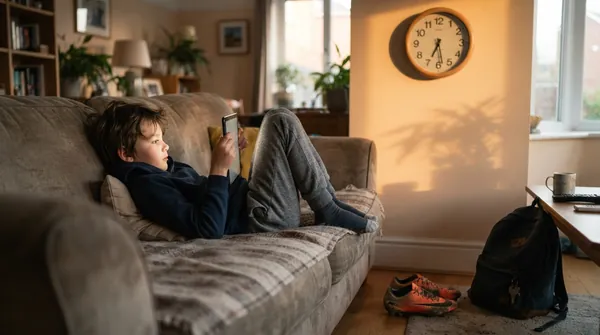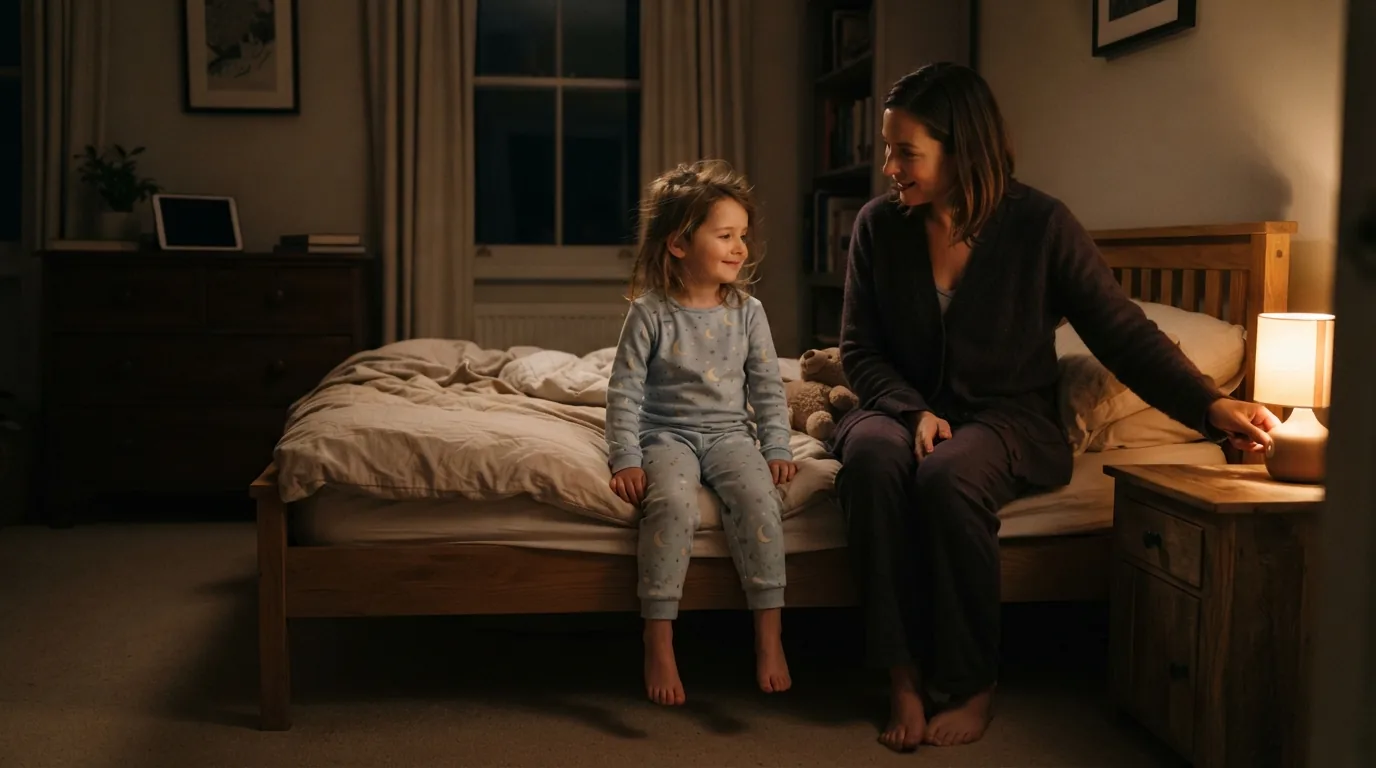
Two children watch the same forty minutes of television. One sleeps fine. The other takes an hour to go down. The difference is not the forty minutes.
Almost every screen rule in every house is built on duration. Two hours. One hour. Thirty minutes and then we turn it off. It is the easiest thing to measure, which is probably why we all landed on it.
Sleep researchers looking at preschoolers have been making a quieter argument: for the evening, timing does more work than duration. The same programme at 5pm and at 7pm are not the same event. One is watched by a child with hours of ordinary life still ahead. The other is the last thing that happens before a brain is asked to shut down.
Three separate things go wrong late
It helps to know that "screens hurt sleep" is really three different problems wearing one coat.
- Arousal. A story with stakes leaves a child alert. Not upset — alert. That takes time to come down from, and bedtime is usually scheduled as though it does not.
- Displacement. The screen quietly eats the routine. Bath, book, chat, lights — that sequence is not sentimental, it is a runway. Twenty minutes of tablet removes the runway and we wonder why the landing is rough.
- Light. The one everybody knows. Bright light late tells a body it is earlier than it is, and melatonin waits.
Only the third is about the screen itself. The first two are about what the screen took the place of.
The version that actually fits a real evening
Telling a tired family to remove screens from the evening is advice written by somebody who has not cooked dinner at 6pm with a four-year-old attached to their leg.
So do not move the amount. Move the slot.
If the tablet currently lives in the half hour before bed, put the same half hour before dinner instead. Nothing has been taken away. The child gets exactly what they got yesterday. But the last thing before sleep is now a bath and a book rather than a bright screen and an abrupt ending.
What to expect
The first two nights are worse, because you have moved the thing they use to wind down and not yet replaced it. By about night four most families find bedtime has quietly shortened by ten or fifteen minutes, which over a week is an evening back.
And if you change nothing else, change the ending. A programme that stops because it finished lands very differently from one that stops because a timer went off — and a child who has just lost an argument is not a child who is about to fall asleep.