The phone ban is no longer a debate. It is policy in 39 US states and 106 countries. The interesting question has quietly changed from "should we?" to "what did it actually do?"
The largest study so far followed more than 40,000 US schools across three years, comparing schools with locked-pouch policies against those without. The findings, reported in 2026, are more honest than either camp wanted.
What improved, and what did not
What moved: phone use in schools genuinely fell, and student well-being improved over time. Teachers reported fewer distractions. One New York high school reported stronger engagement and a 50% rise in attendance at after-school and sporting events.
What did not move: test scores. Attendance rates barely changed. Self-reported attention in class showed close to zero difference.
What got worse first: disciplinary incidents and suspensions rose briefly, and student well-being dipped before it recovered. Removing something a teenager relies on is not free, and the cost lands before the benefit does.
The bans were unpopular with students and popular with parents and teachers, which surprises nobody. The study's author, speaking to The New York Times, called the results "encouraging" and warned against abandoning bans simply because test scores had not jumped.
The number that should give us pause
A school day is roughly seven hours. A waking day is closer to fifteen. Even a perfectly enforced ban touches under half of a child's day, and none of the part where the household sets the tone.
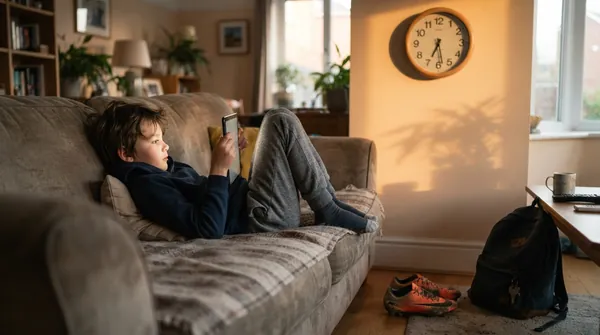
That is not an argument against bans. It is an argument against outsourcing. If the school holds the line from 8 to 3 and the phone is back in a child's hand at 3:01 until midnight, the policy has bought six hours of attention and changed nothing about the relationship.
The uncomfortable read of this study is that removal alone is not a strategy. Taking something away creates a gap. What fills the gap is the actual intervention — and schools can only fill a third of it.
What families can borrow from the policy
The schools that saw the strongest results did not simply confiscate. They made the phone-free time about something. Some ideas that translate to a kitchen:
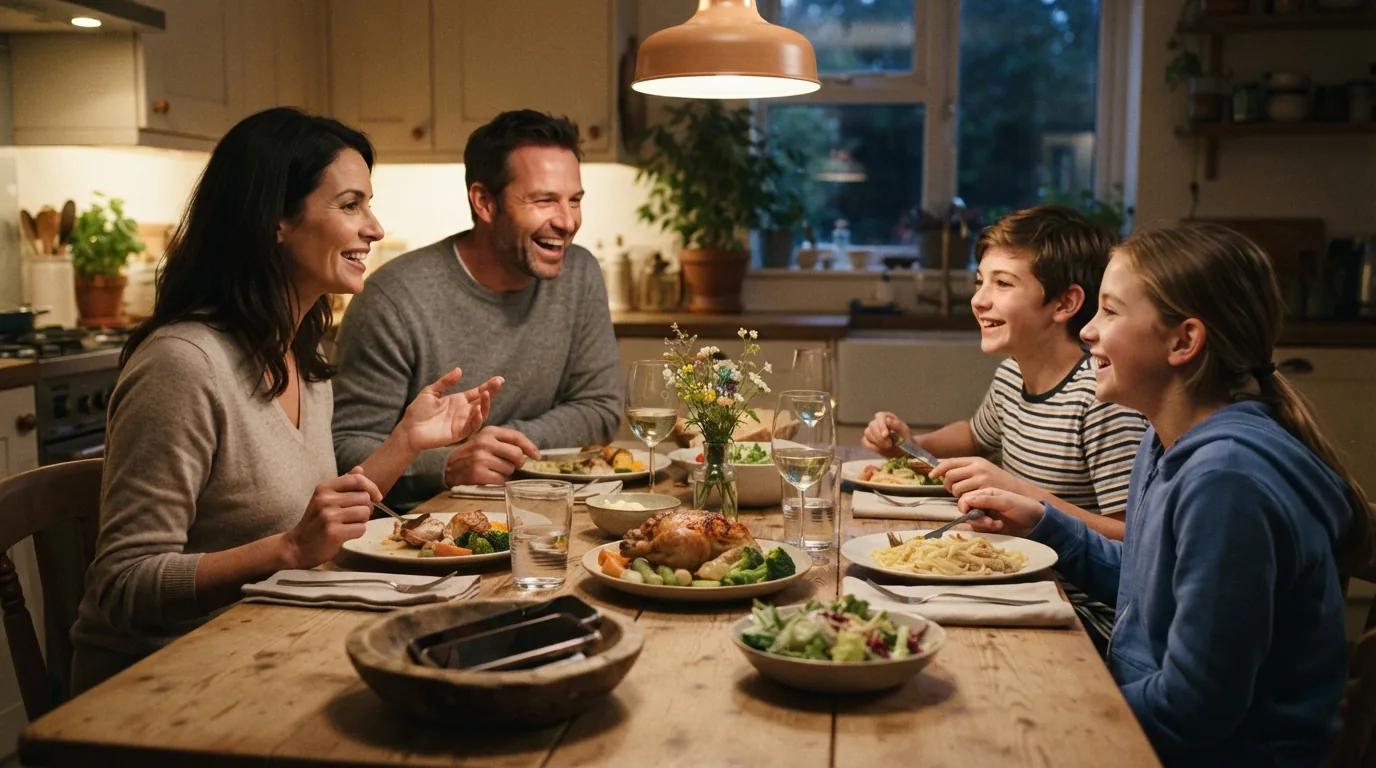
- Make it a place, not a rule. "No phones at dinner" is a prohibition to be negotiated. A bowl by the door that everyone's phone goes into, adults first, is a habit. Habits argue back less.
- Go first, visibly. The single most quoted objection children raise is the fairness one, and it is a good objection. A rule that applies to the adults is a different object than a rule imposed on children.
- Expect the dip. The study found well-being fell before it rose. The first week of a new household norm is the worst week. It is not evidence that the norm is wrong.
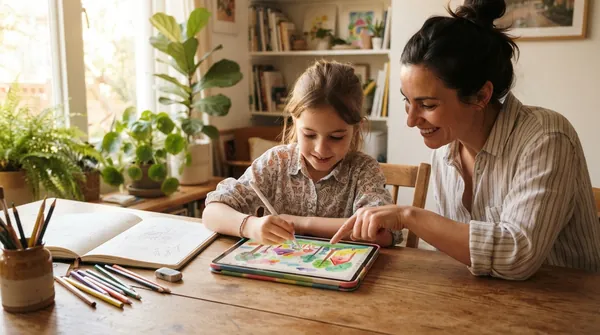
- Fill the gap deliberately. An empty hour and a bored child will find the nearest screen in the house. An hour with a board game already on the table, or a colouring book open at the page they left, resolves differently.
- Do not expect grades. Forty thousand schools could not find a test-score effect. If you are doing this for report cards you will be disappointed and you will quit. Do it for the conversations.
The honest summary
Schools have done the easy, visible half — and it was worth doing. But the evidence points somewhere less convenient than a policy: the hours that shape a child's relationship with a screen are mostly the hours we are responsible for, in rooms we control, in front of a child who is watching how we handle our own phone.
That is harder than a locked pouch. It is also the part that keeps working after they leave school.
Sources: US News on the policy landscape; Semafor and NBC News on the largest study to date; Paragon Institute literature review.