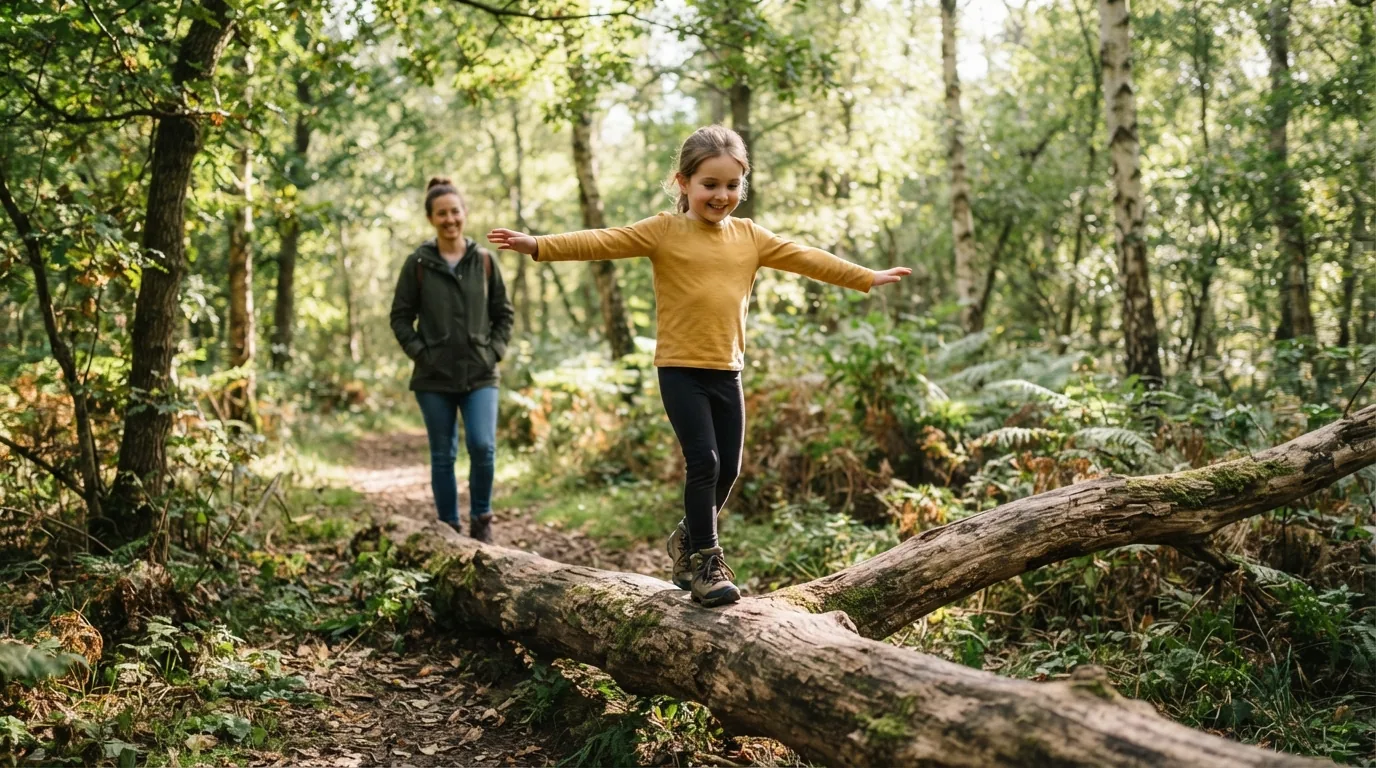
Every parent knows the feeling. Your child is one branch higher than you are comfortable with, and your mouth opens before you have decided anything.
A scoping review of nature-based risky play and outdoor adventure education gathered what the evidence says about that branch. The benefits it found clustered in three places: mental health, social competence, and the prevention of anxiety.
That last one is worth reading twice. Not "children who climb are braver." Children who are allowed uncertainty appear less likely to develop problematic anxiety later.
Why the scary thing is the useful thing
A child on a high branch is running an experiment they cannot run anywhere else. Their heart rate rises. Their hands sweat. Something in them says this is a lot — and then, over the next ninety seconds, it comes back down while they are still up there.
They have just learned, in their body rather than from a conversation, that alarm passes and that they can act while feeling it. That is the exact skill that anxiety treatment tries to teach, years later, in a room, at considerable expense.
Risky play is not a break from the important developmental work. In this window, it is the work.
The obstacle the review kept naming
The barriers researchers identified were not about children. They were parental anxiety, institutional liability worry, and a general cultural risk aversion.
Which is uncomfortable but useful, because it means the variable most within reach is the adult standing at the bottom of the tree.
Risky is not the same as dangerous
This distinction is the whole thing, and it is easy to hold on to:
- A risk is something the child can see, judge, and choose. A high branch. A fast slide. A stream to cross on stones.
- A hazard is something they cannot see and would not choose. A rotten branch. Broken glass in the sand. A drop hidden by long grass.
Your job is hazards. Their job is risks. Most of us have quietly swapped the two, and spend the playground trip managing what our children are perfectly capable of managing while never checking the ground.
Try this once
Next time your instinct says "be careful," ask a question instead: "How are you going to get down?"
It does the same safety work — they have to think about it — but it hands the assessment back to the person doing the climbing. And that, over years, is the difference between a child who checks with you and a child who can check for themselves.