Ask an adult what they remember from being four and you will almost never get a fact. You will get a smell, a texture, the feeling of cold sand. That is not nostalgia. That is how the memory was built.
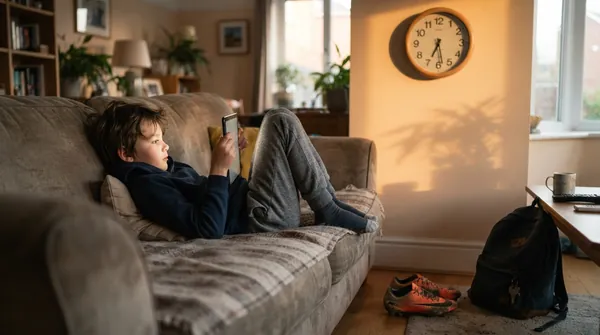
We have quietly redesigned early learning around two senses. A child looks at a screen and listens to it, and we call that education. It can be — but seeing and hearing are the two thinnest channels a young brain has, and we are running almost everything through them.
A three-year-old has a whole body available for the job. Learning at that age happens through weight, resistance, temperature, balance, the effort of a hand closing around something heavier than expected. Those are not decorations on the lesson. In early childhood they are the lesson.
Why the wooden block beats the picture of the block
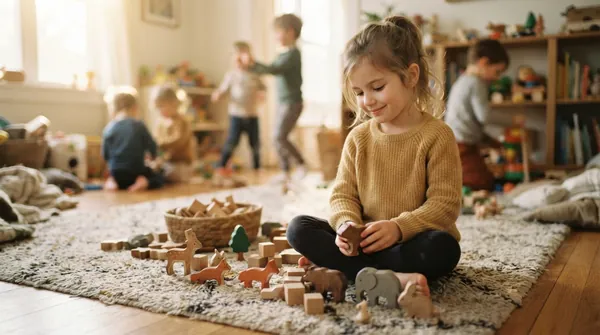
Show a toddler a video of a tower falling and they watch it. Hand them blocks and let them build a tower that falls, and something entirely different happens.
They feel the wobble a half-second before the collapse. They learn that the big one goes on the bottom — not because they were told, but because the alternative fell on their foot. Their hands adjust before they could explain why.
The screen version gives them the answer. The block version gives them the experience of finding it, and those are stored in different places and last different lengths of time.
What multi-sensory actually looks like on a Tuesday
It sounds like a curriculum. It is mostly just letting ordinary things be messier and slower.
- Cooking counts. Weight, temperature, smell, texture, waiting, and a result you eat. It is the densest learning hour in most houses and it was going to happen anyway.
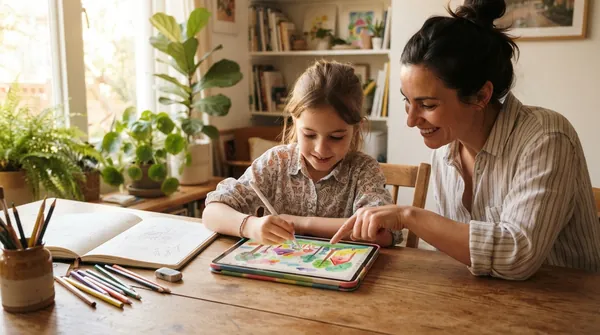
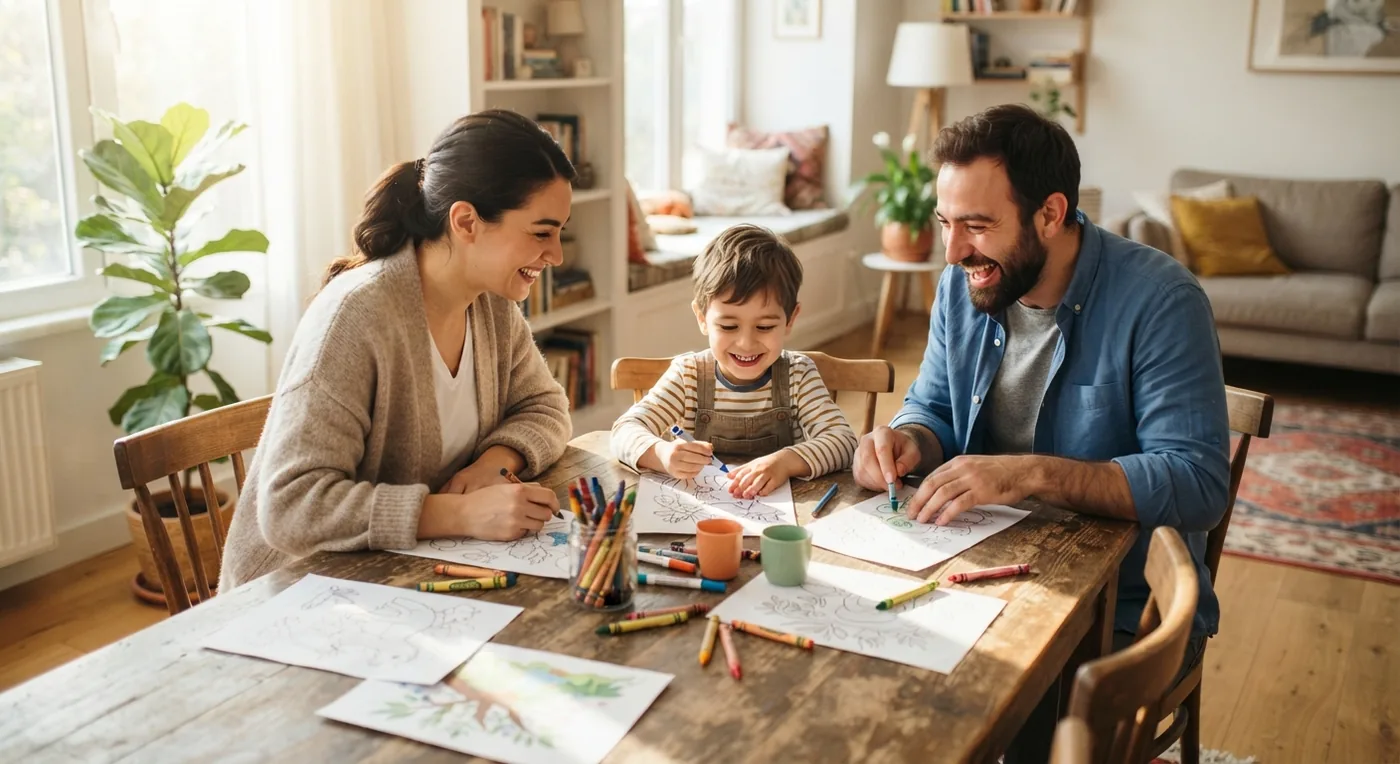
- Let the crayon be a crayon. Colouring on paper carries resistance and pressure and the small motor control that later becomes handwriting. Colouring on a tablet is a lovely thing, but the finger meets glass every time.
- Outside is not just exercise. Uneven ground trains balance, which trains attention. A child who has climbed something sits still more easily afterwards, not less.
- Say what they are doing. "That one is heavier." "It is sticky now." Words attached to a physical sensation stick in a way that words attached to a picture do not.
This is not an argument against screens
It is an argument about proportion. A screen is very good at some things — showing a child a whale, a volcano, a country they will not visit this year — and completely unable to do others.
The question worth asking is not how many minutes. It is simpler than that: today, did this child get to use their hands for something that mattered to them?
If the answer is yes most days, the screen time is probably fine. If the answer is no, no timer app is going to fix what is actually missing.