1st Grade Logic & Problem Solving Worksheets
Number rules, logic grids, balance scales, sudoku, Venn diagrams and arrow code. · 1.OA / 1.NBT / 1.MD.C.4 · MP.1 / MP.3 / MP.7
All 15 worksheets
Tap a sheet to open it full size
Save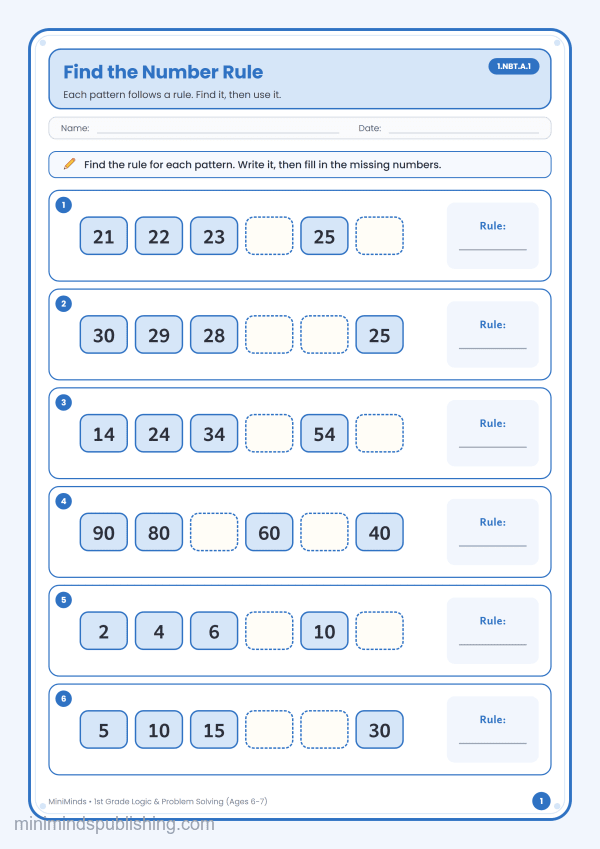 1.NBT.A.1
Find the Number Rule
Number patterns
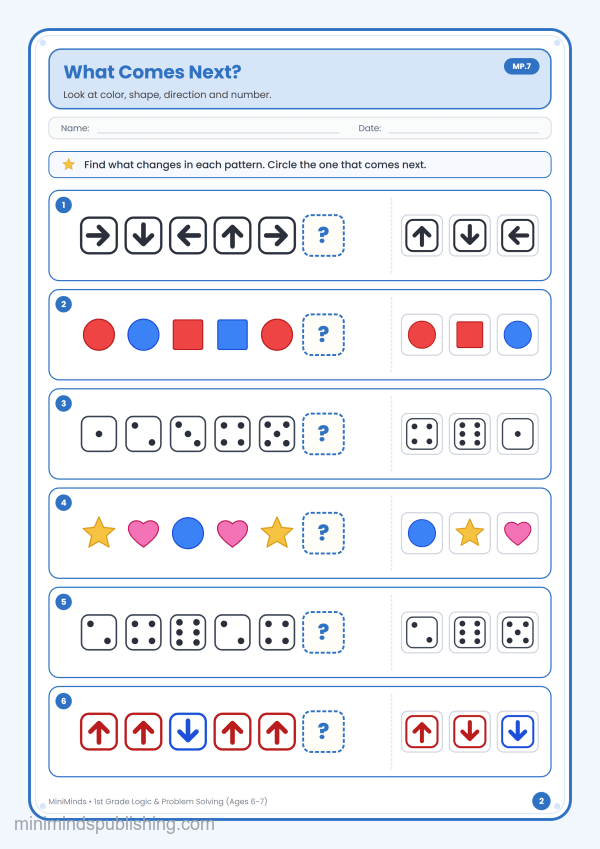 MP.7
MP.7What Comes Next?
Shape patterns
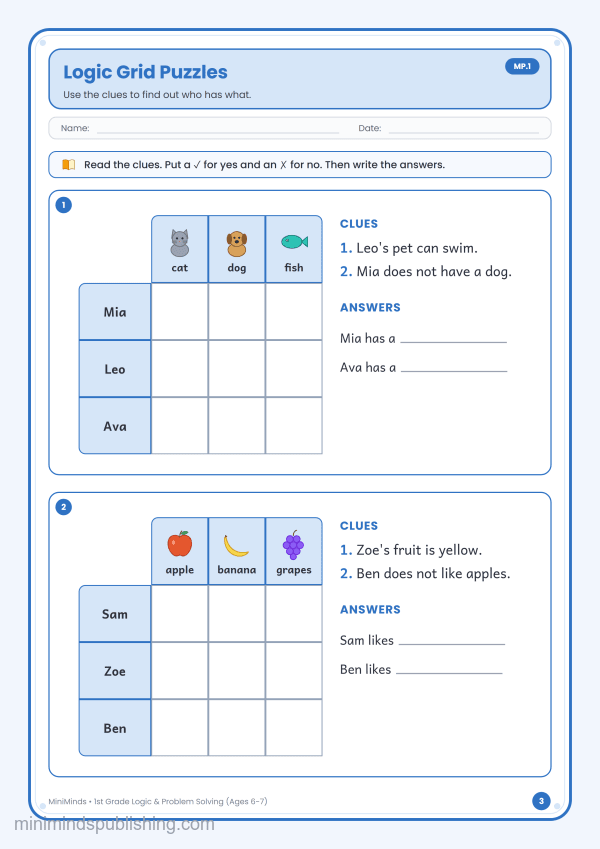 MP.1
MP.1Logic Grid Puzzles
Logic grids
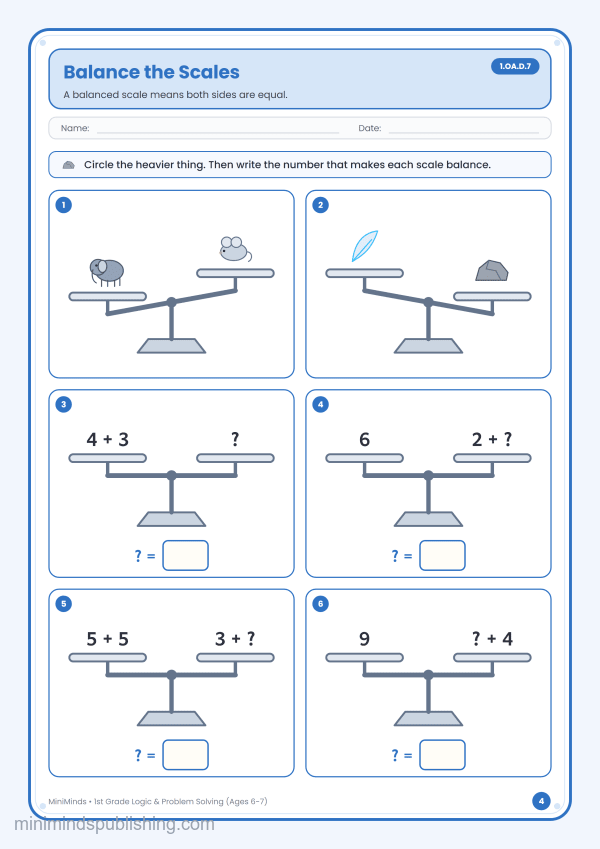 1.OA.D.7
Balance the Scales
Equal sides
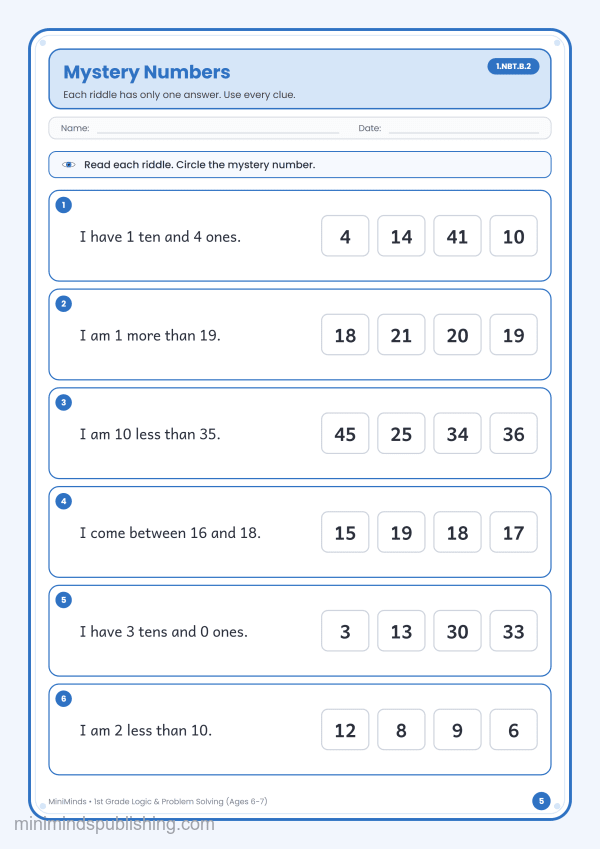 1.NBT.B.2
Mystery Numbers
Number riddles
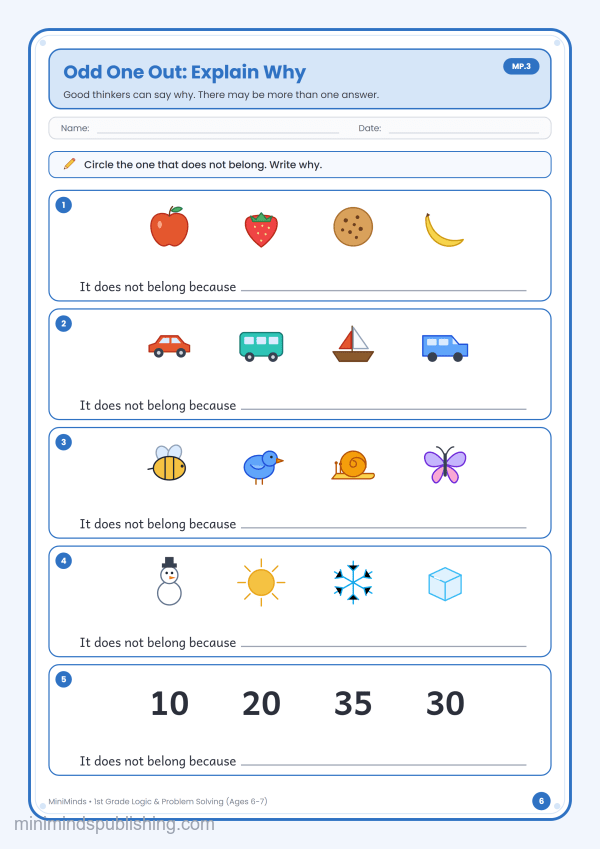 MP.3
MP.3Odd One Out: Explain Why
Reasoning
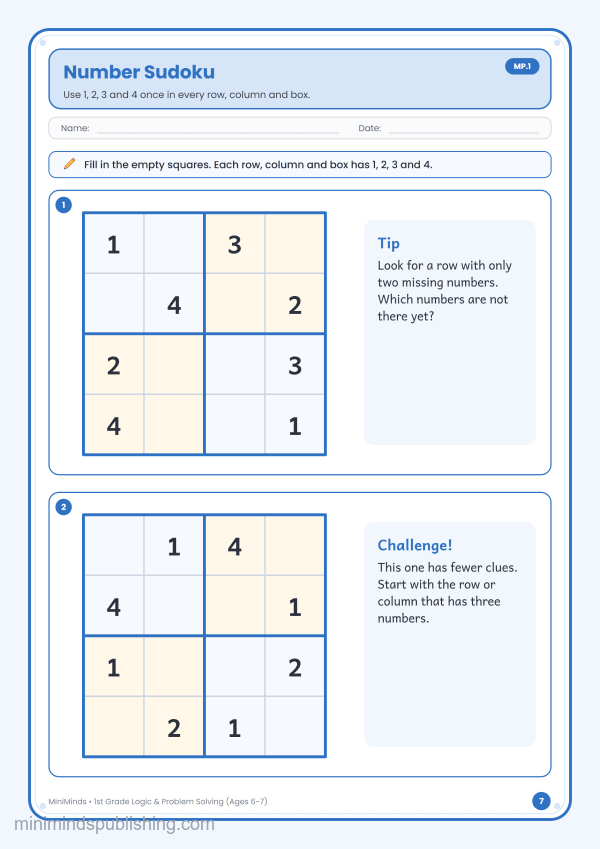 MP.1
MP.1Number Sudoku
Sudoku
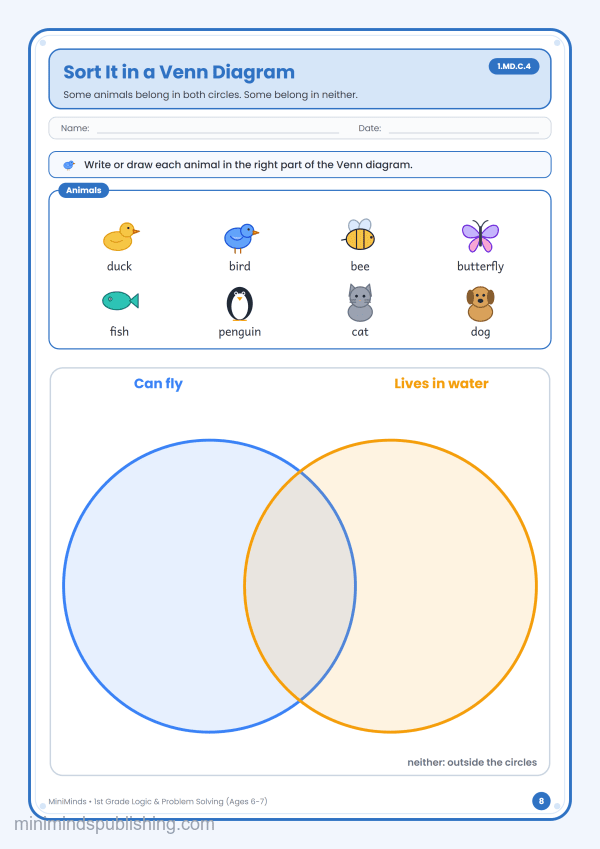 1.MD.C.4
Sort It in a Venn Diagram
Venn diagrams
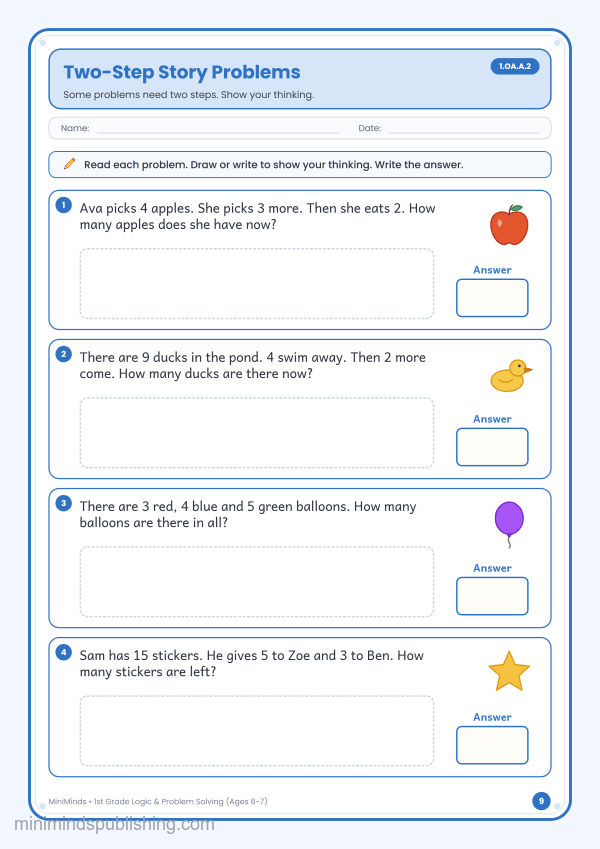 1.OA.A.2
Two-Step Story Problems
Word problems
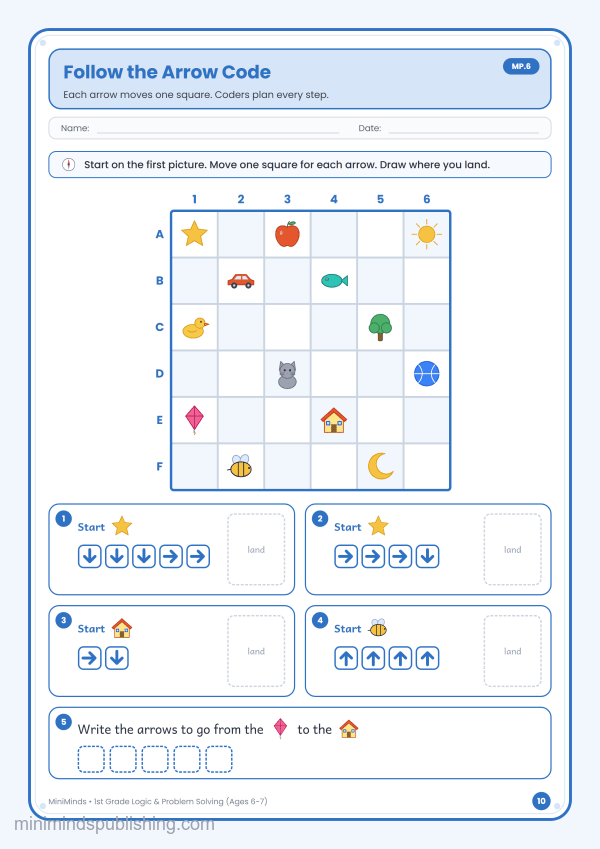 MP.6
MP.6Follow the Arrow Code
Coding
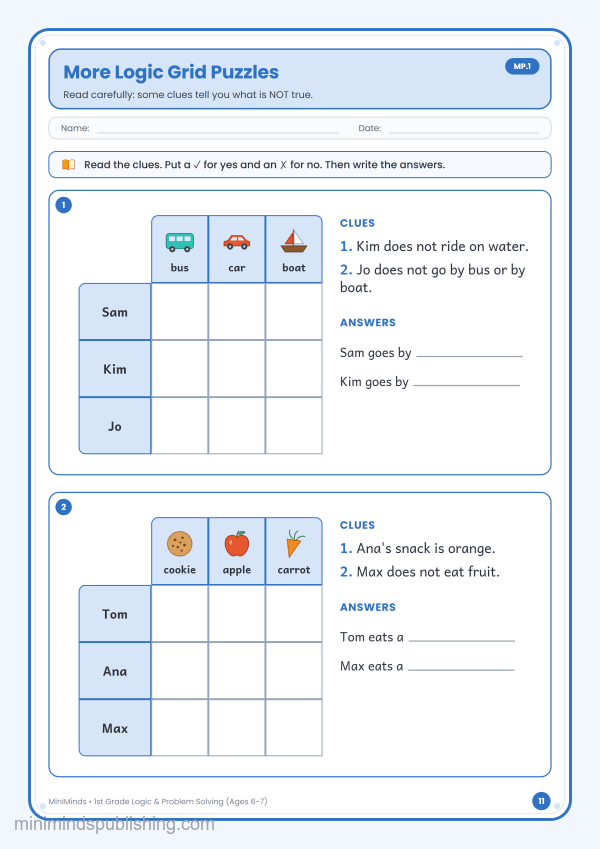 MP.1
MP.1More Logic Grid Puzzles
Logic grids
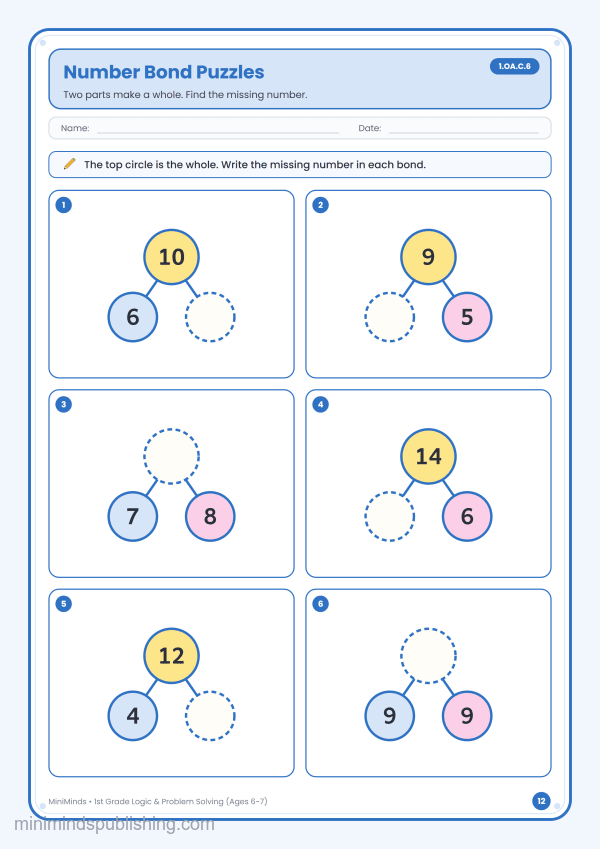 1.OA.C.6
Number Bond Puzzles
Number bonds
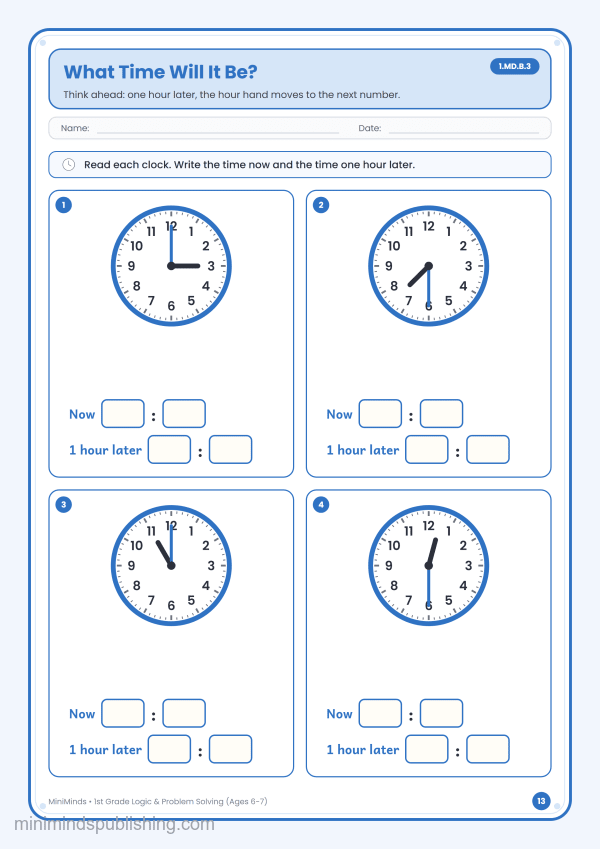 1.MD.B.3
What Time Will It Be?
Time reasoning
 MP.6
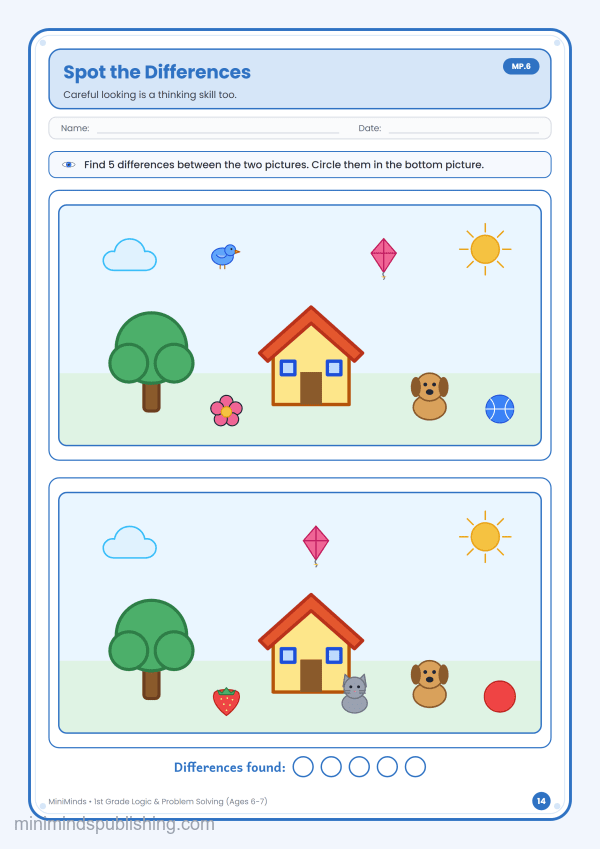
MP.6Spot the Differences
Visual reasoning
 MP.6
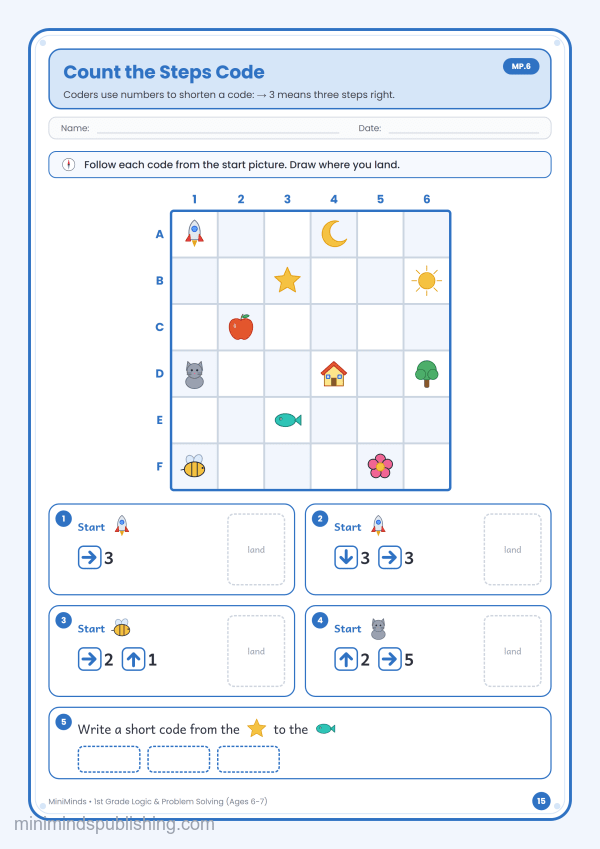
MP.6Count the Steps Code
Coding
About these 1st grade logic & problem solving worksheets
These 1st grade logic and problem-solving worksheets stretch first graders with real puzzles: finding the rule in a number pattern, logic grid puzzles, balance scales, place value riddles, explaining the odd one out, 4 × 4 number sudoku, a Venn diagram, two-step story problems and following arrow code on a grid.
The math inside them follows the Common Core 1st grade standards — counting by ones and tens (1.NBT.A.1), place value (1.NBT.B.2), the meaning of the equal sign (1.OA.D.7), organizing data (1.MD.C.4) and word problems with three numbers (1.OA.A.2) — while the puzzles build the practices of persevering (MP.1) and explaining reasoning (MP.3).
What these 15 worksheets cover
- Number patterns counting by 1s, 2s, 5s and 10s, forwards and backwards
- Shape, color, direction and dot patterns
- Beginner 3 × 3 logic grid puzzles with clues
- Balance scales and the equal sign
- Mystery number riddles using tens and ones
- Explaining why one does not belong
- 4 × 4 number sudoku
- Sorting animals in a Venn diagram
- Two-step and three-number story problems
- Following arrow code on a coordinate grid
- Logic grid puzzles with not-clues
- Number bond puzzles within 20
- Telling time and working out one hour later
- Spot the differences
- Arrow code with step counts
All worksheet sets
How to get the most out of them
- 1
On the logic grid sheet, show your child how one ✓ means ✗ everywhere else in that row and column. Once they see it, the puzzles solve themselves.
- 2
Use real objects on a coat hanger or kitchen scale before "Balance the Scales" so "equal" means the same on both sides, not "the answer comes next".
- 3
After "Follow the Arrow Code", let your child write arrow directions for you to follow around the room. Giving exact instructions is harder than following them.
1st Grade Logic & Problem Solving Worksheets — questions parents ask
- What are logic grid puzzles?
- A logic grid lists people down the side and things across the top. Each clue lets you mark a square yes or no until every person is matched to one thing. The 1st grade sheet uses 3 × 3 grids and two clues each.
- Do these worksheets teach coding?
- The arrow code sheet teaches the core idea of coding: a sequence of exact steps. It needs no screen. Children follow arrows one square at a time, then write their own code.
Next steps after 1st Grade Logic & Problem Solving Worksheets
Keep practising in Fun & Learn
- SudokuAges 3–6
- Puzzles and MazesAges 3–6
- MazesAges 3–6
- Spot the DifferencesAges 3–6
- Shadow MatchingAges 3–6
- Things That Go TogetherAges 3–6