Pre-K Logic & Problem Solving Worksheets
Patterns, odd one out, shadows, sorting, sizes, positions and cause and effect. · Head Start ELOF: Approaches to Learning, Math Reasoning
All 15 worksheets
Tap a sheet to open it full size
Save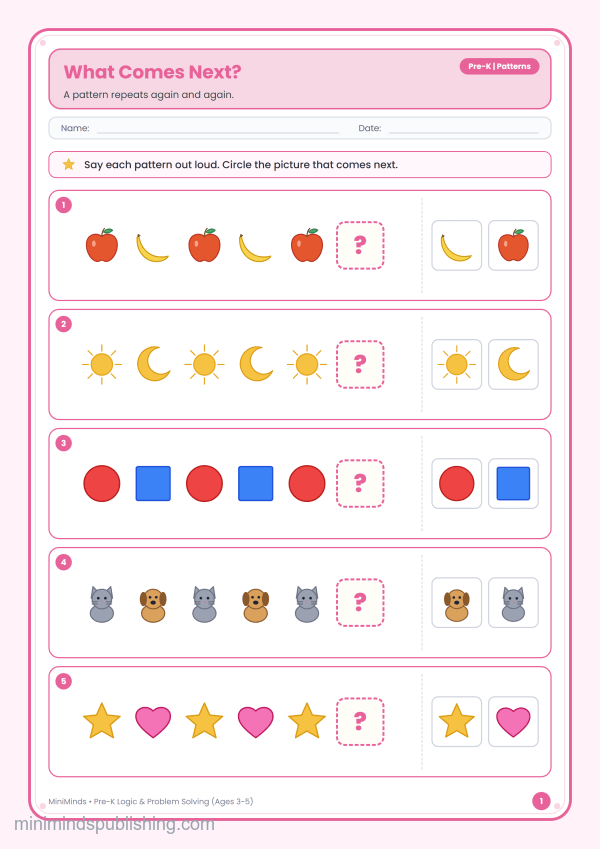
What Comes Next?
Patterns
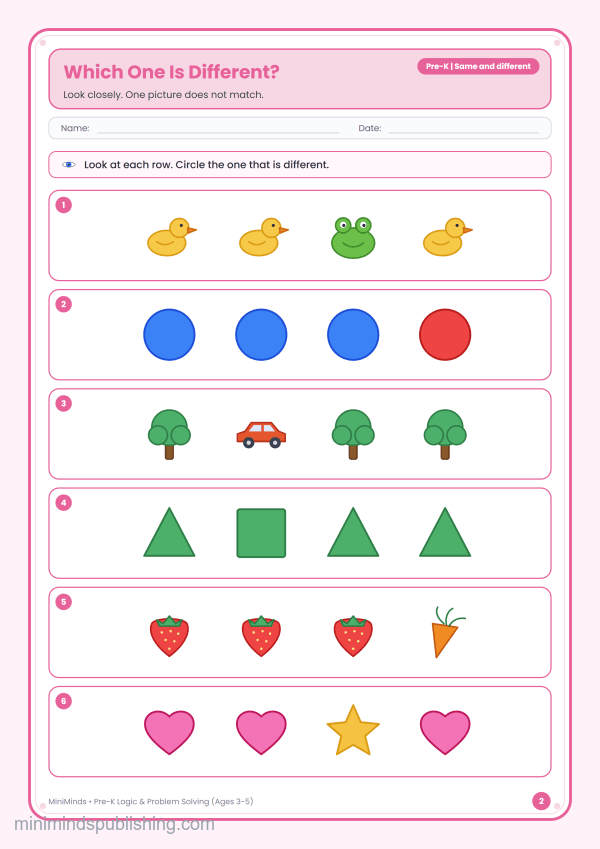
Which One Is Different?
Same and different
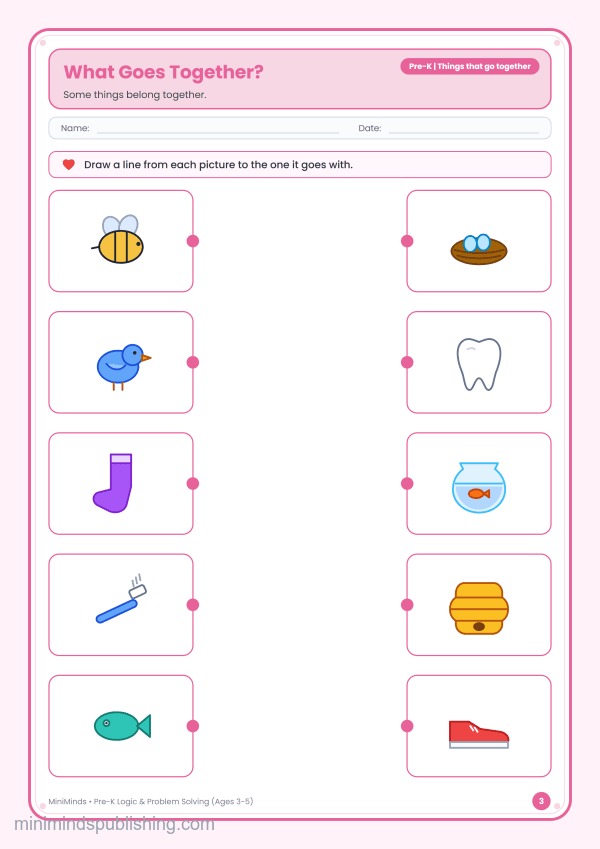
What Goes Together?
Things that go together
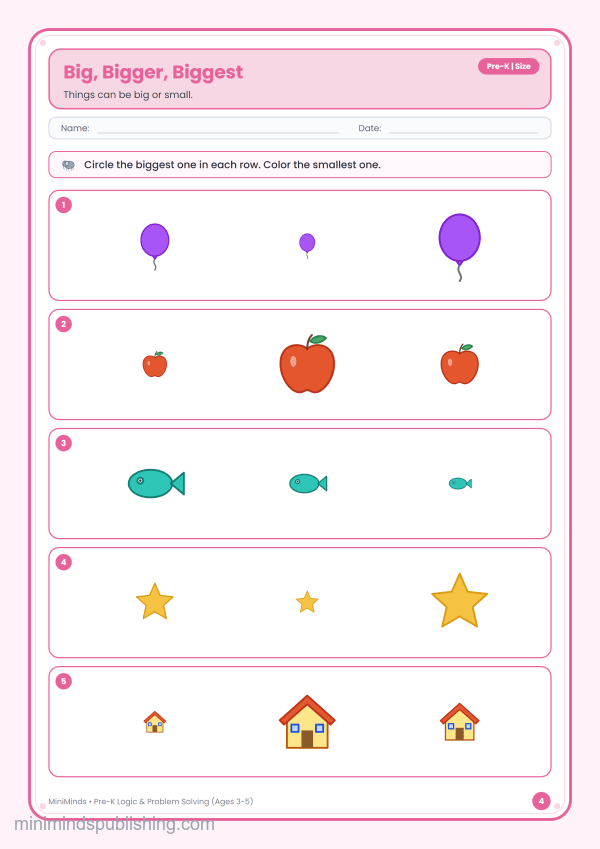
Big, Bigger, Biggest
Size
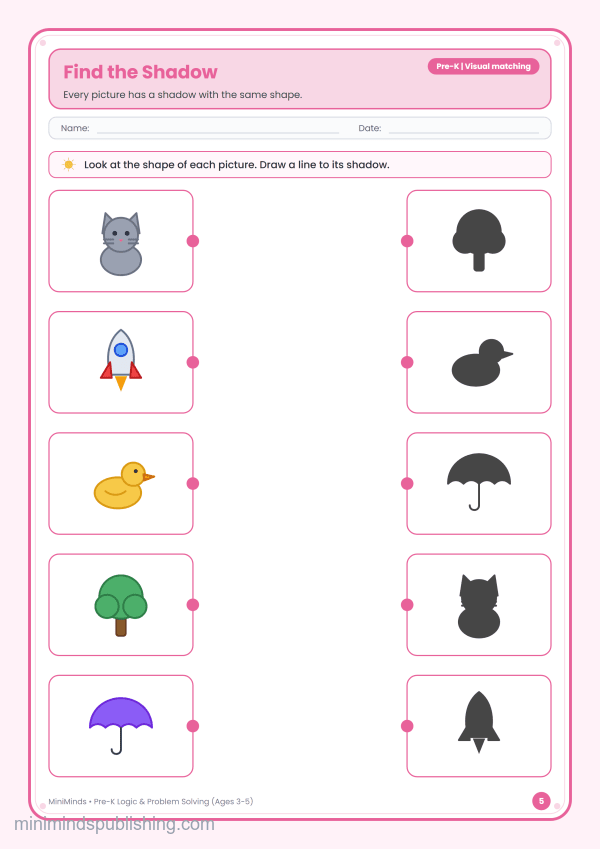
Find the Shadow
Visual matching
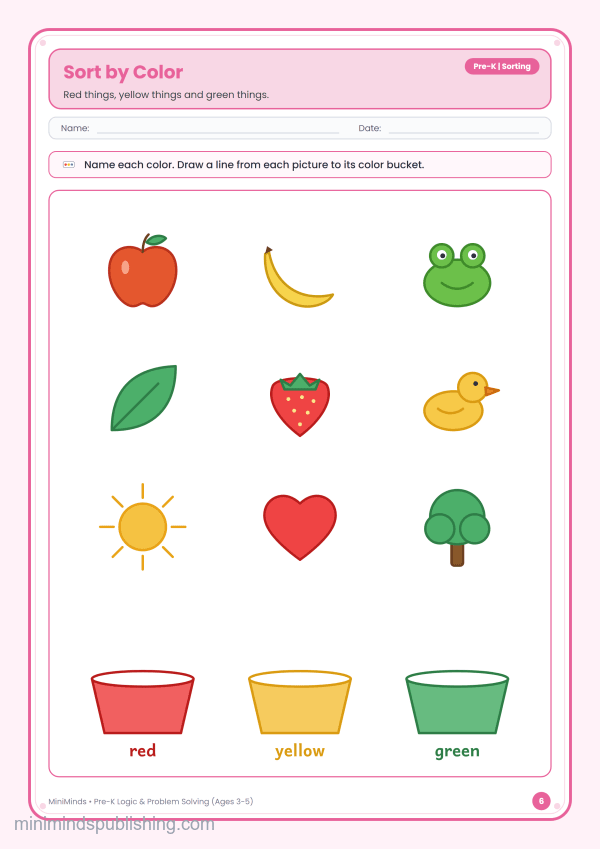
Sort by Color
Sorting
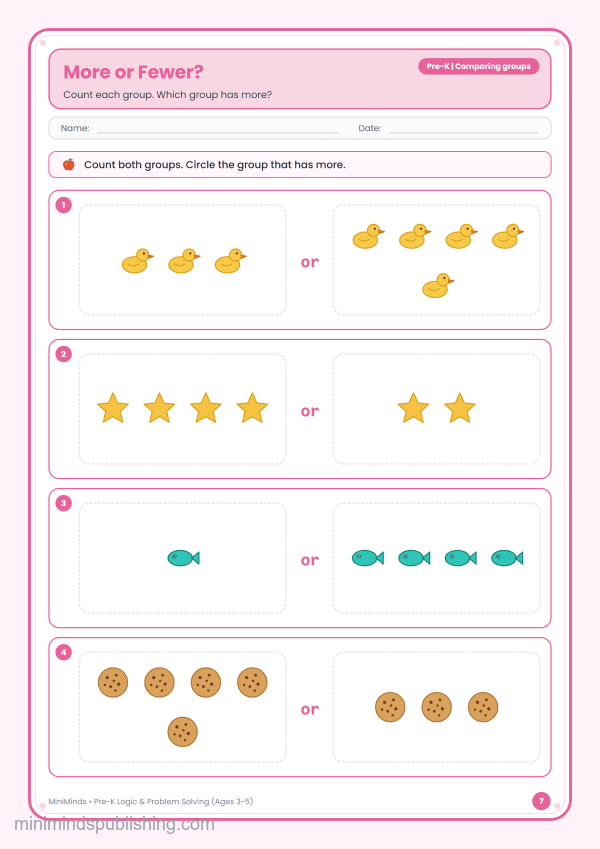
More or Fewer?
Comparing groups
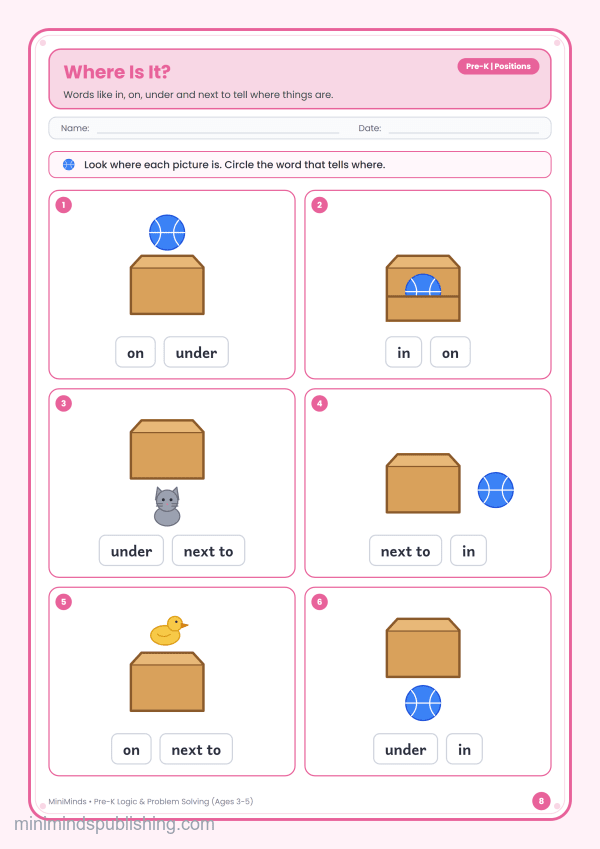
Where Is It?
Positions
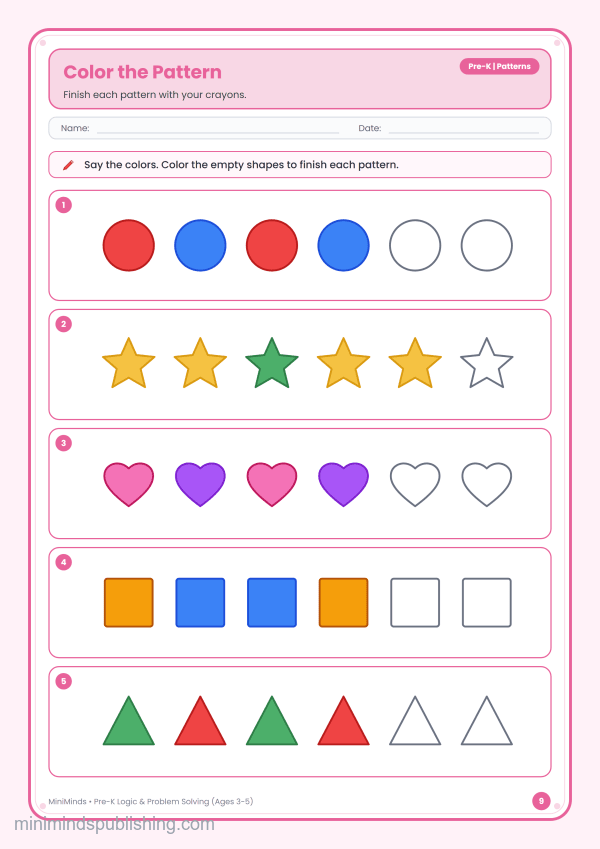
Color the Pattern
Patterns
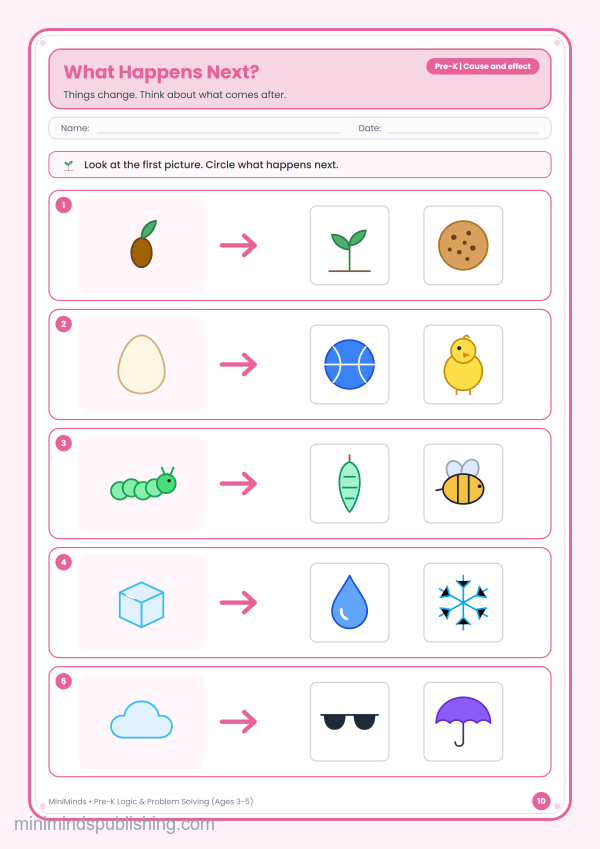
What Happens Next?
Cause and effect
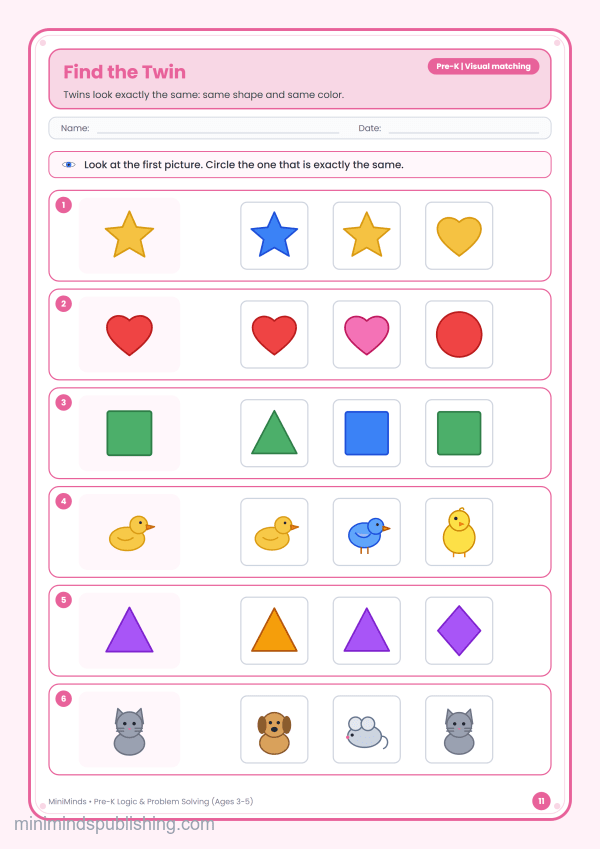
Find the Twin
Visual matching
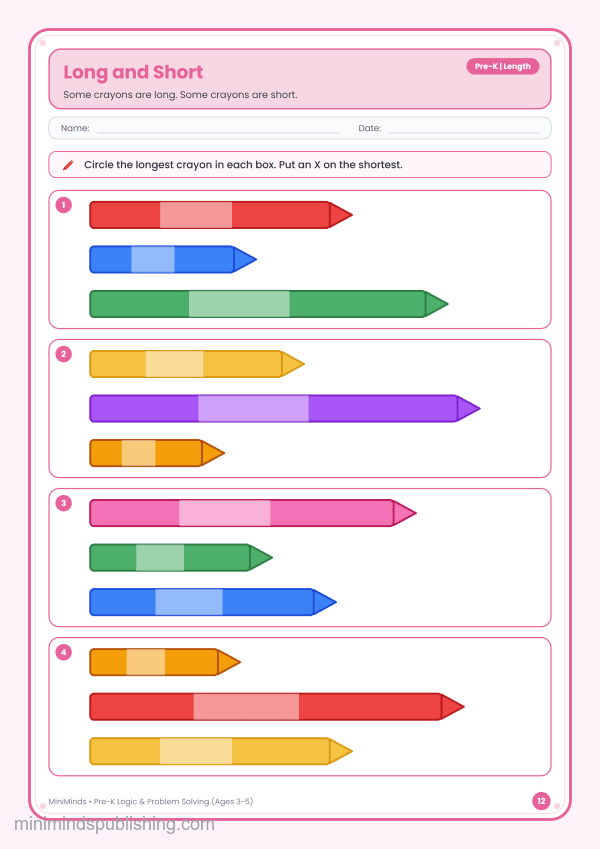
Long and Short
Length
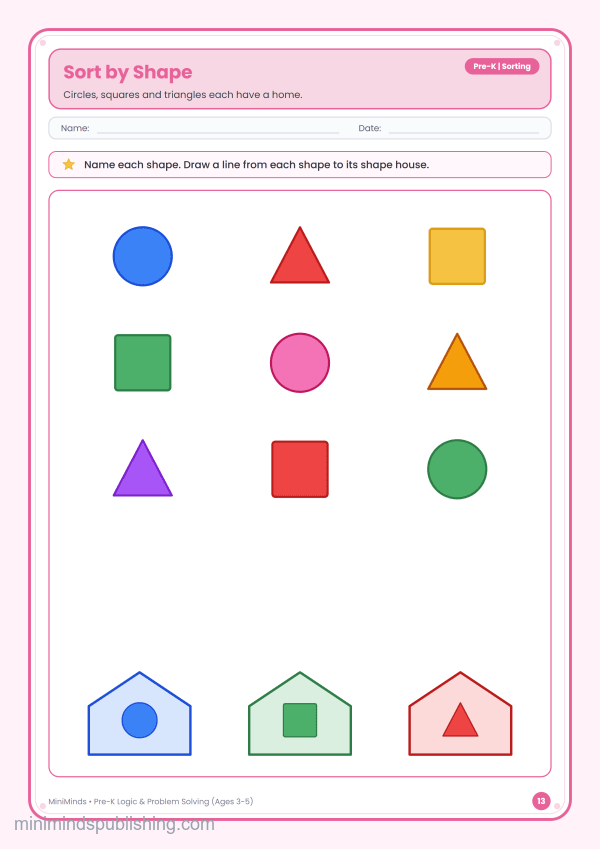
Sort by Shape
Sorting
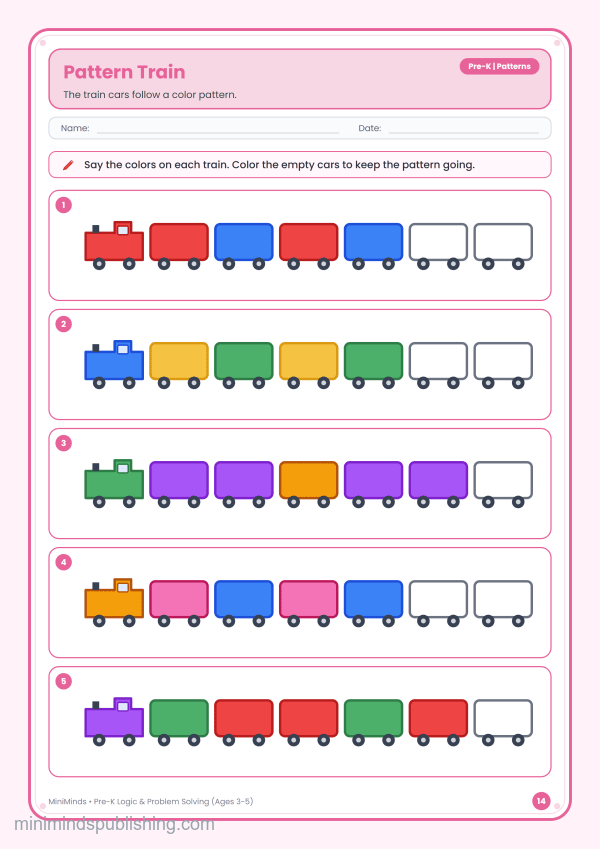
Pattern Train
Patterns
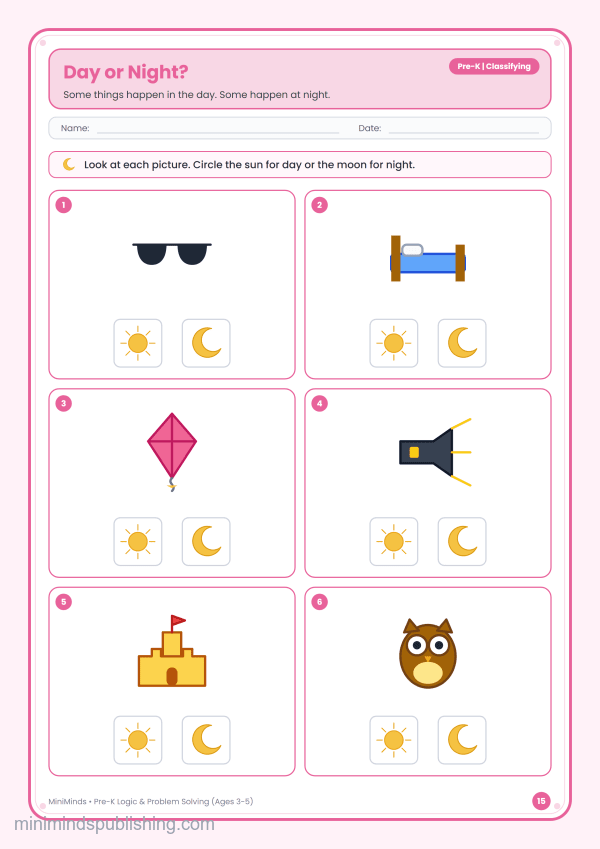
Day or Night?
Classifying
About these pre-k logic & problem solving worksheets
These Pre-K logic and problem-solving worksheets give a three-to-five-year-old their first taste of thinking step by step: spotting what comes next in a pattern, finding the one picture that is different, matching shadows, sorting by color, comparing two groups and deciding what happens next.
Every sheet is almost entirely pictures, so a child who cannot read yet can still do the thinking. The skills behind them — noticing, comparing, sorting and predicting — are the ones Head Start lists under approaches to learning, and they are the groundwork for early math.
What these 15 worksheets cover
- Continuing simple AB patterns with pictures and shapes
- Finding the one that is different in a row
- Things that go together, such as a bee and a hive
- Comparing sizes: biggest and smallest
- Matching pictures to their shadows
- Sorting objects by color
- Comparing two groups: which has more?
- Position words: in, on, under and next to
- Coloring to finish a repeating pattern
- Cause and effect: what happens next?
- Finding the exact twin: same shape and same color
- Comparing lengths: longest and shortest
- Sorting shapes into circle, square and triangle houses
- Coloring a pattern train
- Classifying things as day or night
All worksheet sets
How to get the most out of them
- 1
Ask your child to say each pattern out loud — "apple, banana, apple, banana" — before choosing. Hearing the rhythm is what makes the next picture obvious.
- 2
After "Find the Shadow", make shadows with a torch and a few toys. Guessing the toy from its shadow is the same skill in three dimensions.
- 3
For "Where Is It?", hide a toy in, on, under and next to a real box and let your child say where it is before doing the page.
Pre-K Logic & Problem Solving Worksheets — questions parents ask
- Can a three-year-old do logic worksheets?
- Yes, if they are picture-based and short. Start with "What Comes Next?" and "Which One Is Different?". Each has one idea per row and needs no reading or writing — just looking, pointing and circling.
- Why do logic puzzles matter before kindergarten?
- Noticing patterns, sorting and comparing are the thinking skills that counting, reading and science build on. A child who can say why one picture does not belong is practising reasoning, not just matching.
Next steps after Pre-K Logic & Problem Solving Worksheets
Keep practising in Fun & Learn
- SudokuAges 3–6
- Puzzles and MazesAges 3–6
- MazesAges 3–6
- Spot the DifferencesAges 3–6
- Shadow MatchingAges 3–6
- Things That Go TogetherAges 3–6