Kindergarten Logic & Problem Solving Worksheets
Pattern detective, picture sudoku, riddles, sort and count, directions and a maze. · K.MD.B.3 / K.CC / K.G.A.1 · MP.1 / MP.7
All 15 worksheets
Tap a sheet to open it full size
Save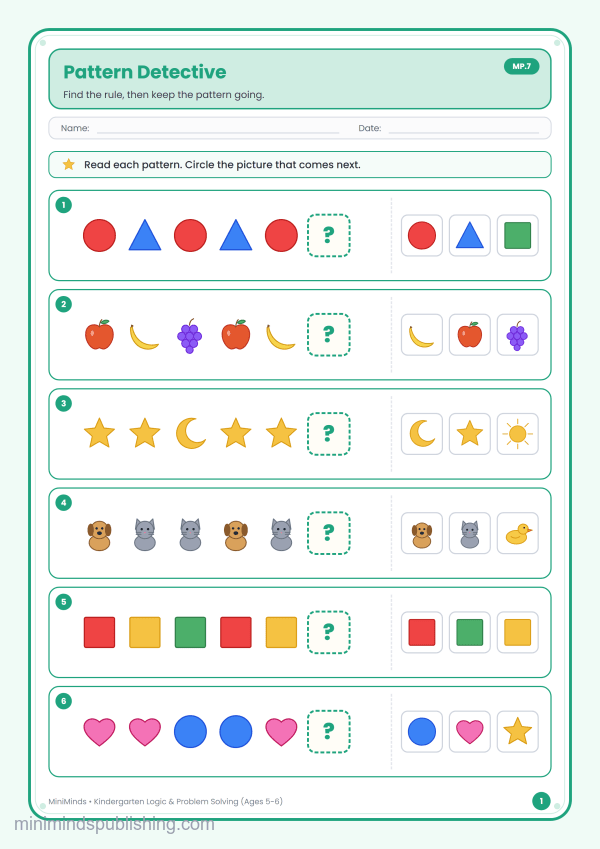 MP.7
MP.7Pattern Detective
Patterns
 K.MD.B.3
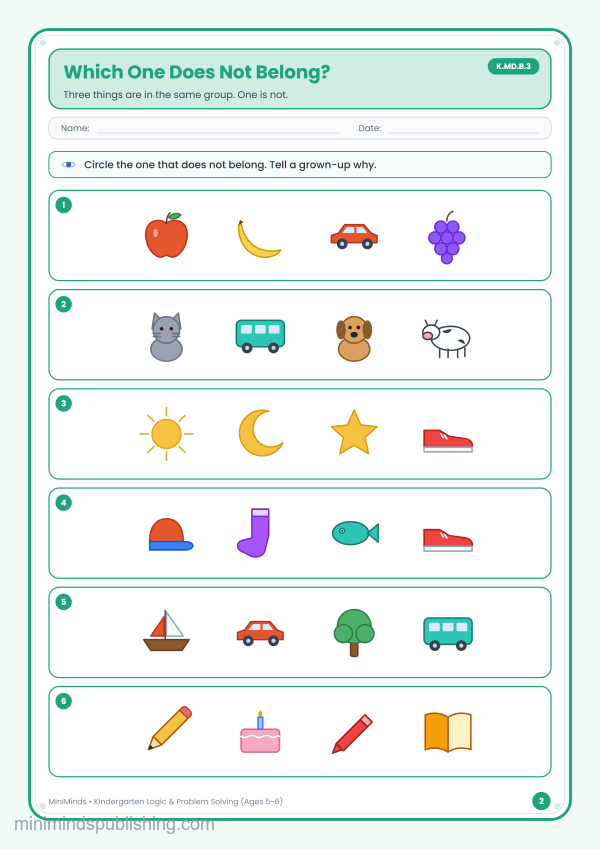
Which One Does Not Belong?
Classifying
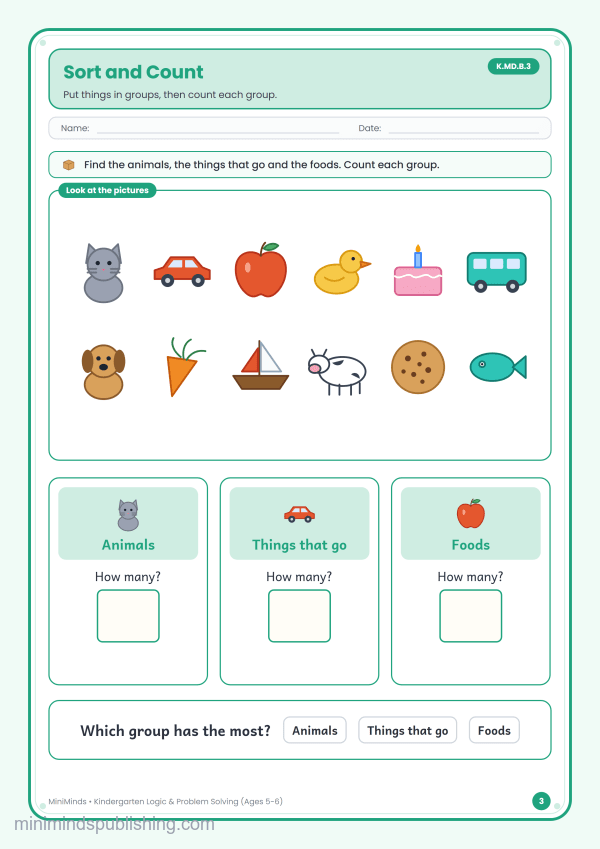 K.MD.B.3
Sort and Count
Sorting and counting
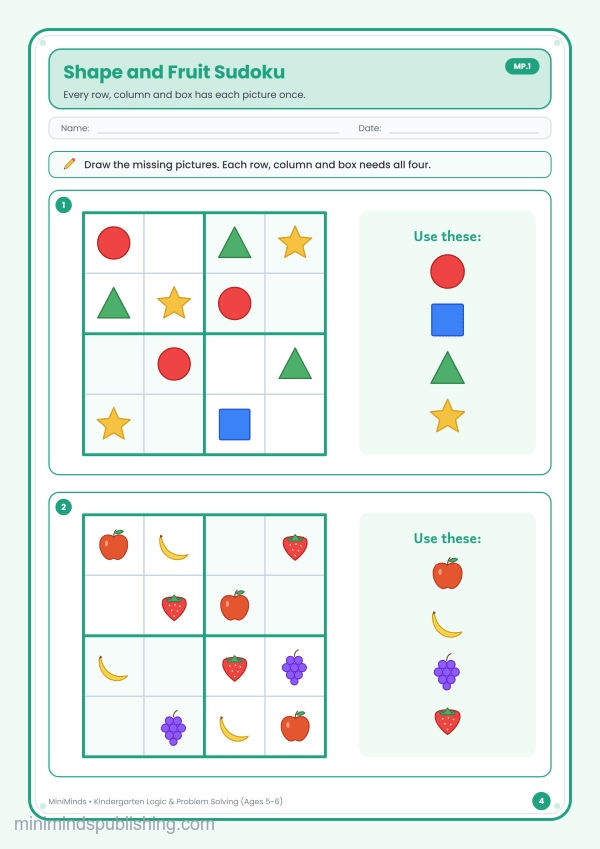 MP.1
MP.1Shape and Fruit Sudoku
Picture sudoku
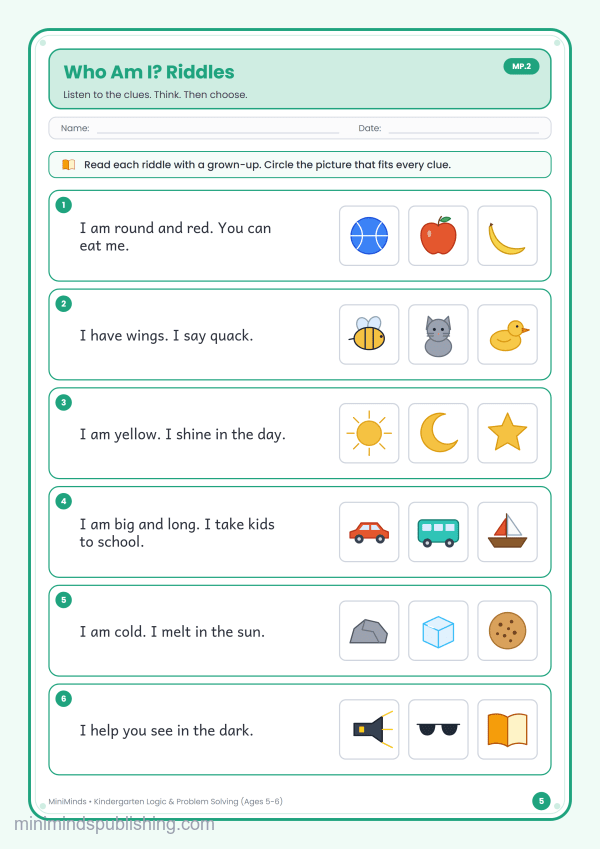 MP.2
MP.2Who Am I? Riddles
Using clues
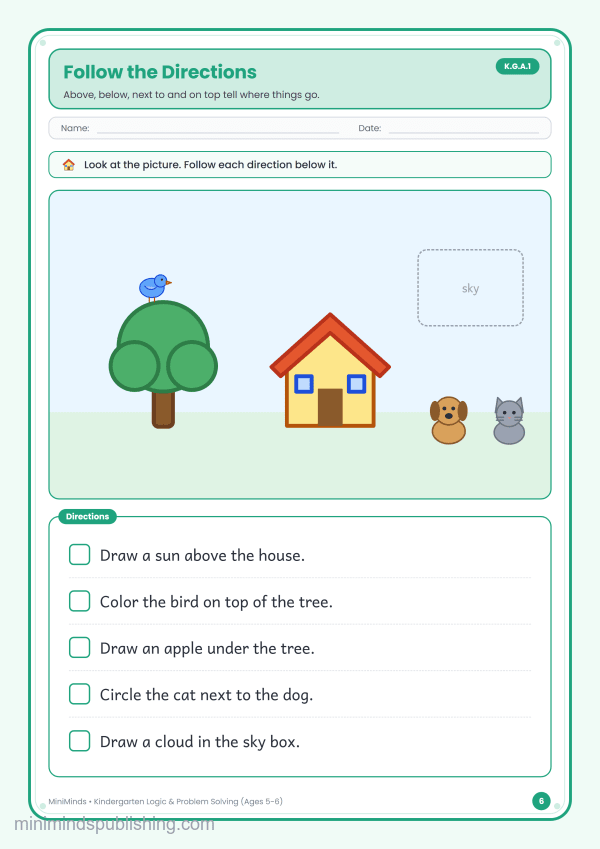 K.G.A.1
Follow the Directions
Positions
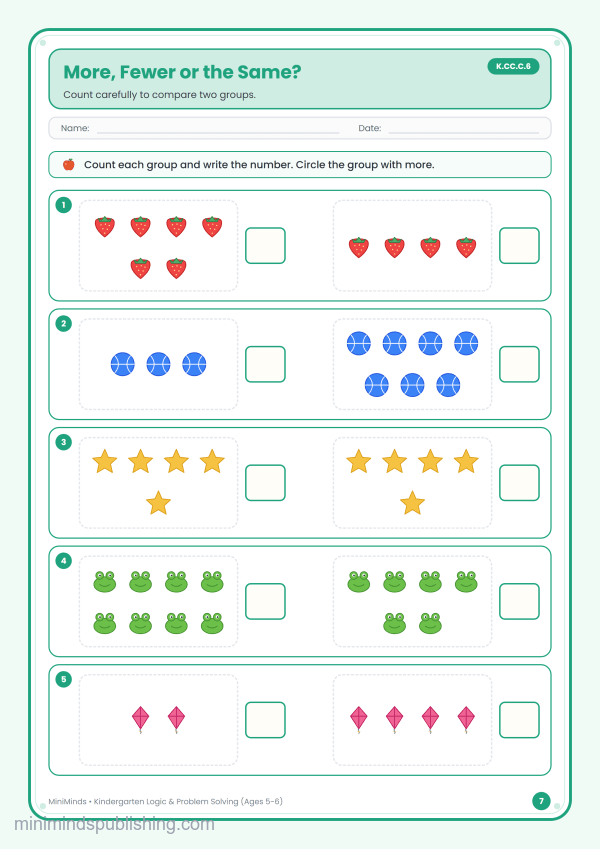 K.CC.C.6
More, Fewer or the Same?
Comparing numbers
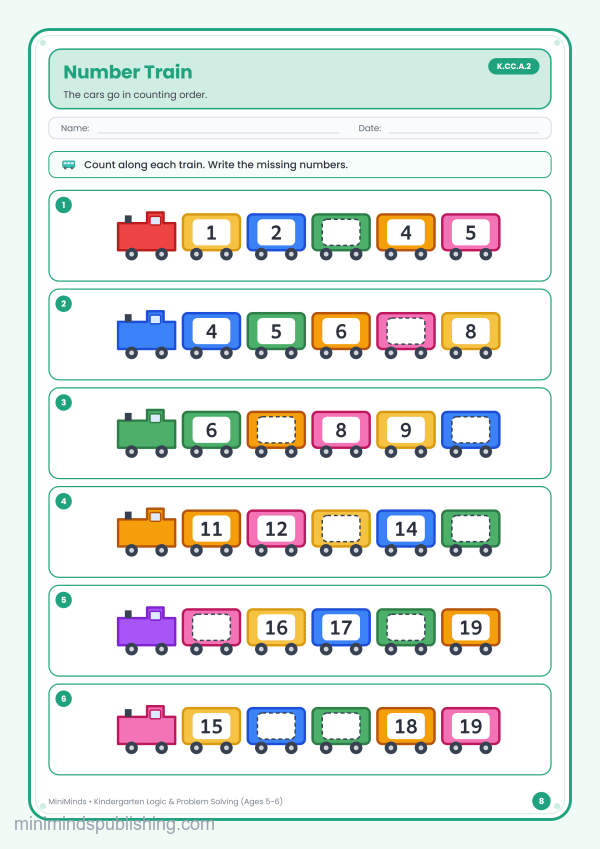 K.CC.A.2
Number Train
Counting sequence
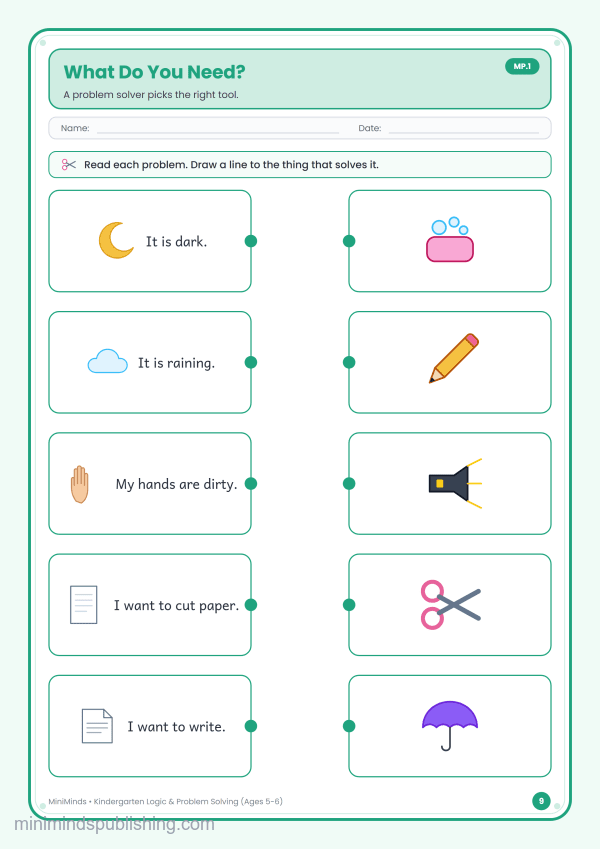 MP.1
MP.1What Do You Need?
Problem solving
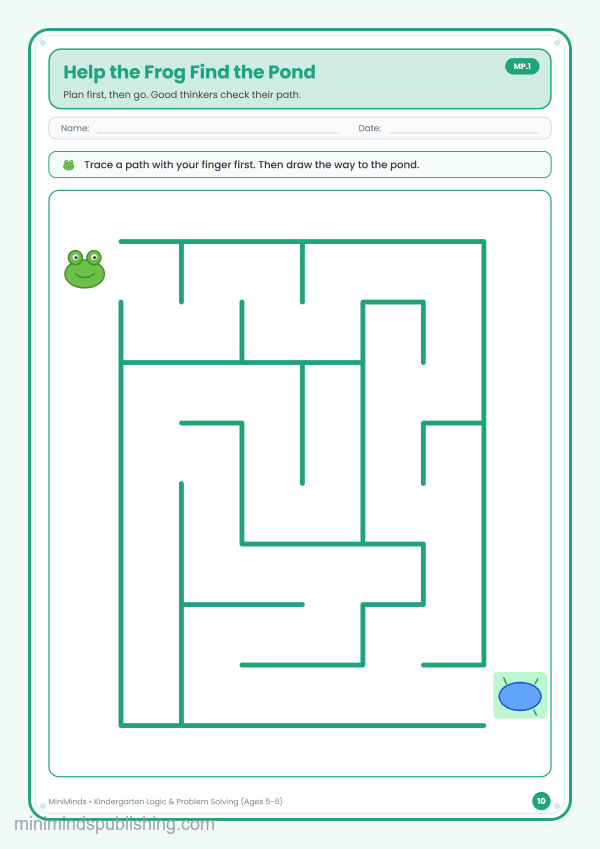 MP.1
MP.1Help the Frog Find the Pond
Planning
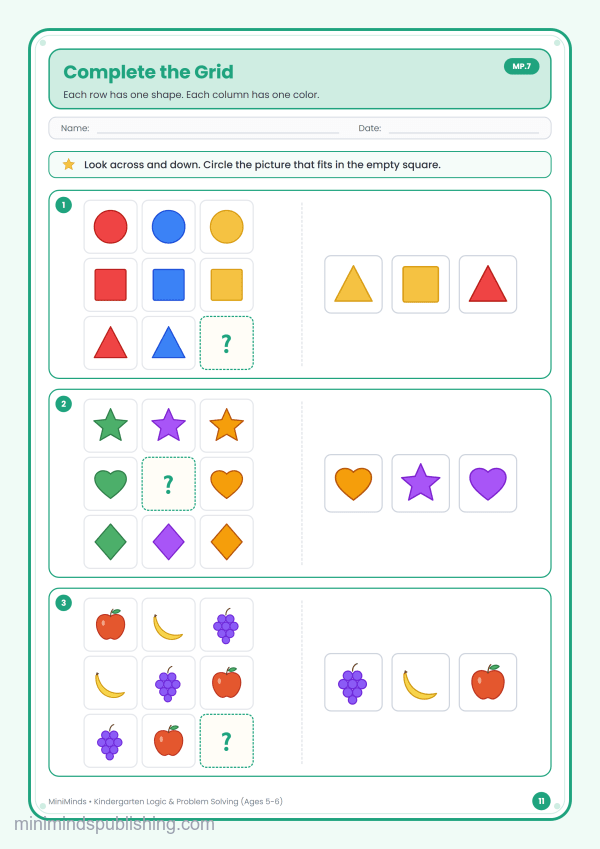 MP.7
MP.7Complete the Grid
Picture matrices
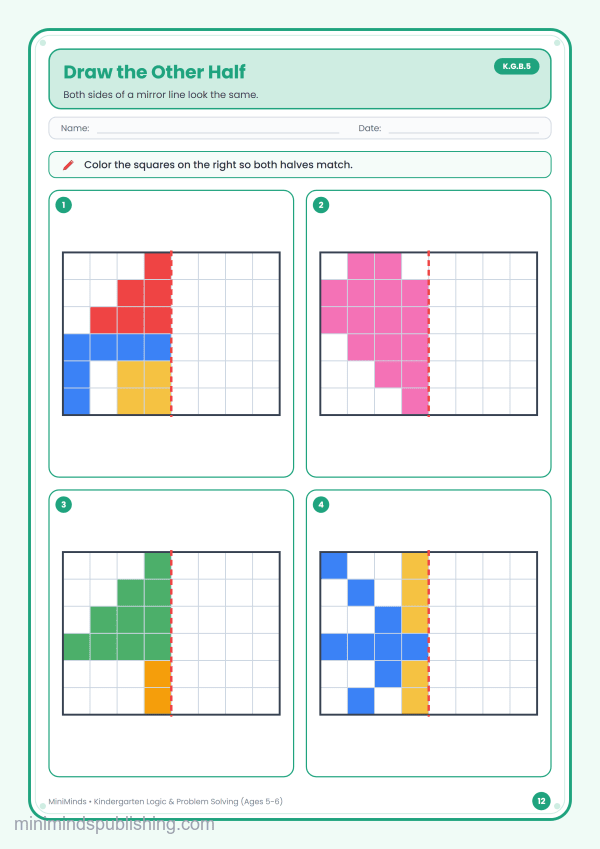 K.G.B.5
Draw the Other Half
Symmetry
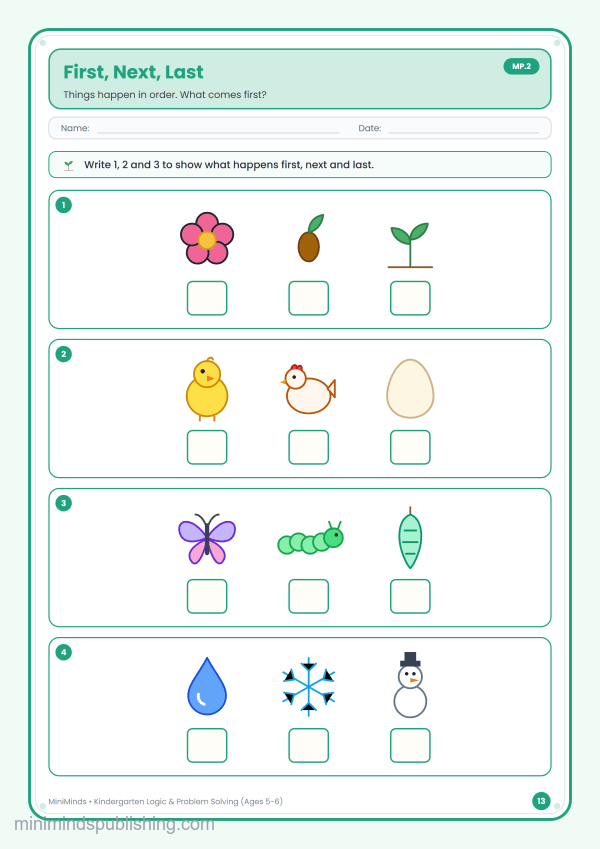 MP.2
MP.2First, Next, Last
Sequencing
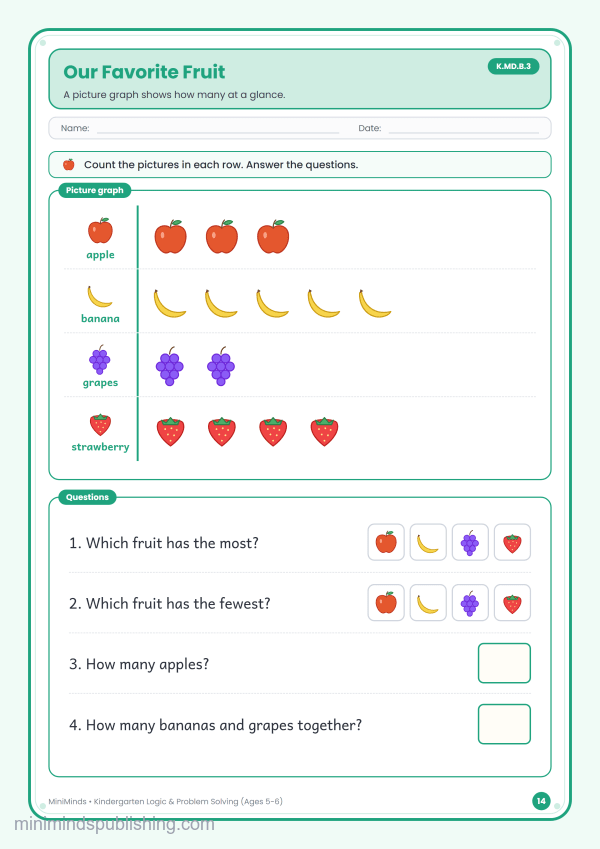 K.MD.B.3
Our Favorite Fruit
Picture graphs
 MP.1
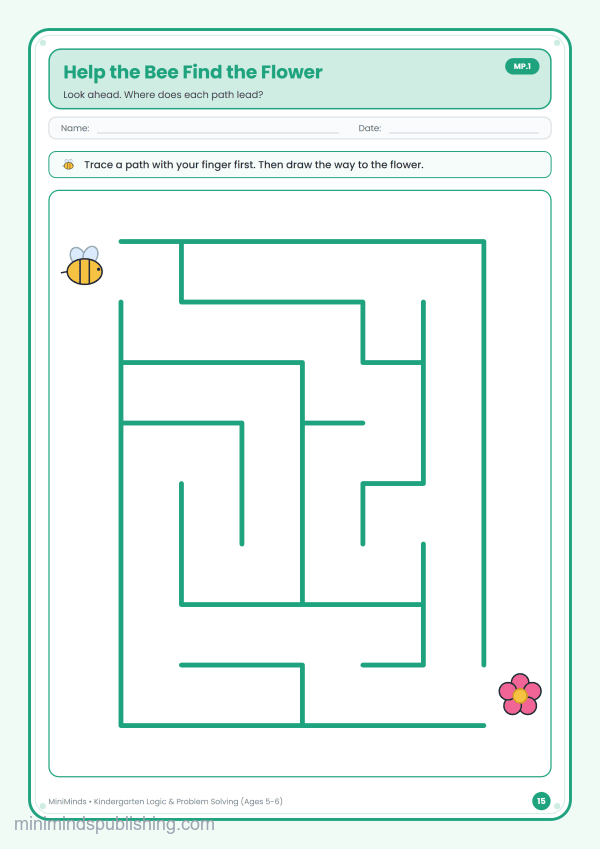
MP.1Help the Bee Find the Flower
Planning
About these kindergarten logic & problem solving worksheets
These kindergarten logic and problem-solving worksheets turn critical thinking into short, colorful puzzles: pattern detective, which one does not belong, sort and count, shape and fruit sudoku, who-am-I riddles, following position directions, comparing groups, a number train, picking the right tool and a maze.
They line up with the Common Core kindergarten standards for classifying and counting (K.MD.B.3), comparing groups (K.CC.C.6), the counting sequence (K.CC.A.2) and position words (K.G.A.1), and with the mathematical practices of persevering in problem solving (MP.1) and looking for structure (MP.7).
What these 15 worksheets cover
- AB, ABC, AAB and ABB patterns with pictures and shapes
- Classifying: which one does not belong?
- Sorting pictures into groups and counting each group
- 4 × 4 picture sudoku with shapes and fruit
- Riddles that use more than one clue
- Following directions with above, below, on top and next to
- Comparing groups: more, fewer or the same
- Missing numbers to 20 on a number train
- Problem solving: choosing the right tool
- Planning a path through a maze
- 3 × 3 picture matrices: what fits in the empty square?
- Symmetry: coloring the other half of a picture
- Sequencing: first, next and last
- Reading a picture graph
- A second maze for planning a path
All worksheet sets
How to get the most out of them
- 1
On the sudoku sheet, let your child cut out small paper shapes and place them before drawing. Moving pieces makes it easy to try an idea and change it.
- 2
Read the riddles aloud and stop after each clue. Ask which pictures are still possible — that is the reasoning, and it matters more than the final circle.
- 3
For "Which One Does Not Belong?", accept any answer your child can explain. The explanation is the point of the page.
Kindergarten Logic & Problem Solving Worksheets — questions parents ask
- What logic skills should a kindergartner have?
- By the end of kindergarten most children can continue and describe simple patterns, sort objects into groups and count them, compare two groups, use position words and follow two-step directions. These sheets practise each of those.
- Is sudoku too hard for kindergarten?
- A 4 × 4 picture sudoku is not. With only four pictures and several already placed, each empty square can be worked out from its row or column. It is a gentle way to practise careful checking.
Next steps after Kindergarten Logic & Problem Solving Worksheets
Keep practising in Fun & Learn
- SudokuAges 3–6
- Puzzles and MazesAges 3–6
- MazesAges 3–6
- Spot the DifferencesAges 3–6
- Shadow MatchingAges 3–6
- Things That Go TogetherAges 3–6